
This guide explains what many families experience during the first year after someone dies, both emotionally and administratively. It’s meant to give you a clearer sense of what tends to happen, what often takes longer than expected, and why the process can feel so disorienting.
The timeline below is not a test, or a standard to measure yourself against. Every situation is unique, and estate settlement can look different depending on a family’s circumstances, the accounts involved, and the city you’re in. Use what applies. Leave the rest.
You can read this from the top, or skip to the section that matches where you are right now. If you’re in the early weeks, you may be searching for a starting point. If you’re further along, you may be trying to understand why certain moments still feel so heavy, or why a task you handled months ago keeps resurfacing.
Estate settlement asks families to become organized and decisive at the exact moment they feel least able to. It expects you to learn who to call, what forms matter, what steps have urgent deadlines, and what can wait. All this, during one of the hardest periods of your life.
That mismatch is exhausting, but there are ways to manage it. More than anything, our hope is that you’ll be able to use this timeline as a handrail. Not to push yourself forward, but to give you something steady to hold onto as you navigate the process. Move through it at your own pace. Pause when you need to. Come back when you can.
{{blog-cta-admin}}
Week 1: The Week That Doesn’t End
The first days can feel like a blur that keeps restarting.
There is usually a lot of noise around you. Phone calls. Logistics. People asking how you’re feeling, what you need, and offering help.
In the middle of that, it can be hard to keep track of details. It’s easy to forget who you spoke to, or what you’re supposed to do next. That’s not carelessness; it’s dealing with shock and intense pressure.
If there’s one administrative task you have time for, let it be requesting multiple certified copies of the death certificate. You’ll need it for banks, insurance, and many other institutions. If you can, also try securing your loved one’s home, and locating important documents.
This week isn’t about productivity. Focus on getting through the day, one decision at a time, with as much steadiness as you can find.
Key Reminders
- If your loved one received VA, Medicaid, or pension benefits, report the death quickly to avoid overpayments that can become debts.
- Notify Social Security promptly. They may reclaim the month-of-death payment.
- Freeze credit with Equifax, Experian, and TransUnion. Identity theft risk rises after an obituary is published.
Helpful Resources
- What I’ve Learned from 1,000 Conversations After the Death of a Loved One
- How to Order Certified Death Certificates
- How Elayne Supports Families After a Loss
- Social Security Survivor Benefits
- USA.gov: What to Do When Someone Dies
Weeks 2–4: The Paperwork Begins
In the first month, grief and administration start to collide in a new way. You might be dealing with a painful memory one moment, and then quickly switch into problem-solving mode the next.
This is also when many families begin to see how much of the process depends on proof. Proof of death. Proof of authority. Proof that you are allowed to ask questions on someone else’s behalf. Even simple requests can require multiple documents before an institution will take the next step.
In terms of paperwork, this is when it starts to accumulate. Identification documents. Account statements. Insurance policies. Property records.
Another challenge is figuring out what’s actually urgent. Some letters need a response right away. Others are important, but not immediate. It can help to begin separating tasks into two categories: what needs attention now, and what can wait until you have more capacity. Be kind to yourself; learning that difference is part of the first month, and definitely takes practice.
Also, if it feels like the “small” things are taking more effort than they should, you’re not imagining it. This process moves slowly and asks a lot, especially from people who are already carrying grief. In this stretch, the goal is to keep things moving in the right direction, at a pace you can sustain.
Key Reminders
- File life insurance claims as soon as you have death certificates. There's no hard deadline, but funds can help cover immediate costs.
- Apply for Social Security survivor benefits if eligible. Benefits are not retroactive, so earlier is better.
- Notify banks and financial institutions. Don't close joint accounts you still depend on without checking first.
- Contact your loved one's employer about a final paycheck, 401(k), and any group benefits.
Helpful Resources
Month 2: The Administrative Fog
This is the stage when the work starts to feel less urgent, and more constant.
The immediate decisions from the first weeks are behind you, but the follow-ups keep coming. Forms get returned. Requirements change. You send something in and are asked for it again. It can feel like the process is built on invisible rules that no one explains until a correction is needed. And because so much of it happens out of view, it can be hard to tell whether anything is actually moving.
The hardest part of this month isn’t just the tasks themselves. It’s the mental load. Keeping track of what you submitted, what you’re waiting on, and what still needs attention. This is often when families start building some form of tracking, whether it be a physical folder, shared list or spreadsheet.
If you feel scattered in month two, it doesn’t mean you’re doing anything wrong. It means you’re navigating a complicated process at a time when you’re still adjusting to loss. Progress may look smaller than you want it to. But each call made, each form sent, and each detail written down counts. You’re moving forward, and for this month, slow and steady is more than enough.
Key Reminders
- Cancel or transfer utilities, subscriptions, and memberships. Keep records of every cancellation.
- Health insurance coverage (employer plan) typically ends at the end of the month of death. Survivors have 60 days to elect COBRA and coverage lasts up to 36 months when a spouse or dependent loses coverage due to a death.
- The final federal tax return (Form 1040) is due April 15 of the following year.
Helpful Resources
- How to Obtain an EIN for an Estate
- Teaming Up: How Elayne and Attorneys Help Families After a Loss
- What to Do with a Passport When Someone Dies
- Continuation of Health Coverage (COBRA)
- IRS: Deceased Persons — Filing the Final Return
Month 3: A Regular Afternoon
Grief can start showing up differently in this stretch.
Not always as constant sadness, but as sudden drops in energy, focus, or motivation.
A regular afternoon where you’re feeling okay can quickly become overwhelming. It can be hard to explain, especially when you were “fine” a minute ago.
When these moments happen, it can help to view them as just information or signals, not failure, and adjust the rest of your day accordingly.
If month three feels harder than month two, you’re not falling behind. You’re entering a stage where life expects you to be “back,” even when you’re still carrying a lot. Make a point of breaking tasks into smaller steps, asking for help from others, and only focusing on what truly needs attention.
Key Reminders
- If any beneficiary is thinking about declining an inheritance, there's a 9-month window from the date of death to do so (IRC section 2518). It's a firm federal deadline, and courts won't extend it. If this is something you’re considering, it's worth talking to an attorney well before the window closes.
- If the estate owns property, keep paying property taxes, as well as mortgage and insurance dues. Lapsed coverage or missed payments can create liability for the executor.
- Vehicle titles often must be transferred within a state-specific window (commonly 30 to 90 days).
Helpful Resources
- Helping Families Through The Hardest Tasks
- How to Help a Grieving Parent
- Journal Prompts For Grief
- How to Transfer a Car Title After Death
- Publication 559 - Introductory Material
Months 4–6: The Long Middle Begins
This is when the process starts to drag. Instead of urgent tasks, it becomes a long string of follow-ups, loose ends, and waiting.
This is also when the work becomes easier to lose track of. Not because you’re disorganized, but because the process is spread across too many places at once: mail, emails, phone calls, online portals, and forms that all move on different timelines. One task might be “in progress” with an insurance company, while another is stuck in a bank queue, and another can’t move until you find a certain document.
Many families also notice how responsibility starts to concentrate. One person becomes the main point of contact simply because someone has to be. They’re the one with the passwords, the reference numbers, and the full context.
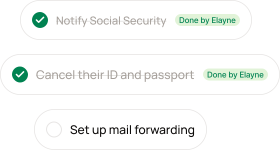
If you can, try to make the work more shareable. Start by putting together a list with three columns: Open, Pending, Done. Next, add a note with names, dates, and confirmation codes, along with a sentence about what needs to happen next. From there, look for tasks that are easier to hand off, like canceling subscriptions, requesting statements, or gathering documents.
If needed, it can also help to give the work clearer boundaries. Pick one or two windows each week to handle calls, forms, and follow-ups, then step away when that time is up. Estate settlement often takes longer than anyone expects, and the only way to get through it is at a cadence that’s sustainable.
Key Reminders
- If the estate is earning any income, even just interest from a bank account or rent from a property, it will need its own tax ID number (called an EIN). The process is free and only takes a few minutes to complete online.
- If the estate earns more than $600 in gross income, it must file its own tax return (Form 1041). This is separate from your loved one's final personal return.
- If a deceased person received Medicaid for long-term care (nursing home, home health), the state may seek recovery from the estate for those costs, as mandated by federal law. These claims can be significant. The process usually follows the state's standard creditor claim timeline. If applicable, consult an elder law attorney; hardship waivers are available but must be requested.
Helpful Resources
- What It Feels Like to Be "The Responsible One"
- How Elayne Keeps Your Data Safe
- How Long Does Probate Court Take?
Months 7–8: The “Did I Miss Something?” Months
Months seven and eight are often when a different kind of worry settles in.
Not the rush of the early weeks, but a specific question that keeps coming up: What if I missed something important?
It can sound like:
- Did I file what needed to be filed?
- Did I respond to the right letters?
- Did I miss a deadline I didn’t know existed?
- Is something going to come back later and become a bigger problem?
If you’re thinking about those questions, it doesn’t mean you’ve failed to keep up. It usually means you’ve learned how the process works: the stakes feel high, the rules aren’t always clear, and small details can have real consequences. By this point, you’ve probably seen how one missing document can stall progress, or how one correction can reset a timeline.
Especially during this period, reassurance matters. Not the kind that says, “don’t worry,” but the kind that comes from confirming what’s true. Pick one day to see where everything stands: what has a deadline, what you’re waiting on, and what still needs a next step.
If you can bring someone else into that review process, even briefly, it helps. A second person who can scan what’s outstanding, sit with you during a call, or take an item off your list can make a big difference. These months aren’t about proving you did everything perfectly. They’re about building enough clarity to keep moving forward, without feeling like you always have to stay on alert.
Key Reminders
- Pull your loved one's free credit report from each bureau to spot unknown accounts, debts, or early identity theft signs.
- If your loved one had retirement accounts, it’s important to understand withdrawal rules.
- Gather all records, payments, distributions, expenses, and fees for a final accounting. This is usually required by probate courts to close the estate, and beneficiaries have a right to review it.
Helpful Resources
- Keep Track of Claims Submitted After a Loved One’s Death
- Tax Returns and Filing Statuses During Estate Administration
- How to Get a Full View of a Loved One’s Credit History
- AnnualCreditReport.com
Month 9: The First Holiday Season
Month nine is often when the calendar starts to feel sharp again. The first birthday without them. The first holiday season. The first anniversary.
Grief changes shape around milestones; it becomes more anticipatory, and you may feel a sense of dread building up days in advance.
It’s also common for family dynamics to intensify. Some people may want a tradition to stay the same. Others may want to avoid the day entirely. When tension shows up, it’s rarely just about differing plans. It’s often about how each person is trying to survive the same absence.
In terms of logistics, you may still have forms to respond to or accounts to monitor. During times like this, it helps to be as selective as possible. If something can wait a week, let it.
Month nine isn’t about making the milestone feel “okay.” It’s about getting through it without adding more weight than the day already carries. Keep plans simple. Let expectations be small. This isn’t avoidance, it’s self-care. It’s a way of protecting your energy, and making room for whatever the day brings.
Key Reminders
- For larger estates (over $15 million in 2026), the estate tax return is due 9 months after the date of death. You can request a 6-month extension for filing, but any tax owed is still due at the 9-month mark. If this applies to you, your attorney or CPA should already be involved.
- Having property in multiple states can lead to owing estate or inheritance tax in those locations. 18 states have their own rules, and often, exemption thresholds are much lower than the federal amount.
Helpful Resources
- How Family Relationships Change After a Death
- Meet Elayne Care Manager: Kylee Bandy
- Quotes That Bring Comfort
- IRS: Frequently Asked Questions on Estate Taxes
Months 10–11: The Reemergence of Grief
By late in the year, many of the tasks are winding down. Accounts close. Mail slows. Fewer things demand immediate attention. From the outside, it can look like the process is nearly finished.
There’s an assumption that once the logistics ease, the emotional weight will too. Instead, what often happens is that grief becomes more noticeable. Not harsher, and not new, just more present now that there’s less to manage day-to-day.
With fewer fires to put out, your attention has room to land on what’s been there all along. You haven’t made a mistake, and nothing has gone backward. The reality: this is often the first moment when grief is no longer competing with constant urgency.
This period isn’t a step you need to complete. It’s a transition you’re already moving through. And it sets the stage for the final stretch of the year, where the question shifts from “What still needs handling?” to “What does moving forward actually look like?”
Key Reminders
- Before distributing the remaining assets, it's a good idea to request an IRS account transcript for your loved one. This confirms there are no surprise tax liabilities that can impact the estate.
- Wait for the 3-6 month creditor claim period to expire after notification before making final distributions. This essential waiting period must pass before wrapping up the estate.
Helpful Resources
- Designing with Empathy: A Conversation with Emi Rohn
- How to Request an Estate Tax Closing Letter from the IRS
- Building Tech That Understands Grief
{{blog-cta-admin}}
Month 12: The Path Ahead
By month twelve, the picture looks different for every family. Some estates are settled. Others are still moving through probate. The length of the year is not an indication of effort or ability. It’s a reflection of how slow many systems are, and how little they account for the reality of grief.
Emotionally, this month often brings more steadiness. You may notice that your days hold more range again: work, plans, focus, laughter. At the same time, certain dates, songs, or objects can still catch you off guard. Grief is no longer constant, but it hasn’t left. It’s become familiar, something you recognize when it arrives.
What changes most at one year is not the absence of pain, but your relationship to it. You’ve learned what you can carry without losing your footing. You’ve learned where your limits are, and how to respect them. Hard days still exist, but they no longer undo everything around them.
Month twelve isn’t a finish line, it’s a marker. A chance to reflect on the distance you’ve covered, despite every challenge along the way. If there’s one thing this year has demonstrated, it’s that you can keep going. You can hold memory and responsibility, grief and daily life, at the same time. That isn’t closure. It’s continuity. And it’s a way forward that honors both what was lost, and what remains.
Key Reminders
- Once the final tax returns are filed, hold onto all your estate records for at least 3 years (or 7 if there's any grey area).
- Many families come away from this year with a deeper awareness of planning, and how impactful it can be during a difficult time. When you feel ready, organizing your own estate documents is a meaningful way to care for the people you love, and offer them greater clarity and support when they need it most.
Helpful Resources
- The Story Behind Elayne’s Mission
- How Elayne Builds: Principles in Action
- Best Estate Settlement Platforms for Families
**Disclaimer: This timeline is for informational purposes only and does not provide legal, medical, financial, or tax advice. Please consult with a licensed professional to address your specific situation.










.svg)