

After a death, there’s an expectation that families will put aside differences and settle the estate amicably.
But quite often, the reality’s more complicated.
The administrative side of loss can introduce friction, disagreements, and impact relationships that were previously on good terms.
To be clear, none of this signals a lack of love, care, or willingness to work together. Rather, it’s a natural response to managing both grief, and difficult decisions that can’t be postponed.
This article begins our four-part series on the emotional strains that families experience after a loss. We’ll explain why these challenges are so common, and different ways to address them as well.
{{blog-cta-financial}}
Why Tension Appears During This Stage
A loved one has just passed, and almost immediately, families become responsible for administrative work. Because these processes are unfamiliar, conversations between family members can take on a hesitant tone. People worry about saying the wrong thing, missing something important, or slowing things down. That uncertainty can weaken communication, long before any actual disagreement takes place.
More broadly, the pain that accompanies loss magnifies everything, which is why regular interactions feel significantly sharper. A question meant to clarify a detail is interpreted as criticism. A request for help can sound like a complaint. An update shared in a group chat can come across as abrupt.
When grief and urgency collide, every task becomes harder to navigate. Recognizing this is an important step; it helps families move through these moments with more patience, empathy, and less self-blame.
Why Sibling Relationships Often Feel the Most Strain
Among all family relationships, siblings tend to be affected by this pressure the most. They’re grieving the same person, but each carries a different history, level of closeness, and understanding of what the relationship looked like. Past conflicts can resurface, especially if someone feels that an issue was never fully resolved.
Differences in life circumstances add another layer of complexity. One sibling may have taken on more caregiving during the final years. Another may have been supporting their own family, working long hours, or managing health concerns. What felt understandable before the loss may be viewed as uneven once the settlement process begins.
For example, when there’s no will, state laws determine how the estate must be divided, and caregiving isn’t an element that’s taken into account. In some situations, these rules can create outcomes that feel surprising or difficult to accept.
There are also logistical reasons why siblings feel more strain. Siblings who have not communicated in years may suddenly need to coordinate signatures, discuss finances, or make joint decisions. They may also need to manage disagreements about who should take the lead on certain steps, or how quickly tasks should be completed.
How These Dynamics Affect the Estate Process
When relationships are tense, the estate process usually becomes longer.
The tasks themselves haven’t changed, but the emotional backdrop has. A quick question about a bank account suddenly feels complicated. A form that needs two signatures turns into a longer conversation about timing. Even just deciding who will handle a step can start to feel overwhelming.
Many of these situations arise from differences in how family members cope after a loss. One sibling may want to begin working on tasks because the structure helps them find their footing. Another may need more time before they’re able to deal with paperwork and phone calls. Both responses are valid, but the variation in pace can make coordination more difficult.
In addition, the structure of the estate process can amplify these challenges. Many steps must happen in a specific order, and several require participation from more than one person. For example:
- A bank may not release information until two siblings confirm details.
- A legal document may remain unfinished until everyone has signed.
- An agency may require verification that only one sibling can provide.
- Financial records from multiple people may be needed before the next step can begin.
On paper, these steps look simple. In practice, they unfold in the middle of grief, exhaustion, and constant decision-making. Recognizing this helps everyone approach the work with more understanding, and creates room for each family member to contribute in a way that’s manageable.
Why Structure Reduces Pressure
If a settlement isn’t progressing as planned, adding more structure to the process can make an immediate difference. When tasks are organized, visible, and clearly sequenced, it helps prevent steps from being skipped or misunderstood.
A shared structure does more than list tasks. It shows how one step leads to the next, which parts can move forward independently, and where coordination is needed. Without this context, it can feel like you’re constantly starting from scratch. It becomes more difficult to decide what comes next, or determine if something’s been overlooked.
Most importantly, structure gives everyone a neutral reference point. It removes the pressure to interpret tone or negotiate each step, and replaces it with a plan everyone can follow. In our experience, when a family’s process is mapped out, it becomes one of the most effective ways to assign and keep items on track.
How a Neutral Space Helps Families Work Together
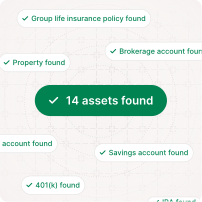
Many families using Elayne have access to a shared account. This removes the pressure on any one person to manage, summarize, or interpret the settlement process. Everyone sees the same information, and each task becomes easier to work on.
Some of the features that families find most helpful include:
- Centralized Information. Insurance policies, bank statements, agency notices and tasks are all stored in one place. This helps reduce the risk of important items being misplaced or overlooked.
- Clear Next Steps. Elayne’s platform turns complex estate requirements into a simple, personalized roadmap. Families immediately see what needs to be done now, what can wait, and who needs to be involved in each step.
- Easy Collaboration. Everyone gets the same view of where things stand, whether they live nearby or across the country. This makes dividing responsibilities easier, and prevents one person from becoming the default point of contact for each task.
- Additional Support. Our team is able to offer assistance with administrative tasks, and connect families with legal and financial professionals as well.
Earlier this year, one of our clients lost his father. When helping his mother through the estate process, he’d struggle to share updates because it felt like he was delivering painful reminders. Once his mother had access to the shared space in Elayne, they could both see what needed attention through the platform. He no longer carried the weight of relaying difficult information, and she felt more in control because she could review each step at her own pace.
Families use the platform in different ways. Some prefer to work independently and update tasks on their own. Others reach out to our team when they’d like additional support. Both approaches work well. What matters most is that the estate process becomes clearer, easier to navigate, and more manageable for everyone involved.
Additional Guidance for Navigating This Stage
Once there’s a shared place to work from, the next step is handling daily tasks in a way that feels sustainable. Some of the most effective approaches we’ve seen include:
1. Breaking Tasks into Smaller Steps. Many estate tasks feel overwhelming because of how many parts they involve. Turning them into smaller actions provides a clear starting point, and makes the overall process feel more doable.
2. Matching Responsibilities to Strengths. Estate settlement requires handling everything from phone calls to forms and tracking deadlines. When tasks are assigned based on strengths, it becomes easier for each family member to contribute.
3. Pausing Before Tough Topics. Families often feel pressure to complete tasks quickly. Allowing even a short pause before difficult discussions helps reduce the chance of misunderstandings or rushed decisions.
4. Choosing a Stopping Point. Estate work can feel both emotionally and physically exhausting. Each day, it’s important to timebox responsibilities, and ensure that everyone is getting enough time to rest and recover.
5. Asking for Support Early. Certain tasks can build up quickly, and waiting until something feels urgent makes it harder to manage. Checking in sooner, even for small questions, keeps each item on track.
{{blog-cta-financial}}
Conclusion
During a settlement, the pain of loss affects how people communicate, make decisions, and divide responsibilities. By understanding why tension appears, families are better able to address these challenges.
A clear structure, shared tools, and thoughtful communication can prevent misunderstandings, and keep the work from resting on one person’s shoulders. They also help families see what needs immediate attention, and what can be set aside for a later date.
Though estate work is difficult, most households do find their rhythm again once the immediate intensity begins to settle. Steady routines, check-ins, and clear next steps help reduce friction, rebuild trust, and give everyone a shared sense of direction. Ultimately, families move forward not by avoiding the hard moments, but by supporting each other through them: one step, conversation, and decision at a time.










.svg)