

Key Takeaways
- Wait until immediate crisis passes before introducing comprehensive estate planning, focusing first only on urgent matters that require immediate attention
- Frame estate planning as protecting the family and honoring the deceased's memory rather than as business transactions or sales opportunities
- Break information into small, manageable pieces rather than overwhelming families with everything they need to know at once
- Provide written materials families can review when ready, acknowledging they may not absorb information during initial conversations
- Recognize signs that families aren't ready for planning discussions and be willing to postpone conversations until they're in a better place emotionally
{{blog-cta-admin}}
Understanding the Grieving Family's State of Mind
What Grief Does to Decision-Making Capacity
Grief significantly impairs cognitive function in ways that directly affect people's ability to engage with estate planning. Newly bereaved people experience difficulty concentrating and absorbing complex information, impaired decision-making and judgment, reduced ability to consider long-term consequences, trouble remembering details or instructions, and emotional volatility that affects rational thinking. These effects are strongest immediately after loss and gradually improve over weeks and months.
Understanding these cognitive impacts helps you set realistic expectations about what grieving families can handle. A conversation that would take an hour with someone not grieving might need to be broken into three shorter sessions for someone recently bereaved. Information that a non-grieving person could absorb from a single explanation might need to be repeated multiple times or provided in writing for a grieving family member.
This doesn't mean grieving families can't make any decisions or engage with estate planning at all. It means you need to adjust your approach, simplify your communication, and build in extra support and patience. The goal is meeting families where they are emotionally rather than expecting them to function at normal capacity.
The Difference Between Immediate and Long-Term Planning Needs
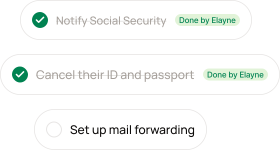
Not all estate planning conversations are equally urgent. Some matters require immediate attention including decisions about funeral arrangements if not pre-planned, securing the deceased's property and assets, notifying Social Security and other government agencies, and filing the will with probate court if one exists. These immediate needs must be addressed regardless of the family's emotional state.
Other estate planning matters can wait until families are more emotionally stable, such as comprehensive estate planning for surviving family members, trust administration that doesn't have immediate deadlines, discussions about inherited assets and investment strategies, and long-term care planning for elderly surviving relatives. Distinguishing between urgent and non-urgent matters helps you prioritize appropriately.
When working with grieving families, handle immediate needs with gentle efficiency, acknowledging that these tasks are necessary but difficult. For non-urgent matters, plant seeds about future planning needs without pushing for immediate action. You might say, "In a few months when you're feeling more settled, we should discuss updating your own estate plan. But for now, let's just focus on what needs to happen this week."
Signs a Family Isn't Ready
Learn to recognize when families aren't emotionally ready for estate planning conversations. Signs include inability to focus on what you're saying, becoming overwhelmed or tearful when discussing planning, making statements like "I can't think about this right now," expressing anger or resistance to planning discussions, and seeming confused or unable to understand basic concepts. When you see these signs, it's time to simplify your approach or postpone the conversation.
Don't interpret resistance as lack of intelligence or interest. Grief creates temporary cognitive and emotional limitations that have nothing to do with a person's normal capacity. Someone who is usually sharp and organized might struggle to understand simple concepts when grieving. Someone typically decisive might feel paralyzed by even small choices.
Respecting these limitations and working within them rather than pushing through them builds trust and leads to better outcomes. Families who feel rushed or overwhelmed often make poor decisions or avoid you entirely. Families who feel you respect their pace and emotional state stay engaged and eventually complete necessary planning.
Timing Your Approach
Waiting for the Initial Crisis to Pass
The first days and weeks after a death are consumed with immediate crises including funeral planning and arrangements, notifying family and friends, managing the logistics of death, and simply surviving intense grief. During this period, limit your estate planning discussions to absolute necessities. Handle urgent matters efficiently and compassionately, but don't try to address comprehensive planning.
Most families begin to stabilize emotionally somewhere between two and six weeks after death. The funeral is over, immediate logistics are handled, and shock begins to wear off even as grief continues. This transition period is often when families become ready to think about next steps, though they're still quite vulnerable emotionally.
Look for signs that families are transitioning from acute crisis to early adaptation including asking questions about what comes next, expressing concern about unresolved matters, showing more consistent emotional regulation, and mentioning practical concerns about finances or paperwork. These signals suggest readiness for gentle introduction of broader estate planning topics.
Choosing the Right Setting
Where you have estate planning conversations matters almost as much as when. Formal office settings can feel intimidating or cold to grieving families. Consider offering to meet at their home if appropriate, choosing comfortable meeting spaces rather than sterile conference rooms, or meeting in neutral locations like coffee shops for initial low-pressure conversations.
Phone or video calls sometimes work better than in-person meetings for initial estate planning introductions. Families might feel less pressured when they can have conversations from their own homes, and you can gauge their emotional state without the commitment of a formal meeting. Use initial calls to assess readiness and schedule in-person meetings once you've established that families are prepared for more detailed discussions.
Whatever setting you choose, ensure privacy for emotional moments. Families shouldn't have to worry about others overhearing when discussing sensitive estate matters or when emotions surface unexpectedly. Private settings allow families to be vulnerable without embarrassment.
Breaking Information Into Manageable Pieces
Don't attempt to cover everything estate planning related in one conversation with grieving families. Break information into small, digestible pieces delivered over multiple interactions. Your first conversation might simply cover what happens next with the deceased's estate. A second conversation weeks later might address the surviving spouse's own estate plan. A third might delve into specific trust or tax planning strategies.
Each conversation should have a clear, limited focus. Instead of "Let's discuss your complete estate plan," try "Today I'd like to explain the probate process and what you can expect over the next few months." Instead of "We need to review all your assets," try "Let's just focus on updating your beneficiary designations on your retirement accounts today."
Limiting scope reduces overwhelm and increases the likelihood that families will absorb and act on information. You can accomplish comprehensive planning through a series of focused conversations rather than trying to handle everything at once.
Language and Framing That Helps
Avoid Legal Jargon and Technical Language
Estate planning is full of technical terms that confuse even people who aren't grieving. For bereaved families, legal jargon is especially alienating and overwhelming. Translate technical concepts into plain English whenever possible. Instead of "testamentary capacity," say "ability to understand what they were signing." Instead of "per stirpes distribution," say "inheritance passing to grandchildren if their parent died first."
When technical terms are unavoidable, define them clearly the first time you use them and provide written glossaries families can reference later. Assume families won't remember technical definitions from conversation to conversation. Don't be frustrated by needing to explain the same terms repeatedly during early grief when memory and concentration are impaired.
Watch families' faces and body language for signs of confusion. If someone looks lost or overwhelmed, stop and ask if they need clarification. "I know I'm throwing a lot of information at you. What questions do you have?" creates space for families to admit confusion without feeling embarrassed.
Framing Planning as Protecting Family
Position estate planning as protecting the family and honoring the deceased rather than as business transactions or legal requirements. Instead of "You need to update your will," try "Let's make sure your children are protected the way you want them to be." Instead of "We should discuss trust administration," try "Let's talk about how to best manage the inheritance your mother left for your children."
This reframing connects estate planning to what grieving families care most about: honoring their loved one's memory and protecting remaining family members. It makes planning feel meaningful rather than bureaucratic. Families who see planning as protecting loved ones engage more fully than those who view it as just checking legal boxes.
Emphasize that proper planning prevents future problems and additional stress. You might say, "I know this is difficult to think about right now, but handling these matters now means you won't have to deal with complications later when you're trying to move forward." This frames planning as ultimately reducing burden rather than adding to it.
Acknowledging the Difficulty
Don't pretend estate planning discussions are easy or comfortable for grieving families. Explicitly acknowledge the difficulty: "I know talking about legal and financial matters is probably the last thing you want to do right now." This acknowledgment validates their feelings and builds trust.
You can also normalize their reactions: "Many people find these conversations overwhelming at first. There's no rush, and we can take breaks whenever you need them." This permission to struggle reduces pressure and makes families more willing to engage despite difficulty.
When families become emotional during planning discussions, respond with compassion rather than trying to push through. "I can see this is bringing up a lot of feelings. Would you like to take a break?" shows respect for their grief while keeping the door open to continue when they're ready.
Practical Strategies for Professionals
Starting With What's Most Urgent
Begin with matters that genuinely require immediate attention and work outward to less urgent planning. This prioritization shows respect for the family's emotional capacity while ensuring critical items don't fall through cracks. Create a simple timeline showing what needs to happen when: "This week we need to file the will. Next month we should notify creditors. In a few months we can discuss updating your own estate plan."
Visual timelines or checklists help families understand what's required without feeling overwhelmed by the full scope. They can see that not everything needs to happen at once. These tools also provide structure that many grieving people find comforting when life feels chaotic.
Be honest about the consequences of delaying various planning items. Some matters have legal deadlines that can't be missed, while others are important but flexible. Families appreciate transparency about what's truly urgent versus what's simply recommended.
Providing Written Materials
Never rely solely on verbal communication with grieving families. Provide written materials covering key points, action items, deadlines, and contact information. Families can review written materials when their concentration is better and can share information with other family members who need to be involved.
Make written materials simple, clear, and visually organized. Bullet points, short paragraphs, bold headers, and plenty of white space make information more digestible than dense legal documents. Consider creating one-page summaries of complex topics rather than expecting families to read lengthy materials.
Follow up after conversations with email summaries of what was discussed, decisions made, and next steps. These summaries serve as reference documents and confirm that everyone understood the same things from your conversation. They also provide documentation of your communication for professional liability purposes.
Offering to Include Other Family Members
Grieving people often struggle to absorb and retain information, making it helpful to include other family members in estate planning discussions when appropriate. An adult child might attend meetings with a widowed parent, or siblings might all participate in discussions about their parents' estate. Multiple people hearing the same information increases the likelihood that someone will remember and understand it.
However, respect client confidentiality and family dynamics. Not all family members should be included in all discussions. The surviving spouse might need private conversations about their own estate plan separate from conversations about the deceased's estate that involve adult children. Be thoughtful about who should be included when.
Offer to repeat information for family members who couldn't attend initial meetings. "I'm happy to have the same conversation with your sister when she's back in town" shows flexibility and ensures all key family members get necessary information.
Following Up Gently
Grieving families often intend to follow through on estate planning matters but lose track of action items as they struggle with daily life. Follow up gently and without judgment. Instead of "You were supposed to send me those documents," I wanted to check in about those documents we discussed. How can I help you locate them?"
Space your follow-ups appropriately. In the first few weeks after death, weekly contact might be appropriate for urgent matters. As time passes, monthly check-ins are usually sufficient for ongoing planning needs. Too frequent contact feels pushy, while too infrequent contact allows important matters to fall through cracks.
When families haven't followed through on action items, explore whether the issue is emotional readiness rather than simple forgetfulness. "I notice we haven't moved forward on updating your will yet. Is it feeling overwhelming, or is this just not the right time?" creates space for honest conversation about readiness.
What to Avoid
Don't Lead With Sales Pitches
If you're an insurance agent, financial advisor, or other professional who sells products, introducing those products during early grief is inappropriate and damages trust. Grieving families need help and guidance, not sales pressure. Focus first on helping families navigate their immediate situation. Product recommendations, if appropriate, come much later after trust is established and families are emotionally stable.
Even when you genuinely believe a product would help, timing matters. The widow who just lost her husband isn't ready to hear about life insurance for herself, no matter how much she needs it. That conversation happens months later, if at all. Respect the distinction between appropriate professional guidance and opportunistic sales tactics.
Families have sensitive radar for professionals who are more interested in generating business than helping them. One premature sales pitch can permanently damage your reputation and relationship. Patience and genuine service create opportunities for appropriate product recommendations later when families are ready.
Avoid Overwhelming Detail
Resist the urge to explain every nuance and possibility when working with grieving families. While you might pride yourself on thoroughness, comprehensive explanations overwhelm people in early grief. Provide enough information for families to make necessary decisions and understand basic concepts, but save detailed explanations for later when they can absorb them.
If families ask detailed questions, answer them, but don't volunteer complex information they didn't ask for. Many professionals over-explain because they're uncomfortable with silence or want to demonstrate expertise. With grieving families, less is often more. Simple, clear communication serves them better than comprehensive technical explanations.
You can always provide more information later. It's much harder to un-overwhelm someone who received too much information too soon. Start simple and add complexity gradually as families demonstrate readiness for deeper understanding.
Don't Ignore Emotional Reactions
When families become tearful, angry, or overwhelmed during estate planning discussions, acknowledge their emotions rather than glossing over them to return to business. A simple "I can see this is really hard" or "Take your time" shows humanity and builds trust. Pushing forward when someone is emotionally struggling communicates that you care more about completing your agenda than about their wellbeing.
Emotional reactions during estate planning conversations are normal and healthy. Grief doesn't follow schedules or respect professional meetings. Creating space for emotions rather than treating them as interruptions to be minimized makes families more comfortable working with you long-term.
Sometimes emotional reactions indicate you've pushed too far too fast. If a family member becomes significantly distressed, that's feedback that you need to slow down, simplify, or postpone. Listen to these emotional cues rather than barreling forward with your agenda.
Don't Make Assumptions About Family Dynamics
Every family is different, and grief affects families in complex ways. Don't assume that the person who seems most put-together is ready to handle estate planning, or that the person who's most emotional can't engage with practical matters. Don't assume spouses agree on planning approaches, or that siblings have the same priorities.
Ask rather than assuming: "Who would you like to include in these conversations?" "What concerns you most about the estate planning process?" "How can I best support you through this?" These questions allow families to tell you what they need rather than you guessing based on assumptions.
Also don't assume all grieving families need the same approach. Some want lots of information and structure. Others need minimal contact and space. Some want to tackle planning immediately as a way of feeling productive. Others need months before they can engage. Flexibility and responsiveness to individual family needs serve better than one-size-fits-all approaches.
Building Long-Term Relationships
Establishing Yourself as a Trusted Resource
When you handle estate planning sensitively with grieving families, you establish yourself as a trusted resource they'll return to for future needs. This trust comes from demonstrating genuine care for their wellbeing, respecting their emotional state and capacity, providing clear guidance without pressure, and being consistently available and responsive.
These relationships often extend for years or even generations. The widow you helped sensitively navigate her husband's estate becomes a long-term client who refers her children to you. The adult children you guided through their parents' estate remember your compassion when they need their own estate planning years later.
Building trust-based relationships creates more sustainable and rewarding practices than transactional approaches focused only on immediate business opportunities. The time you invest in compassionate service during families' most vulnerable moments pays dividends throughout your career.
Staying Connected After Immediate Needs Are Met
Don't disappear once immediate estate matters are resolved. Periodic check-ins show continued care and keep you available for questions or concerns that arise later. These might be brief emails asking how families are doing, cards on anniversaries of the death, or invitations to client appreciation events that provide low-pressure opportunities for contact.
Staying connected allows you to identify future planning needs as they develop. The surviving spouse who didn't want to discuss updating her own estate plan six months ago might be ready a year later. Adult children who needed time to process their parents' estate might eventually need help with their own planning. Maintaining relationships creates opportunities to serve families comprehensively over time.
However, maintain appropriate boundaries. Occasional friendly contact is different from excessive outreach that feels intrusive. Respect signals that families want more distance or have moved on to other professionals for future needs.
Conclusion
Introducing estate planning to grieving families requires balancing necessary practical guidance with deep sensitivity to emotional vulnerability, recognizing that while estate matters must be addressed, the timing, approach, and framing of these conversations significantly impacts whether families can engage productively or become overwhelmed and shut down.
The most effective professionals wait for immediate crisis to pass before introducing comprehensive planning, focus first on genuinely urgent matters while postponing less time-sensitive discussions, break information into small manageable pieces rather than attempting comprehensive coverage in single conversations, and use plain language that frames planning as family protection rather than bureaucratic requirements.
Watch for signs of readiness and be willing to slow down or postpone when families aren't emotionally prepared, provide written materials families can review when their concentration improves, and explicitly acknowledge the difficulty of these conversations rather than pretending they're easy or comfortable.
The patience and compassion you demonstrate while helping families through necessary estate planning during their most vulnerable time establishes trust-based relationships that extend far beyond immediate business transactions, creating sustainable practices built on genuine service rather than opportunistic sales. Families remember not just what you helped them accomplish but how you made them feel during the process, and your sensitivity during their grief becomes the foundation for long-term professional relationships.
{{blog-cta-admin}}
FAQs
Q: How long should I wait after a death before introducing estate planning topics?
Wait at least two to four weeks after death before introducing non-urgent estate planning matters, focusing only on genuinely time-sensitive issues in the immediate aftermath, and watch for signs of readiness rather than following rigid timelines.
Q: What if the family seems resistant to any estate planning discussion?
Respect their resistance, acknowledge the difficulty, and offer to postpone while leaving the door open for future conversations when they're ready, and consider whether your approach might be too aggressive or poorly timed.
Q: How do I balance being helpful without seeming like I'm pushing products or services?
Lead with education and guidance rather than sales, focus on answering their questions and addressing their concerns, and wait until trust is established and families are emotionally stable before introducing product recommendations if appropriate.
Q: Should I bring up updating the surviving spouse's own estate plan right away?
Generally no, surviving spouses need time to process their loss and settle the deceased's estate before they're ready to think about their own mortality and planning, with most benefiting from at least several months before these discussions.
Q: What if urgent deadlines make it impossible to wait for emotional readiness?
Acknowledge the difficulty of the timing, be extra gentle and supportive in your approach, focus narrowly on just what's urgently needed, and provide extra support and written materials to help them meet deadlines despite emotional challenges.
Q: How do I know if I should include other family members in estate planning discussions?
Ask your primary contact who they would like included, respect confidentiality while recognizing that multiple perspectives can be helpful, and be thoughtful about family dynamics that might make certain conversations better handled individually.
Q: What if the family asks detailed questions I think are too complex for them right now?
Answer their questions honestly but concisely, watch for signs they're becoming overwhelmed by the information, and offer to provide more detailed explanations in writing they can review when ready.
**Disclaimer: This article provides general guidance about working with grieving families and should not be considered legal, medical, or mental health advice. Every family and grief situation is unique, and professionals must use judgment about appropriate timing and approaches. The strategies discussed are general recommendations that may need adaptation based on specific situations and professional contexts.








.svg)