

Signing a trust creates the legal structure, but the trust only controls assets that have been retitled into its name. Whether an asset goes through probate depends on how it is titled and whether it has a beneficiary designation. This guide explains key points for families, executors, and successor trustees to be aware of, including: what retitling means, what a pour-over will does, small estate alternatives, and more.
Key Takeaways
- Signing a trust creates the legal structure, but assets must be retitled separately or they pass through probate.
- Real estate, bank accounts, and investment accounts all require retitling; life insurance and retirement accounts pass by beneficiary designation instead.
- A pour-over will directs untitled assets into the trust, but those assets still go through probate first.
- In California, a Heggstad petition can confirm trust ownership of an untitled asset without full probate, though it requires legal proceedings and is not guaranteed.
- Elayne's Verified Asset Search surfaces how each asset is titled and where it sits relative to the trust, and tracks deadlines across both trust and probate channels.
What "Retitling" Means and Why It Is Separate from Creating a Trust
Setting up a trust creates the legal structure. It does not move anything into it.
Retitling is the separate step of changing the official ownership record of an asset from an individual name to the trust's name. For real estate, that means recording a new deed. For bank accounts, it means updating the account registration with the financial institution. For investment accounts, it means reregistering the holdings. Until those steps happen, each asset still belongs to the individual personally, not to the trust.
{{blog-cta-financial}}
What Happens to Untransferred Assets After Death
Assets left outside the trust at death are treated as individually owned property.
Those assets typically enter probate, the court-supervised process for distributing a deceased person's estate. The court oversees paying debts and transferring what remains to heirs, which can take time, generate public records, and add costs.
Asset-by-Asset Breakdown: Real Estate, Bank Accounts, and More
| Asset Type | What Happens Without Retitling |
|---|---|
| Real estate | Stays in the individual's name; requires probate unless a deed was recorded into the trust |
| Bank accounts | Treated as individual property; pass through probate without a payable-on-death designation |
| Investment accounts | Same as bank accounts unless retitled or a TOD beneficiary is named |
| Life insurance | Passes by beneficiary designation, bypassing both the trust and probate |
| Retirement accounts (IRA, 401k) | Pass by beneficiary designation; the trust is typically named as beneficiary, not the account holder |
| Vehicles | Subject to probate in many states; some allow simplified title transfers for low-value vehicles |
Life insurance and retirement accounts are exceptions here. Because they carry their own beneficiary designations, they pass outside both probate and the trust.
The Role of a Pour-Over Will
A pour-over will is a companion document designed to work alongside a revocable living trust. When someone dies with assets still in their individual name, the pour-over will directs those assets into the trust through the probate process. A pour-over will does not bypass probate.
Small Estate and Summary Administration Alternatives
When the assets left outside a trust are relatively modest in value, full probate may not be required. Many states offer simplified procedures that allow heirs to claim those assets without a formal court proceeding.
Common options include:
- Small estate affidavits: a sworn statement allowing an heir to collect assets directly from a financial institution, typically available when the total probate estate falls below a state-set dollar threshold
- Summary administration: an abbreviated court process, generally faster and less expensive than standard probate, available in many states when the estate value is under a certain limit
- Affidavits of heirship: used primarily for real property in states like Texas, documenting inheritance through a recorded document instead of a court order
Eligibility depends on several factors: the total value of assets subject to probate, the asset type, and the state where the deceased lived or owned property. A $15,000 bank account might qualify for a small estate affidavit in one state and require full probate in another. Real estate is often excluded from simplified procedures regardless of value.
Who Has Authority Over Trust Assets and Probate Assets?
A successor trustee has authority over assets titled in the trust. An executor, once the probate court issues Letters Testamentary, has authority over assets outside it. When the same person holds both roles, the responsibilities remain separate: acting as successor trustee does not grant authority over probate assets, and vice versa.
Before a transfer or distribution moves forward, assets need to be sorted into two categories: what is in the trust, and what is not. Deeds, account registrations, and beneficiary designation records help answer that question.
{{blog-cta-financial}}
How Elayne Helps Families Identify and Organize Assets After a Loss
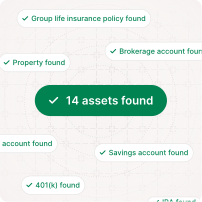
Elayne's Verified Asset Search surfaces real property and deeds, financial account records, unclaimed property, and life insurance through credentialed database queries and document analysis of tax returns and bank statements, which also helps clarify whether bank accounts go through probate in a given situation. Successor trustees and executors get a clear picture of what exists, how each asset is titled, and where it sits relative to the trust.
The shared dashboard lets co-executors, successor trustees, and attorneys work from the same verified record, which is especially important when assets span both trust and probate channels at once. Elayne also tracks key deadlines across both processes, helping reduce the risk of missed creditor notice windows or distribution deadlines.
FAQ
What happens when trust assets are not retitled before the grantor dies?
Assets left in an individual's name at death pass through probate as if the trust never existed. The trust document has no legal authority over anything not formally transferred into it. Each asset type follows its own retitling path: real estate requires a recorded deed, bank accounts require updated registration with the financial institution, and investment accounts require reregistration. Life insurance and retirement accounts are exceptions, passing instead through beneficiary designations.
Can a pour-over will fix untransferred trust assets without going through probate?
No. A pour-over will directs untransferred assets into the trust, but only after those assets move through court-supervised probate first. It determines the destination, not the route. The time and cost of probate still apply. For qualifying estates, small estate affidavits or summary administration procedures may offer a faster path depending on the state and asset type.
What is a Heggstad petition and when does it apply to unfunded trust assets?
A Heggstad petition is a California court procedure that lets a successor trustee ask a probate court to confirm an asset belongs to the trust even without formal retitling, based on written evidence of the grantor's intent. It draws from Probate Code Section 850 and can avoid full probate for the disputed asset, though it requires legal proceedings and is not guaranteed.
How do I find out which assets were actually transferred into a trust after someone dies?
The trust document itself does not answer this question. The title records do. Deeds show whether real estate was recorded into the trust's name; account registrations at financial institutions show how bank and investment accounts are held; beneficiary designation records show how retirement accounts and life insurance are directed. Tax returns and bank statements can surface additional accounts the family may not have known about, including interest-bearing accounts, retirement distributions, and dividend income sources tied to specific financial institutions.
What is the difference between a will and a revocable living trust?
A will is a legal document that takes effect at death and generally goes through probate, where a court oversees how the assets it covers are distributed. A revocable living trust is created during the grantor's life, can be changed or revoked by the grantor, and holds only the assets that have been transferred into it. After the grantor's death, the successor trustee manages and distributes the trust assets according to the trust terms, typically without court supervision.
What does funding a trust mean?
Funding a trust is the process of transferring ownership of assets into the trust. For real estate, bank accounts, and investment accounts, this is done by retitling the asset in the name of the trust. Life insurance and retirement accounts are not retitled. They are directed through a beneficiary designation, which may name the trust or an individual. Tangible personal property such as furniture or jewelry is often transferred through a written assignment.
Does a trust avoid probate if only some assets were retitled?
Only the assets titled in the trust's name pass under the trust. Assets still in the individual's name at death, with no beneficiary designation or joint owner, are part of the probate estate. An estate can therefore involve a trust administration for the retitled assets and a probate proceeding for the remaining ones. In some states, small estate procedures may apply to those remaining assets, depending on their value and type.
*Disclaimer: This article is for informational purposes only and does not provide legal, medical, financial, or tax advice. Please consult with a licensed professional to address your specific situation.










.svg)