.webp)

When someone dies, two separate roles often come into play: an executor and a trustee. Each one manages a different set of assets, draws authority from a different document, and operates on a different timeline. This article covers key topics for families and fiduciaries to be aware of, including: what each role does, how their authority differs, who can serve in each seat, what happens when both roles exist at once, how the executor and trustee relate to a beneficiary and a power of attorney, and more.
Key Takeaways
- An executor manages assets through probate court; a trustee manages assets held in a trust, often without any court involvement
- A power of attorney ends at death
- Executor and trustee authority each begins at death, over their respective asset pools
- The same person can legally serve as executor, trustee, and beneficiary, though overlapping roles require transparent, documented administration
- Neither role outranks the other; each holds authority over a different pool of assets for a different period of time
- Elayne organizes the administrative layer under both roles, tracking how each asset transfers across probate and trust inventories
What Is an Executor?
An executor is the person named in a will to carry out the deceased's final wishes. A probate court must officially confirm this appointment and issue Letters Testamentary, the court document granting legal authority to act on the estate's behalf. Until those letters are issued, the executor has no formal power to access accounts, pay debts, or transfer property.
Core responsibilities include:
- Locating and filing the will with the probate court
- Inventorying and valuing estate assets
- Notifying creditors and paying valid debts
- Filing the decedent's final tax return
- Distributing remaining assets to beneficiaries
The executor's authority is temporary and court-supervised, ending once assets are fully distributed.
{{blog-cta-financial}}
What Is a Trustee?
A trustee is the person or institution appointed to manage assets held inside a trust on behalf of those who benefit from it. A trustee's authority comes directly from the trust document itself, a key distinction in the will vs. trust comparison, which means a trustee can often act immediately, without waiting for court approval.
Three roles that define how a trust operates:
- The grantor (also called the settlor or trustor) creates the trust and transfers assets into it
- The trustee manages and administers those assets according to the trust's terms
- The beneficiary receives distributions from the trust
The trustee's core responsibilities include managing assets prudently, keeping accurate records, distributing funds per the trust document, and acting in the beneficiaries' best interests. That duty of loyalty is a fiduciary obligation, and breaching it can create personal liability. A trustee's role can last years or even decades, particularly when a trust is designed to benefit minor children or span multiple generations.
Key Differences Between an Executor and a Trustee
| Executor | Trustee | |
|---|---|---|
| Governing document | Will | Trust agreement |
| Court involvement | Probate-supervised | Generally private, no court required |
| Duration | Temporary, ends at distribution | Ongoing, potentially years or decades |
| Authority source | Letters Testamentary from court | Trust document itself |
| Accountability | Court oversight and reporting | Fiduciary duty to beneficiaries |
As the American Bar Association notes, both roles carry fiduciary obligations, but each answers to a different authority. The executor answers to the probate court. The trustee answers to the beneficiaries and the terms of the trust.
The timing distinction matters practically. An executor's role ends once debts are paid and assets distributed. A trustee managing a trust for a minor child may hold that position for 20 years.
What Does an Executor Actually Do?
Once Letters Testamentary are issued, the executor's work follows a practical sequence:
- Filing the will with probate court and opening the estate
- Inventorying and appraising all probate assets
- Notifying creditors, government agencies, and beneficiaries
- Paying valid debts, filing the final tax return, and handling any estate income taxes
- Distributing remaining assets per the will's terms
There are clear limits, too. An executor cannot alter the will's terms, act before the court grants authority, or favor one beneficiary over others. Understanding the full scope of executor of a will duties matters: self-dealing, misappropriating assets, or ignoring valid creditor claims all breach the fiduciary duty and can create personal liability.
What Does a Trustee Actually Do?
After the grantor dies or becomes incapacitated, the trustee takes on a defined set of ongoing obligations:
- Notifying beneficiaries of their rights under the trust
- Managing and investing trust assets prudently
- Making distributions according to the trust's terms
- Keeping accurate records and providing regular accountings
- Filing any required trust income tax returns
- Winding up the trust once its purpose is fulfilled
If the original trustee dies, resigns, or becomes incapacitated, a successor trustee can step in and assume full authority under the trust document, typically without any court involvement.
Executor vs. Trustee vs. Beneficiary
A beneficiary is the person or organization entitled to receive assets from a will or trust. Unlike executors and trustees, beneficiaries hold no administrative authority.
The three roles occupy distinct positions in the estate hierarchy:
- The executor administers the probate estate, pays debts, and distributes assets according to the will
- The trustee manages trust assets and distributes them per the trust document
- The beneficiary receives what remains after obligations are met
The same person can legally serve as executor, trustee, and beneficiary at once. Handling the executor and beneficiary dual role is common in family estate plans, where a surviving spouse or eldest child takes on all three roles. A fiduciary who stands to personally benefit from their own decisions faces an inherent conflict of interest, and courts are likely to scrutinize those decisions closely. Documented, transparent administration matters even more when roles overlap.
Trustee vs. Executor vs. Power of Attorney
A power of attorney operates in a completely different window than either an executor or trustee. Someone acting under a durable power of attorney has authority to manage finances, sign documents, and make decisions on behalf of a living person who is incapacitated or unavailable. The moment that person dies, power of attorney ends at death and cannot be used to access accounts, transfer property, or settle an estate.
The three roles cover three distinct phases:
- Power of attorney: while the person is alive and incapacitated
- Executor: after death, for assets passing through probate
- Trustee: after death (or during life), for assets held in trust
Does a Trust Have an Executor?
Trusts do not have executors. The trustee handles trust assets directly, drawing authority from the trust document instead of a court appointment. No probate filing, Letters Testamentary, or court oversight is required for assets held inside a properly funded trust.
When an estate includes both a will and a trust, each document has its own administrator. The executor manages assets passing through probate; the trustee manages assets held in the trust. The same person often holds both roles, but the roles remain legally distinct.
{{blog-cta-financial}}
How Elayne Supports Families Managing Both Roles
Managing both executor and trustee responsibilities at the same time is genuinely demanding, as anyone working through the full estate administration process knows. Elayne organizes the administrative layer underneath both roles, so families can focus on the legal and fiduciary decisions instead of the paperwork behind them.
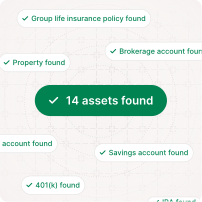
Elayne's Verified Asset Search™ surfaces accounts, property, insurance policies, and unclaimed assets across both probate and trust inventories. Inheritance and distribution mapping tracks how each asset transfers, whether through the will, the trust, or directly to a named beneficiary.
For dual-role fiduciaries serving as both executor and beneficiary, the shared dashboard creates an auditable record of every action taken, supporting transparent administration. Attorneys and co-executors can access the same record in real time. Elayne can take on what could otherwise be hundreds of hours of estate administration work per estate.
FAQ
Can the same person serve as executor, trustee, and also be a beneficiary?
Yes, and it is common in family estate plans. One person, often a spouse or adult child, can legally hold all three roles at once. When a fiduciary stands to personally benefit from decisions they control, courts are likely to scrutinize those decisions closely, so documented and transparent administration matters even more when roles overlap.
Trustee vs. executor of a will: which role has more power?
Neither outranks the other. Each holds authority over a separate pool of assets in a different legal context. The executor controls probate assets under court supervision for a limited period; the trustee controls assets held inside the trust, privately, sometimes for years or decades. For any given asset, authority belongs to whichever role governs the document that controls it.
Executor vs. trustee vs. power of attorney: which applies after a death?
A power of attorney ends at death and cannot settle an estate. Executor and trustee authority then applies to their respective asset pools as described above.
How does estate settlement work differently when a successor trustee steps in vs. when an executor handles everything through probate?
A successor trustee steps in without any court involvement, managing trust assets privately and often distributing them far faster than probate allows. An executor works through the probate court, which can take many months depending on the estate and state. Many estates need both roles filled. When a revocable living trust is fully funded, the successor trustee can handle distribution while the executor resolves any remaining probate assets in parallel.
*Disclaimer: This article is for informational purposes only and does not provide legal, medical, financial, or tax advice. Please consult with a licensed professional to address your specific situation.










.svg)