

A pour-over will is a type of last will that names a living trust as its beneficiary. When someone dies with assets left outside their trust, those assets pass through the pour-over will into the trust, but only after going through probate first. This guide explains key points about how pour-over wills work, including: what a pour-over will is, how it works alongside a living trust, whether it avoids probate, and more.
Key Takeaways
- A pour-over will names your trust as beneficiary, catching assets left outside the trust at death.
- Pour-over wills do not avoid probate; assets they govern go through the full court process first, which can take many months depending on estate complexity and state.
- If the trust didn't exist when the will was signed, the pour-over provision can fail and assets may pass under intestacy rules.
- After a death, executors and trustees managing both a pour-over will and a living trust often run those two processes in parallel; Elayne's shared dashboard lets authorized family members, co-executors, and advisors coordinate across both tracks in one place.
What a Pour-Over Will Is
A pour-over will is a type of last will and final declaration with one specific job: directing any assets owned at death that weren't already held inside a living trust to transfer into that trust. Instead of naming individuals to receive those assets outright, the will names the trust itself as the beneficiary.
Stray assets (accounts never retitled, property acquired after the trust was created, ...) get pulled into the trust and distributed according to its terms.
{{blog-cta-financial}}
How a Pour-Over Will Works With a Living Trust
A revocable living trust holds assets during your lifetime and controls how they distribute after death, without court involvement. The pour-over will sits alongside it, handling anything that didn't make it into the trust.
When someone dies, the executor takes responsibility for the will and steers any probate assets through court. The trustee manages what's already inside the trust. If the executor identifies property covered by the pour-over will, those assets move through probate first, then transfer into the trust, where the trustee distributes them according to its terms.
The two documents share one end goal: everything eventually lands in the trust, distributed the way the trust directs.
Pour-Over Will vs. a Standard Last Will
Both documents require signature and witnesses, and both go through probate for any assets they govern. The difference is what happens after probate closes.
A standard will names individuals directly. Each beneficiary receives their share according to the will's own terms.
A pour-over will names the trust as the beneficiary. Assets pass through probate, then transfer into the trust, where the trust's terms govern distribution. The will itself does not determine who gets what; the trust does.
| Pour-Over Will | Standard Last Will | |
|---|---|---|
| Legal formalities required | Signature and witnesses | Signature and witnesses |
| Goes through probate | Yes, assets must complete probate before reaching the trust | Yes, assets pass through probate before distribution |
| Who receives assets after probate | The living trust (named as beneficiary) | Named individuals directly |
| What controls distribution | The trust's terms | The will's own terms |
| Probate avoidance | No; only assets already in the trust bypass probate | No |
| Part of public record | Yes, during probate | Yes, during probate |
| Used alongside a living trust | Yes, designed to work with a trust | Not typically |
Does a Pour-Over Will Avoid Probate?
A pour-over will does not avoid probate. Assets that passes through it must go through the probate process first before transferring into the trust. Timelines vary by estate complexity and state. Assets already titled in the trust during life do bypass probate, a distinction covered in more depth when comparing probate vs. non-probate assets.
Pour-Over Wills and Irrevocable Trusts
Pour-over wills pair naturally with revocable living trusts, but a pour-over provision can reference an irrevocable trust in some circumstances. The core requirement is the same: the trust must generally exist at the time the will is executed.
The more consequential difference involves control. A revocable trust can be amended or dissolved during your lifetime. An irrevocable trust cannot, so the distribution terms are locked in at creation. Assets that pour into it at death will distribute exactly as the irrevocable trust directs.
Anyone pairing a pour-over will with an irrevocable trust should work closely with an estate attorney to confirm the arrangement is valid under their state's law and that the trust's fixed terms align with their distribution goals.
A Pour-Over Will in Action: An Example
When someone sets up a revocable living trust and retitles most of their assets into it, a pour-over will serves as a backstop for anything left out. If they later open a new brokerage account but never transfer it into the trust, that account stays in their individual name with no beneficiary designation.
At death, the executor identifies the account, opens probate, and moves it through the court process. Once probate closes, those funds transfer into the trust.
{{blog-cta-financial}}
How Elayne Supports Families Managing Trust and Estate Administration After a Death
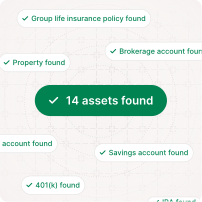
Elayne's Verified Asset Search helps families confirm they haven't overlooked anything, including assets that may need to move through a pour-over will before reaching the trust. Executors, trustees, attorneys, and family members can coordinate across parallel processes through Elayne's shared dashboard, with role-based access and a source-linked estate record. The dashboard also helps clarify the trustee vs. executor distinction for those managing both tracks.
FAQ
Does a pour-over will avoid probate?
A pour-over will does not avoid probate. Assets that pass through it must complete the full court process before transferring into the trust, which can take many months depending on estate complexity and state. Assets already titled in the trust during the decedent's lifetime bypass probate entirely.
What is a drawback of a pour-over will?
The main drawback is that assets caught by the pour-over will must go through probate before reaching the trust, potentially adding months of delay, court costs, and public disclosure of what the estate holds and who receives it. Also, if the trust was revoked, never properly executed, or didn't exist when the will was signed, the pour-over provision can fail entirely and those assets may pass under state intestacy rules instead.
Pour-over will vs last will: what's the actual difference?
Both documents require the same legal formalities and both send assets through probate. The difference is what happens after probate closes: a standard will distributes assets directly to named individuals under its own terms, while a pour-over will names the trust as the beneficiary and hands distribution control to the trust's terms instead of the will's.
Can a pour-over will be used with an irrevocable trust?
A pour-over will can reference an irrevocable trust, but the trust must generally exist at the time the will is signed, and its distribution terms are permanently locked. Assets that pour into an irrevocable trust at death distribute exactly as the trust directed at creation, with no ability to adjust later, so working closely with an estate attorney on that pairing is especially important.
What types of assets typically pass through a pour-over will?
Assets owned in the decedent's individual name at death, without a beneficiary designation or joint owner, can pass through a pour-over will. Common examples include bank accounts never retitled into the trust, personal property, real estate held solely in the decedent's name, and investment accounts opened after the trust was created. Assets with named beneficiaries, jointly held assets with right of survivorship, and assets already titled in the trust do not pass through the will.
What are the signing requirements for a pour-over will?
A pour-over will must meet the same formal signing requirements as any other last will under state law. Many states require the testator's signature and the signatures of at least two witnesses who are present at the time of signing. Some states also allow or require notarization.
What happens if the trust named in the pour-over will no longer exists at death?
If the trust named in the pour-over will was revoked, dissolved, or never properly executed, the pour-over provision can fail. In that situation, the assets caught by the will may pass under the state's intestacy laws rather than according to the decedent's wishes. The outcome depends on state law and on whether the will contains any backup distribution instructions.
How does trust funding affect what goes through a pour-over will?
Trust funding refers to the process of retitling assets into the trust's name during the trust owner's lifetime. The more completely the trust is funded before death, the fewer assets pass through the pour-over will and the smaller the probate estate. A fully funded trust means little or nothing needs to move through probate at death. A partially funded trust leaves the unfunded assets subject to probate before they can transfer to the trust.
Does California have specific rules about pour-over wills?
California recognizes pour-over wills under the Uniform Testamentary Additions to Trusts Act (UTATA), which California has adopted. A pour-over will in California is valid if the trust it references was in existence, or executed concurrently with the will. California also has a simplified probate process for smaller estates. If the total probate estate value falls below California's small estate threshold, those assets may qualify for a simplified transfer procedure rather than full formal probate, potentially reducing the time and cost of moving assets through the pour-over will into the trust.
*Disclaimer: This article is for informational purposes only and does not provide legal, medical, financial, or tax advice. Please consult with a licensed professional to address your specific situation.










.svg)