

When you start looking into how to set up a trust, the first questions are usually about cost and whether you truly need an attorney. Families may be planning ahead or revisiting their own plans while coping with a loss. What you actually need depends on what you are trying to protect and who you are protecting it for, whether that is a spouse, children, or other family members.
A simple trust with one property and clear beneficiaries can often work with online templates, while multiple properties, a business, or blended families call for more careful planning. This guide walks through both paths step by step so you can choose what fits your life and your loved ones.
Key Takeaways:
- You can create a simple trust without an attorney for a few hundred dollars, but properly transferring assets into the trust matters more than the document alone.
- Attorney‑prepared living trusts often fall between 1,500 and 4,000 dollars, with more complex irrevocable trusts starting in the low thousands and rising for advanced planning.
- The most common mistake is picking the wrong trustee, not the wrong trust type.
- Moving your house into a trust usually requires a new deed and lender review to avoid due‑on‑sale issues.
- Trust administration after death includes notifications, account transfers, and beneficiary distributions.
Understanding Trust Basics
A trust is a legal arrangement where you transfer ownership of assets to a trustee, who manages them for your chosen beneficiaries. It creates instructions that control when and how your assets are distributed.
People create trusts primarily to avoid probate, the court process that can take months and make estate details public. Trusts also let you set conditions like age milestones before beneficiaries receive their inheritance, which helps protect young children or family members who need guidance.
The two main types are revocable and irrevocable. A revocable living trust lets you maintain control and make changes at any time. An irrevocable trust cannot be modified once created in most situations, but can offer stronger protection from creditors and potential estate tax benefits.
Your choice depends on priorities: flexibility or protection.
Deciding Between Revocable and Irrevocable Trusts
Revocable trusts let you keep control. You can change beneficiaries, add or remove assets, or dissolve the trust at any time. Since you retain ownership, the assets remain in your taxable estate. Many people prefer this flexibility as circumstances change.
Irrevocable trusts require you to give up control once assets are transferred. In exchange, those assets usually leave your taxable estate and gain more protection from lawsuits and creditors.
Revocable trusts suit planning focused on flexibility and ongoing control. Irrevocable trusts may serve planning goals such as lowering a large taxable estate, protecting against creditors, or preparing for Medicaid eligibility as part of long‑term care planning.
How Much Does It Cost to Set Up a Trust?
The cost of setting up a trust varies widely based on complexity and whether you hire an attorney.
Attorney fees for a revocable living trust vary with the complexity of the plan. Multiple properties, businesses, or complex tax planning can increase the total cost.
Irrevocable trust costs rise with the complexity of the plan. The comparison below outlines approximate setup costs for both trust types.
| Method | Living Trust Cost (approx.) | Irrevocable Trust Cost (approx.) |
|---|---|---|
| DIY online service | 100 to 500 dollars | Not usually recommended |
| Attorney, simpler | 1,500 to 2,500 dollars | 2,000 to 5,000 dollars |
| Attorney, complex | 3,000 to 5,000 dollars or more | 7,000 to 10,000 dollars or more |
Several factors tend to push costs higher: multiple properties in different states, business ownership, complex tax planning, and blended family situations that need detailed instructions.
There are also ongoing costs to consider. Professionally managed irrevocable trusts can incur annual fees for administration, recordkeeping, and tax filings, depending on who serves as trustee and the level of service. In practice, the cost of a trust includes both its initial preparation and any ongoing professional administration.
Can You Set Up a Trust Without an Attorney?
Yes, you can create a trust without an attorney using online services or state‑specific templates. Whether you should depends on your situation.
DIY trust creation works best for simple estates: one property, clear beneficiaries, and a modest set of assets. Online services such as LegalZoom and Nolo offer state‑aligned templates. Free printable forms exist as well, but they may not reflect recent changes in state law.
The bigger risk is not drafting the document. It is funding the trust correctly. Many DIY trusts fail because assets never actually move into the trust name. Your bank accounts, house deed, and investment accounts must be retitled, or the trust controls nothing at your death.
State laws vary considerably. Florida, Texas, and California each have different rules for witnesses, notarization, and spousal rights. A template that is valid in one state might not work in another.
Attorney assistance is common for plans involving multiple properties, business ownership, potential estate tax, or a blended family. Even in simpler cases, funding includes confirming that assets intended for trust ownership have been transferred into the trust name.
{{blog-cta-legal}}
Important Steps to Set Up a Trust
Creating a trust requires a sequence of steps taken on purpose. The process starts with an inventory of assets intended for inclusion: real estate, bank accounts, investments, business interests, and personal property. Cryptocurrency and digital assets need specific planning.
The next steps involve naming beneficiaries and selecting a trustee to manage distributions. A successor trustee serves as a backup. The trust document specifies when and how beneficiaries receive assets, whether immediately or at certain ages or milestones.
An attorney or a vetted online service can provide a trust document that meets your state's legal requirements. Funding then involves retitling appropriate property and accounts, with beneficiary designations coordinated with the trust plan. The document alone does not transfer ownership of assets.
The Biggest Mistake When Setting Up a Trust
The biggest mistake isn't choosing the wrong trust type. It's choosing the wrong trustee.
Many families pick someone they love instead of someone ready for the work. A trustee needs sound financial judgment, fairness, and the ability to follow your instructions even when beneficiaries disagree. Your sibling or closest friend may be caring, but if they struggle with money decisions or cannot say no, your plan may not work as intended.
Specific distribution language helps clarify the trustee's responsibilities. Phrases like “for education” or “reasonable expenses” can create confusion and conflict later.
Another common error is creating a trust but failing to move assets into it. A trust review every few years and after major life changes helps keep the plan aligned with current wishes.
How to Set Up a Trust for Your House
Transferring your house into a trust requires preparing and recording a new deed from you to the trust. You'll file a deed, such as a quitclaim or warranty deed, with your county recorder's office, naming the trust as the new owner. The appropriate deed type depends on your state and situation.
For a mortgaged house, lender communication is part of reviewing the proposed transfer. Most loans contain due-on-sale clauses that allow lenders to demand full payment when ownership changes. The Garn-St. Germain Act protects qualifying transfers to living trusts. Written lender confirmation can help document how the transfer is treated.
Property taxes are worth checking, too. Many states generally exempt transfers to your own revocable trust from reassessment, but rules vary, so confirm with your county assessor. California's Proposition 13 protects these transfers. The deed must use your trust's exact legal name and date to avoid title defects that surface later.
How to Set Up a Trust for Cryptocurrency and Digital Assets
Cryptocurrency needs a different approach because it exists only as private keys. Without clear documentation, these assets can disappear when you pass away.
An inventory lists each exchange account and wallet, noting whether it is a hot or cold wallet. Private keys, recovery phrases, and backup codes for two‑factor authentication are recorded securely. The trustee needs clear instructions about where this information is stored and how to access it.
Private keys are kept outside the trust document itself, as some court records may become public. The document can reference a separate letter of instruction or secure storage method accessible to the trustee. Some families use encrypted storage or divide information between trusted people.
Ongoing Trust Maintenance and Updates
Trusts need regular reviews to stay aligned with changing circumstances and wishes. Reviews commonly follow births, deaths, marriages, divorces, or major asset changes. Periodic reviews may take place roughly every three to five years.
Revocable trusts can be easily updated through amendments. Irrevocable trusts are harder to change, though some states allow court modifications or changes with beneficiary consent.
Annual costs for professionally managed trusts vary with the assets and services involved.
| Annual fee estimate | Share of trust assets |
|---|---|
| Typical fee | Approximately 1% of assets |
| Fee range | Roughly 0.5% to 2% |
Larger trusts often pay lower percentage fees. These costs cover tax filings, record keeping, and trustee management.
A trust that doesn't reflect your current family or assets can create confusion later.
How Elayne Simplifies Trust Administration After Death
After you set up a trust, someone will eventually need to administer it. That job can involve months of forms, calls, and coordination at a time when families are already stretched.
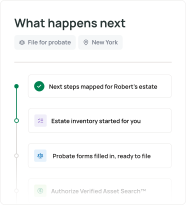
Elayne lightens that load by turning trust administration into a clear process and handling many of the detailed tasks in the background. Elayne helps identify trust assets, prepare and send required notices, coordinate account transfers, track beneficiary distributions, and organize documents for tax reporting. Families see what needs to happen and when instead of piecing it together on their own.
The families we work with often say that having a guide lets them spend more time on each other and less time on paperwork and deadlines during an already hard season.
Final Thoughts on Trust Planning
The time you spend setting up your trust and funding it properly makes all the difference for your family later. Trustee selection involves both financial judgment and the ability to carry out the trust's instructions. Whether you choose revocable or irrevocable, DIY or attorney-drafted, what matters most is creating clear instructions and keeping them up to date.
Your planning today becomes your family's roadmap tomorrow. Elayne can help your family settle your trust with less stress and clearer direction.
{{blog-cta-legal}}
FAQs
Can you set up a trust without a lawyer?
Yes, you can create a simple revocable living trust for roughly $100-$500 using online services or state-specific templates. Funding involves transferring appropriate assets into the trust, with beneficiary designations coordinated with the trust plan. The document alone does not transfer ownership.
What's the difference between a revocable and an irrevocable trust?
A revocable trust lets you maintain control and make changes at any time, keeping assets in your taxable estate. An irrevocable trust requires you to permanently give up control, but offers stronger asset protection from creditors and potential estate tax benefits.
How much does it cost to maintain a trust after you create it?
Revocable trusts have minimal ongoing costs until you pass away. Irrevocable trusts typically require annual maintenance fees ranging from 0.5% to 2% of total assets for tax filings, record keeping, and distributions.
What happens if you don't transfer assets into your trust?
The trust controls nothing if assets aren't properly retitled in the trust's name. Your bank accounts, house deed, and investments must all be transferred into the trust, or they'll still go through probate when you pass away.
How do you transfer a house with a mortgage into a trust?
The transfer involves recording a new deed with the county recorder's office. Lender communication before recording can help clarify how the loan's due-on-sale clause applies. The Garn-St. Germain Act protects qualifying transfers to living trusts.
This content is for informational purposes only and does not constitute legal, financial, medical, or tax advice. Laws and regulations vary by state and individual circumstances differ. Consult a licensed attorney, financial advisor, or other qualified professional for guidance specific to your situation.







.svg)