

A letter of administration is a court-issued document that gives someone legal authority to manage a deceased person's estate. You typically need one when there is no will, or when the named executor cannot serve. Without it, banks won't release funds, property can't be transferred, and the estate process can't move forward. This guide covers what a letter of administration is, who can get one, what documents you need, how long it takes, what it costs, and what happens after it's issued.
Key Takeaways:
- A letter of administration is a court-issued document giving someone legal authority to manage an estate when no valid will exists.
- Banks, title companies, and government agencies require this document before releasing funds or transferring property.
- Courts follow a priority order for who can serve: surviving spouse first, then adult children, then other close relatives.
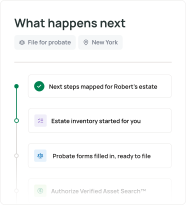
- Elayne handles the administrative work after letters are issued, including searching for accounts, notifying institutions, and coordinating survivor benefits.
What a Letter of Administration Is
A letter of administration is a court-issued document that grants a named individual the legal authority to manage and distribute a deceased person's estate. Courts issue one when someone dies without a valid will, or when a will exists but the named executor cannot or will not serve.
The document functions as the estate's legal credential. Without it, banks will not release funds, property cannot be sold or transferred, and outstanding debts remain unresolved. Financial institutions and government agencies require proof of that authority before they will act, and a letter of administration is that proof.
{{blog-cta-legal}}
Letters of Administration vs. Letters Testamentary
Both documents serve as legal proof that someone has authority to act on behalf of an estate, but they apply to different circumstances depending on whether the person who died left a valid will.
Letters testamentary are issued when there is a will. The court appoints the executor named in that will and issues letters testamentary confirming their authority to manage and distribute the estate according to the will's instructions.
Letters of administration are issued when there is no will, or when the named executor is unable or unwilling to serve. In that case, the court appoints an administrator, typically a close family member, and issues letters of administration granting them similar authority.
How They Compare
The core difference comes down to whether the deceased left a will and who the court appoints to carry out the estate's administration.
| Feature | Letters Testamentary | Letters of Administration |
|---|---|---|
| Issued when | A valid will exists | No will, or executor cannot serve |
| Who receives them | The executor named in the will | A court-appointed administrator |
| How the role is filled | Named in the will | Determined by state intestacy priority |
| Distribution follows | The will's instructions | State intestacy laws |
| Common in | Testate estates | Intestate estates |
In practice, both documents carry the same functional weight. Banks, financial institutions, and government agencies treat them as equivalent proof of authority. The distinction matters most at the start of probate, when the court determines which document to issue and who receives it.
When You Need a Letter of Administration
A letter of administration is typically required when someone dies without a will and leaves behind assets that cannot be transferred without court authorization. Banks, financial institutions, real estate offices, and government agencies generally will not release funds or transfer property to a family member without legal proof that the person acting on behalf of the estate has been formally appointed.
Common Situations That Require One
Several circumstances call for a letter of administration:
- The person who died owned a bank account, investment account, or retirement asset solely in their name, and the institution requires court-issued authority before releasing funds to anyone.
- Real property needs to be sold or transferred, and the title company or county recorder requires documentation of legal authority over the estate.
- A vehicle, business interest, or other titled asset must be retitled, and the relevant agency will not process the transfer without administrator credentials.
- The estate is owed money through a lawsuit, unpaid wages, or tax refund, and the payor requires a representative to be formally named before releasing payment.
The letter is not always required. Estates that pass entirely through joint ownership, designated beneficiaries, or trusts generally do not need one, since those assets transfer outside of the probate process. Small estates may also qualify for simplified procedures in many states, which allow families to collect assets through an affidavit instead.
Who Is Entitled to Letters of Administration
States follow a statutory priority order when deciding who may petition the court to serve as administrator. Most jurisdictions apply the same general sequence:
- Surviving spouse, who holds the highest priority in nearly every state
- Adult children of the person who died
- Parents, siblings, or other next of kin
- Creditors, or a court-appointed public administrator if no qualified family member steps forward
To be eligible, a petitioner must generally be at least 18 years old and legally competent. Courts can deny appointment based on a disqualifying conflict of interest, a prior felony conviction, or other factors that vary by state.
What Documents You Need for a Letter of Administration
Most courts require the same core set of documents when filing a petition for letters of administration.
- A certified death certificate, with multiple copies ordered since banks, brokers, and other institutions each typically require their own original.
- A completed petition for letters of administration, filed in the county where the person who died resided at the time of death.
- A list of known heirs, including full legal names and current contact information, so the court can confirm proper notice was given.
- A preliminary inventory or estimate of estate assets and liabilities, which helps the court assess the scope of the estate.
State-Specific Requirements
Some states ask for additional items. Georgia and Texas, for example, may require proof of heirship or witness affidavits. California courts often require a Spousal or Domestic Partner Property Petition when a surviving spouse is involved. Florida may require a filing fee receipt and a proposed order form alongside the petition.
Checking with the probate court in the county where the person died helps confirm what that jurisdiction requires before filing.
How to Get Letters of Administration
The process starts at the probate court in the county where the person died. Most courts require a petition for letters of administration, a certified death certificate, a filing fee, and proof that no valid will exists.
Who Can Apply
Courts follow a priority order when deciding who can serve as administrator. Surviving spouses typically come first, followed by adult children, then other close relatives. If no family member steps forward, a creditor or court-appointed administrator may qualify.
What to Expect After Filing
Once the petition is filed, the court schedules a hearing. If no one contests the appointment, the judge issues letters of administration, which are the official documents that give the administrator legal authority to act on behalf of the estate. From there, the administrator can open an estate bank account, notify creditors, and begin distributing assets.
{{blog-cta-legal}}
How Long It Takes to Get Letters of Administration
Timelines vary by state, estate size, and whether the appointment goes uncontested. In straightforward cases, letters of administration can be issued within a few weeks of filing. Delays can occur when paperwork is incomplete, when family members dispute who should serve as administrator, or when heirs are difficult to locate. A contested appointment can stretch how long probate takes to several months or longer.
What Happens After Letters of Administration Are Issued
Once letters of administration are issued, the administrator takes on a fiduciary role with legal obligations to the estate and every heir. The work that follows runs in a set sequence:
- Open an estate bank account to hold funds separately from personal finances.
- Notify financial institutions and government agencies of the administrator's formal appointment.
- Inventory and appraise all estate assets to confirm their date-of-death value.
- Publish a notice to creditors, giving them the statutory window to submit claims.
- Pay valid debts and any taxes owed from estate funds before distributing anything.
- Distribute remaining assets to heirs according to state intestate succession laws.
An administrator who distributes assets before settling debts, or who overlooks a legitimate creditor claim, can be held personally liable for the resulting shortfall.
When Letters of Administration May Not Be Required
Not every estate requires a formal letter of administration. Some assets pass outside of probate entirely, which means no court appointment is needed to transfer them.
Assets that typically bypass this requirement include:
- Accounts with named beneficiaries, such as life insurance policies, IRAs, and 401(k)s, pay directly to the named individual without any court involvement.
- Jointly held property with right of survivorship transfers automatically to the surviving co-owner upon death.
- Assets held in a living trust pass according to the trust's terms and are managed by the successor trustee, not a court-appointed administrator.
- Small estates may qualify for simplified procedures, such as an affidavit process, depending on the state's threshold for what counts as a small estate.
Whether a letter of administration is needed depends on what the deceased owned, how those assets were titled, and which state's laws apply.
What Happens When Letters of Administration Expire or Are Revoked
Letters of administration don't always stay valid indefinitely. Many financial institutions will only honor letters issued within the last 60 days, so an administrator working through a lengthy estate may need to request updated certified copies from the court before certain institutions will act on them. Courts issue these updated copies routinely, but it adds time and a small cost to the process.
Courts can also revoke letters outright. Common grounds include failing to fulfill fiduciary duties, failing to post a required bond, or a conflict of interest that surfaces after appointment. When revocation occurs, a replacement administrator must be appointed through the same letter of administration petition process.
How Elayne Supports Families After Letters of Administration Are Issued
Once letters of administration are issued, families must manage tasks such as: notifying financial institutions, closing accounts, transferring property, filing taxes, and distributing assets to heirs. Elayne helps families manage each of those items. After letters are issued, Elayne searches for accounts and assets, notifies financial institutions, and coordinates survivor benefits. For more about Elayne's services, additional information can be found here.
FAQ
What is a letter of administration for an estate, and how is it different from letters testamentary?
A letter of administration is a court-issued document that grants a named individual legal authority to manage and distribute a deceased person's estate when no valid will exists. Letters testamentary serve the same function but apply when a valid will names an executor. In that case, the court appoints that person and issues letters testamentary confirming their authority to act according to the will's instructions.
Can you get a letter of administration without probate?
Generally no. Letters of administration are issued through the probate court, and opening a probate case is part of the process in most states. The exception is when assets pass outside of probate entirely, such as through named beneficiaries, joint ownership, or a living trust, in which case no administrator is appointed and no letter of administration is needed.
What documents do I need for a letter of administration after someone dies?
Most courts require a certified death certificate, a completed petition for letters of administration filed in the county where the person died, a list of known heirs with current contact information, and a preliminary inventory of estate assets and liabilities. Some states ask for additional items: Georgia and Texas may require proof of heirship or witness affidavits, California courts often require a Spousal or Domestic Partner Property Petition, and Florida may require a filing fee receipt and a proposed order form alongside the petition.
What happens after letters of administration are issued when someone dies without a will?
Once letters of administration are issued, the administrator opens an estate bank account, notifies financial institutions and government agencies of their formal appointment, inventories and appraises all estate assets, publishes a notice to creditors, pays valid debts and taxes from estate funds, and distributes remaining assets to heirs according to state intestate succession laws. An administrator who distributes assets before settling debts can be held personally liable for any resulting shortfall.
*Disclaimer: This article is for informational purposes only and does not provide legal, medical, financial, or tax advice. Please consult with a licensed professional to address your specific situation.










.svg)