
When someone dies without a will, a letter of administration is the court document that gives you legal authority to manage their estate. Receiving this document is one of the first steps toward accessing accounts, transferring property, and settling any debts that may be owed. The process varies by state, but the core requirements are consistent across most courts. In this guide, we'll cover key aspects of letters of administration, including who can apply, what documents are needed, how long the process takes, costs, and what happens after someone is appointed.
Key Takeaways:
- A letter of administration is a court document granting legal authority to manage an estate when someone dies without a will
- You'll need a death certificate, petition, and heir contact information; costs run $100 to $400 in filing fees plus publication and bond expenses
- Courts typically issue letters in 2 to 4 weeks for simple estates, though backlogs and contested appointments can extend timelines to months
- Letters can be used to inventory assets, notify creditors, pay debts and taxes, and distribute property according to state intestacy laws
- Letters can be revoked if a will is later found, fiduciary duties are breached, or fraud occurs
What Is a Letter of Administration?
A letter of administration is a court-issued document that gives a named individual, called the administrator, the legal authority to manage a deceased person's estate. Probate courts issue these when someone dies without a valid will, since there is no executor already named to take on that role.
Without one, banks won't release account funds, property cannot be sold or transferred, and creditors have no one to formally communicate with.
When Do You Need Letters of Administration?
Letters of administration become necessary in a few specific situations. The most common is intestacy: when someone dies without a valid will. They can also be required when a will names an executor who has since died, declined the role, or cannot legally serve, and when a court rules a will invalid after someone contests it.
{{blog-cta-legal}}
Letters of Administration vs. Letters Testamentary
Both documents serve as proof of legal authority to act on behalf of an estate, but they come from different circumstances.
Letters testamentary are issued when someone dies with a valid will. The probate court appoints the executor named in that will and issues letters testamentary as confirmation of their authority.
Letters of administration are issued when someone dies without a will, or when the named executor is unable or unwilling to serve. The court appoints an administrator instead.
How They Compare
| Feature | Letters Testamentary | Letters of Administration |
|---|---|---|
| Issued when | Decedent had a valid will | No will, or executor unavailable |
| Who receives them | Named executor | Court-appointed administrator |
| Authority granted | Manage and distribute the estate | Same scope of authority |
| Probate required | Yes | Yes, in most cases |
| State-specific process | Yes | Yes |
The practical authority granted by both documents is largely the same. Holders can access financial accounts, transfer property, pay debts, and distribute assets to beneficiaries. Banks, title companies, and government agencies generally treat both documents as equivalent proof of authority.
Who Can Apply for Letters of Administration?
Most states follow a priority order set by state law when deciding who may apply. Courts generally work down the list until someone steps forward or is appointed.
Here is how that priority typically ranks:
- Surviving spouses are first in line in most states, as they typically have the largest legal and financial interest in the estate.
- Adult children come next when there is no surviving spouse, or when the spouse declines to serve.
- Other close relatives, such as parents, siblings, or more distant family members, are considered if no spouse or children are available or willing.
- Creditors of the estate may petition in some states if no family member comes forward within a set window of time.
Priority rules vary by state. Some states allow courts to skip or override a higher-priority applicant if that person is deemed unfit, unwilling, or unreachable.
What Happens When Multiple People Have Equal Priority?
When two or more people share the same priority level, such as adult siblings, the court may appoint one of them jointly, allow them to agree among themselves, or hold a hearing to decide. Courts prefer cooperative arrangements, but contested appointments do happen, particularly in larger or more complicated estates.
How to Get Letters of Administration (Step by Step)
The process follows a consistent sequence across most states, though timelines and local forms vary by county.

- Gather your documents: a certified death certificate, proof of your relationship to the person who died (marriage certificate, birth certificate, or similar), and a preliminary list of known assets and debts.
- File a petition with the probate court in the county where the deceased last lived. The petition identifies known heirs and formally requests your appointment as administrator.
- Notify heirs and creditors. Most states require formal notice by mail or publication within a set window after filing.
- Attend the court hearing. A judge reviews the petition and issues an appointment order if approved.
- Receive the letters. The court clerk issues certified copies, which you present to banks, title companies, and government agencies to act on the estate's behalf.
What Documents Do You Need for Letters of Administration?
Most probate courts ask for a core set of documents regardless of which state you're filing in:
- A certified copy of the death certificate, which the court uses to confirm the death and the date it occurred.
- A completed petition for letters of administration, which is the formal application filed with the probate court in the county where the person died.
- Proof of your identity, such as a government-issued photo ID.
- The names and contact information for all known heirs, since the court will notify them as part of the proceeding.
- The original will, if one exists, even if you believe it to be invalid or incomplete.
State-Specific Requirements
Some states ask for additional materials depending on the estate's size or the nature of its assets:
- An inventory or estimated value of the estate's assets, which helps the court determine whether full probate is required.
- A filing fee, which varies by state and sometimes by estate size.
- A bond, in some jurisdictions, to protect beneficiaries if the administrator mismanages the estate.
In states like California and Texas, the petition itself has specific statutory forms that must be used.
How Long Does It Take to Get Letters of Administration?
Timelines vary by state, court volume, and estate complexity. In straightforward cases where the deceased left no will and the estate is modest, some courts issue letters of administration within two to four weeks of filing. More contested situations or larger estates can stretch the process to several months.
A few factors consistently affect how long the process runs:
- Court backlogs in busy counties can add weeks or months to an otherwise simple filing.
- Contested petitions, where multiple family members claim priority for appointment, require hearings and can extend timelines considerably.
- Missing documents, such as a death certificate that hasn't been certified yet or proof of residency, pause the process until the court receives the required paperwork.
- Publication requirements in many states require a waiting period after notifying potential creditors before letters can be issued.
{{blog-cta-legal}}
How Much Do Letters of Administration Cost?
Court filing fees generally run $100 to $400, varying by state and sometimes by estate size. Publication costs for creditor notices add $50 to $300 depending on the newspaper and required run length. Certified copies of the letters cost $5 to $25 each, and most banks and title companies ask for their own copy.
Bond premiums, when required, are typically 0.5% to 1% of the estate's value annually. Attorney fees depend heavily on the state: California sets statutory probate fees as a percentage of the gross estate value, while most other states use hourly rates.
What Does an Administrator Do After Receiving Letters?
- Notify creditors and beneficiaries that the estate is open, giving them the opportunity to submit claims or raise concerns within the legally required window.
- Inventory and appraise estate assets, including bank accounts, real property, personal property, and any investments or business interests.
- Pay valid debts, taxes, and expenses of administration before any distributions are made to heirs.
- File the estate's final income tax return and, if necessary, an estate tax return.
- Distribute remaining assets to heirs according to the state's intestacy laws.
- File a final accounting with the probate court documenting all receipts, payments, and distributions.
The timeline for completing these steps varies by estate size and state law, but most administrations run anywhere from several months to over a year. Larger or more complex estates often take longer to settle.
Can Letters of Administration Be Revoked?
Letters of administration can be revoked. Examples of when this may occur:
- Discovery of a valid will after appointment, which transfers authority to a named executor instead of the court-appointed administrator
- A higher-priority heir petitioning the court for their own appointment
- Failure to meet fiduciary duties, such as missing inventory deadlines or neglecting creditor notification
- Evidence of fraud, self-dealing, or mismanagement of estate assets
- Administrator incapacity or a conflict of interest that compromises impartial administration
Revocation requires a court petition and a hearing. If misconduct is proven, the former administrator can face personal liability for losses caused to the estate.
Estate Settlement When You Have Letters of Administration
Once a court grants the letters, the administrator takes on legal responsibility for gathering assets, paying debts, and distributing what remains to the people entitled to inherit.
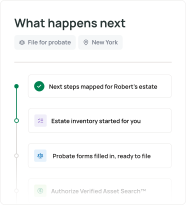
Most estates move through a few consistent stages after letters are issued:
What Administrators Typically Handle
- Notifying financial institutions, government agencies, and creditors that the estate is open and that you are the authorized representative
- Collecting and inventorying assets, including bank accounts, real property, vehicles, and any investments
- Paying valid debts and final expenses, including any taxes owed by the estate
- Distributing remaining assets to heirs according to the intestate succession laws of the state
- Filing a final accounting with the probate court before the estate can be formally closed
The timeline for completing these steps varies. Simple estates can close in a few months, while larger or more complex estates often take a year or longer.
Final Thoughts: How Elayne Helps After Letters of Administration
Once letters of administration are in hand, the steps ahead are clear but substantial. Elayne supports families through each stage of what comes next. Elayne handles creditor notification and Notice to Creditors filings, tracks deadlines, and organizes the estate inventory so administrators have a clear record of what exists and what still needs attention. In addition, our platform helps surface financial accounts, insurance policies, and unclaimed property. Also, when it's time to distribute assets, Elayne makes it easier to identify who inherits and how each asset transfers under the state's intestacy laws.
FAQs
What documents do I need for a letter of administration?
You'll need a certified death certificate, proof of your relationship to the deceased (marriage or birth certificate), your government-issued photo ID, and the names and contact information for all known heirs. Most courts also require a completed petition form and a filing fee that varies by state, and some jurisdictions ask for an inventory of estate assets or require a bond to protect beneficiaries.
Can you get a letter of administration without probate?
No. Letters of administration are issued through the probate process and serve as the court's appointment of an administrator to manage the estate. Small estates below your state's simplified-procedure threshold, assets held in trust, accounts with named beneficiaries, and jointly owned property can transfer without probate and don't require letters of administration.
What is a letter of administration vs letters testamentary?
Letters of administration are issued when someone dies without a will or when the named executor cannot serve, appointing a court-selected administrator. Letters testamentary are issued when a valid will exists, confirming the named executor's authority. Both documents grant the same practical authority to manage and distribute the estate, and banks and government agencies treat them as equivalent proof of legal authority.
What happens after a letter of administration is issued?
After receiving letters of administration, you notify creditors and beneficiaries that the estate is open, inventory and appraise all estate assets, pay valid debts and taxes, and distribute remaining assets to heirs according to your state's intestacy laws. You'll file a final accounting with the probate court before the estate can close, with most administrations taking several months to over a year to complete.
How long does it take to get letters of administration?
In straightforward cases, courts may issue letters within two to four weeks of filing. Court backlogs in busy counties, contested petitions where multiple family members claim priority, missing documents, and mandatory creditor notification waiting periods can extend the process significantly.
*Disclaimer: This article is for informational purposes only and does not provide legal, medical, financial, or tax advice. Please consult with a licensed professional to address your specific situation.









.svg)