.png)

The financial picture after a loss is rarely complete, which is why learning how to locate hidden accounts matters more than most families expect. Accounts opened decades ago still generate 1099 forms the IRS has on file. States hold unclaimed property that never appeared in personal records.
When a family begins settling an estate without a full picture of the finances, the process stalls quickly. Executors cannot distribute assets they do not know exist. Creditors may go unpaid because accounts were never identified. Beneficiaries may receive far less than what was intended, simply because no one knew where to look.
Insurance policies bought through an employer sit in a database waiting for someone to search by Social Security number. Retirement accounts from former jobs can sit untouched for decades. Each source requires different paperwork, but the structure for finding them is consistent once you know where to begin.
Key Takeaways:
- States hold over $70 billion in unclaimed property, with 1 in 7 Americans having funds waiting
- Tax returns reveal hidden accounts through 1099 forms listing interest, dividends, and retirement income
- Search state databases at MissingMoney.com and contact former employers about lost retirement accounts
- You need certified death certificates and court-issued letters before banks will release information
- Elayne locates unclaimed assets and automates follow-up steps so families can focus on healing
Why Locating Hidden Accounts After Death Matters
When someone passes away, the financial picture they leave behind is rarely complete. Accounts get opened and forgotten. Policies go unfiled. Retirement funds sit dormant for years.
None of this reflects carelessness or secrecy. It is simply how a financial life accumulates over decades.
The numbers tell the story. States currently hold more than $70 billion in unclaimed property, with roughly one in seven Americans, about 33 million people, having funds waiting to be claimed. For families settling an estate, locating those accounts is less about suspicion and more about making sure nothing is left behind.
{{blog-cta-financial}}
Starting Your Search: Key Documents You Need First
Before contacting any financial institution, families need two specific documents in hand. Without them, banks and agencies will decline to share information or release funds.
- A certified death certificate. Order multiple copies upfront, since each institution typically requires an original. Most estates need five to ten.
- Letters testamentary or letters of administration, issued by the probate court. These grant the executor legal authority to act for the estate.
No bank will open its records without both. Getting these in order first prevents wasted calls and repeat trips later.
| Resource or Search Method | What It Locates | Documents Required | Typical Timeframe | Cost |
|---|---|---|---|---|
| State Unclaimed Property Databases (MissingMoney.com) | Forgotten bank accounts, uncashed checks, insurance payouts, utility deposits, and dormant financial accounts | Death certificate and proof of authority to claim on behalf of the estate | Immediate search results; claims processed in 30 to 90 days | Free |
| IRS Tax Transcript Request | 1099 forms showing interest, dividends, and retirement distributions from accounts that may not appear elsewhere | Death certificate, executor authority | 5 to 10 business days for online requests; up to 75 days for mailed requests | Free |
| NAIC Life Insurance Policy Locator | Lost or unknown life insurance policies from participating insurers nationwide | Death certificate, requester information, and deceased's Social Security number | 90 business days for participating insurers to respond | Free |
| National Registry of Unclaimed Retirement Benefits | Lost 401(k) accounts, pensions, and other employer-sponsored retirement plans | Deceased's Social Security number for initial search; death certificate and letters for claims | Immediate search results; claim processing varies by plan administrator | Free to search |
| Direct Contact with Financial Institutions | All account types including checking, savings, brokerage accounts, loans, and safe deposit boxes | Certified death certificate, letters testamentary or letters of administration, government-issued photo ID | Immediate confirmation; full account details within 1 to 2 weeks | Free |
| Former Employer HR Departments | Group life insurance, unpaid wages, accrued vacation pay, retirement accounts, and pension benefits | Death certificate and proof of executor authority | 2 to 4 weeks depending on employer responsiveness | Free |
Where to Look: Common Hiding Places for Financial Records
Records scatter across decades of life, and knowing where to look is the only way to piece things together.
Physical spots worth checking first:
- Filing cabinets, desk drawers, and home safes often hold account statements, insurance policies, and old passbooks that can point to accounts opened years ago.
- Unopened or recent mail from banks, brokerages, or insurers can signal active accounts that haven't yet surfaced.
- Safe deposit boxes at local banks frequently contain original documents, certificates, or valuables not listed anywhere else.
- Old tax return copies are especially useful, as they often list interest and dividend sources.
For digital records, the search moves online:
- Email inboxes searched by terms like "statement," "account," or "policy" can surface years of financial correspondence quickly.
- Cloud storage folders such as Google Drive, Dropbox, or iCloud may hold scanned documents or downloaded account statements.
- Saved browser passwords and password manager apps can reveal accounts the person used regularly but never documented elsewhere.
Using Tax Returns To Uncover Hidden Accounts
Tax returns go deeper than most people expect. Every interest-bearing account generates a 1099-INT filed with the IRS. Dividends from a brokerage show up on a 1099-DIV. Retirement distributions appear on a 1099-R. Each form names the paying institution and sometimes includes a partial account number, giving families a concrete list of where to follow up.
Schedule B is worth pulling first. It lists every interest and dividend source by name, year by year. A credit union account that stopped sending paper statements years ago will still appear here as long as it earned income.
Searching State Unclaimed Property Databases
Every U.S. state holds unclaimed property: forgotten bank accounts, uncashed checks, insurance payouts, and utility deposits. Searching these databases is one of the most reliable ways to locate accounts that may have been overlooked.
The best starting point is MissingMoney.com, which searches multiple states at once. From there, searching the deceased person's state of residence directly through that state's official unclaimed property website can turn up additional results not captured in the aggregate search.
What to Search For
When running a search, try variations of the deceased's name, including maiden names, nicknames, and any former locations across different states where they lived or worked.
Finding Lost Life Insurance Policies
Life insurance is commonly overlooked in an estate. Policies from decades ago, often purchased through an employer or independent agent, can sit unclaimed simply because no one knew they existed.
The NAIC (National Association of Insurance Commissioners) runs a free Life Insurance Policy Locator. Submit a request, and participating insurers check their records against the deceased's name and Social Security number. Results typically arrive within 90 business days.
Former employers are worth contacting directly as well. Group life insurance coverage often never makes it into personal files, and HR or benefits departments can confirm whether a policy was active at the time of death.
Contacting Financial Institutions Directly
Once a financial institution is identified as a likely account holder, contacting them directly is one of the most reliable ways to confirm what exists. Most banks, credit unions, and brokerage firms have dedicated estate departments that handle exactly these requests.
To move forward, executors and administrators typically need:
- A certified copy of the death certificate, as institutions will not release any account information without it
- Letters testamentary or letters of administration, which prove legal authority to act on behalf of the estate
- A government-issued photo ID for the person making the request
Some institutions require a written request submitted by mail instead of accepting walk-in or phone inquiries for estate matters. Calling ahead to ask about their specific process can save time.
What to Ask When You Call
When reaching the estate department, ask whether the deceased held any accounts, safe deposit boxes, or outstanding loans. Asking about all account types at once, instead of one at a time, helps avoid missing anything. Some institutions will only confirm or deny account existence before providing further details pending documentation.
Checking for Employer Benefits and Retirement Accounts
Employer benefits exist outside personal financial records, which is why they often go unnoticed. Former employers may still hold unclaimed 401(k) accounts, owe pension payments, or carry group life insurance that was never documented at home.
Contact HR departments at every employer the deceased worked for, including former ones. Ask about retirement accounts, pensions, and unpaid benefits. For lost retirement accounts, the National Registry of Unclaimed Retirement Benefits allows searches by Social Security number.
{{blog-cta-financial}}
Digital Assets and Online Accounts
When paper statements stopped arriving by mail, a key signal for finding accounts disappeared with them. Financial life has shifted online, and many accounts now exist without any physical footprint at all.
Cryptocurrency wallets and online-only investment accounts hold real value without paper trails. Digital payment services may carry stored balances the estate is entitled to. These often require account credentials or direct outreach to the service's estate team to access.
Subscription services billing to a credit card are worth reviewing too. Recurring charges can point to accounts holding value that would otherwise go unnoticed.
What to Do When You Cannot Find Everything
Not finding everything is more common than most families expect. Financial lives span decades and institutions. Gaps are not a failure.
When a search stalls, a probate attorney can subpoena financial records that institutions won't release voluntarily. For complex estates, a forensic accountant can reconstruct a financial history using tax filings and bank records alone.
Executors carry a fiduciary duty to make reasonable efforts to locate assets, not to guarantee a complete recovery. Documenting each search step satisfies that obligation and protects the executor if questions arise later.
How Elayne Helps Families Find and Manage Hidden Accounts
Tracking down hidden accounts is only half the work. Once found, each account opens a new set of steps: notifying institutions, filing paperwork, transferring assets, or closing accounts properly. That follow-through is where most families lose momentum.
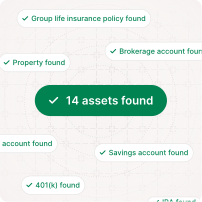
Elayne handles both sides. Its asset and benefit discovery feature searches databases and analyzes documents to locate unclaimed property, lost policies, and retirement accounts families may not have known existed. From there, Elayne's automated checklist manages every follow-on step, so nothing stalls while families are still grieving.
The goal is not to make the estate whole. It is to give families confidence they have not overlooked anything.
Final Thoughts on Uncovering Accounts Left Behind
When you are trying to locate hidden accounts after someone dies, remember that gaps are common and do not reflect carelessness on anyone's part. Financial lives accumulate over decades, and not every piece surfaces easily. The effort you put in now, even if it does not turn up everything, shows you took the responsibility seriously. Elayne helps families search for overlooked accounts and manage what comes next so nothing stalls while you are still grieving.
{{blog-cta-financial}}
FAQ
Can families find hidden accounts without a lawyer?
Yes. Families can search state unclaimed property databases, request IRS tax transcripts, use the NAIC Life Insurance Policy Locator, and contact financial institutions directly using a death certificate and letters testamentary. A probate attorney becomes helpful when institutions won't release records voluntarily or when the estate is especially complex.
What's the fastest way to locate unclaimed property after someone dies?
Start with MissingMoney.com to search multiple states at once, then search the deceased person's home state directly through its official unclaimed property website. Tax returns from the past three years can point to accounts that earned interest or dividends, giving you specific institutions to contact next.
How can an executor get account information if the bank won't cooperate?
Financial institutions require two documents before releasing any information: a certified death certificate and letters testamentary or letters of administration from the probate court. Without both, banks will decline to share account details, even with immediate family members.
Tax returns vs bank statements for finding hidden accounts?
Tax returns are more reliable for locating accounts. Every account that earned interest, dividends, or distributions files a 1099 with the IRS, so Schedule B lists every paying institution by name even if paper statements stopped years ago. Bank statements only show what you already know exists.
What happens if not every account can be located?
Executors have a fiduciary duty to make reasonable efforts to locate assets, not to guarantee complete recovery. Document each search step: unclaimed property databases, tax transcript requests, employer contacts, insurance locator tools. That satisfies the obligation even if some accounts remain unfound.










.svg)