.webp)

When someone dies, locating their financial accounts is one of the first steps in settling the estate. Accounts may be scattered across banks, brokerages, retirement plans, and insurance policies. This article covers key points for families and executors who are managing this process to be aware of, including: how to confirm legal authority before searching, where to look for accounts and policies, how account titling affects access, what documents banks require, and more.
Key Takeaways
- Over $70 billion in unclaimed property sits with state treasurers; tax forms and credit reports are the most reliable roadmap to locating accounts.
- Legal authority comes first: banks require Letters Testamentary or Letters of Administration before releasing any account information.
- Account titling determines access speed; POD and joint accounts transfer without probate, while solely owned accounts can be frozen for months.
- Inherited IRAs and 401(k)s face mandatory distributions starting in 2026 under SECURE Act 2.0, with a 25% penalty for missed withdrawals.
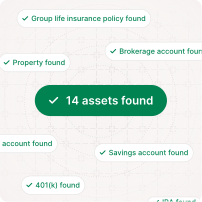
- Elayne's Verified Asset Search searches across 100+ financial sources and analyzes existing documents to surface accounts.
Confirming Legal Authority Before Anything Else
Banks, brokerages, and insurers operate under strict privacy rules. They will not confirm balances, share statements, or release funds to someone who simply claims to be family. Legal authority has to be documented before the search can go anywhere productive.
How that authority works depends on whether a will exists:
- With a will, the probate court appoints the named executor and issues Letters Testamentary, granting authority to act on behalf of the estate.
- Without a will, the court issues Letters of Administration to an administrator, typically a spouse or adult child, under state intestate succession rules.
Either document functions as the key financial institutions recognize. Death certificates are equally important, and most institutions will not accept photocopies. Requesting ten to fifteen certified copies upfront helps prevent delays, since each bank, insurer, and agency typically requires its own original.
Some states have small estate affidavit procedures that allow families to claim limited assets without full probate, a detail covered further in this guide to finding deceased accounts. Dollar thresholds and requirements vary by state depending on where the decedent lived and how accounts were titled.
{{blog-cta-financial}}
Searching at Home
Records that can be helpful include:
- Bank and brokerage statements, checkbooks, and canceled checks naming a financial institution
- Rental agreements
- Insurance cards and policy documents
- Tax forms (1099-INT, 1099-DIV, 1099-R) naming the paying institution
- Retirement account notices or annual benefit statements
Using Tax Returns and Credit Reports as Account Roadmaps
Form 1099-INT reports interest income paid by a specific bank. Form 1099-DIV names the brokerage or fund company paying dividends. Form 1099-R covers retirement distributions and identifies the custodian. Each form appears on the decedent's Form 1040 and connects back to a financial institution worth contacting, which is part of the broader process of finding bank and investment accounts after death.
A credit report adds the debt side of the picture. Families can request the decedent's credit report through AnnualCreditReport.com. It lists open and recently closed accounts, names the lenders and servicers, and may point to institutions holding other accounts as well.
Line items worth reviewing on the return:
- Schedule B: lists payers of interest and dividends by name
- Line 5a/5b: pension and annuity distributions
- Line 4a/4b: IRA distributions and the custodian named on the attached 1099-R
- Any state tax refund, which confirms a filing location and sometimes a bank used for direct deposit
Searching State Unclaimed Property Databases
When accounts sit dormant long enough, financial institutions are required by state law to transfer those funds to the state treasury, a process called escheatment. The money sits in a state-held registry, waiting for someone to claim it.
Two places to search:
- MissingMoney.com, a national database operated by the National Association of Unclaimed Property Administrators, searches multiple states at once
- Each state's own unclaimed property portal, which may hold records not yet reflected in national databases
The FDIC recommends searching the state where the person last lived as well as any state they previously resided in. A savings account opened in Ohio decades before a move to Florida may have escheated to Ohio, not Florida.
Searches run under every name the person used (legal name, maiden name, any former surnames, and common nicknames) are a key step in any decedent bank account search. Results that come back empty under one spelling or name variant are worth retrying under another.
Finding Life Insurance Policies
The NAIC Life Insurance Policy Locator is a strong starting point. As the NAIC explains, the tool is free, and works by sending search requests to participating insurers, who contact the requestor directly if a matching policy is found.
Three other searches are worth running alongside this process:
- Bank statements and canceled checks for recurring premium payments to an insurer
- Former employers, since many offer group life policies a retiree may have converted or continued after leaving
- The state unclaimed property database, where life insurance proceeds are transferred when insurers cannot locate a beneficiary
What Happens to Accounts Depending on How They Were Titled
How an account was titled at the time of death determines who can access it, how fast, and whether probate is involved at all.
| Account Type | How It Transfers | Probate Required? |
|---|---|---|
| Payable-on-death (POD) | Directly to named beneficiary | No |
| Joint with right of survivorship | Automatically to surviving owner | No |
| Solely owned, no beneficiary | Through probate or small estate affidavit | Usually yes |
| Trust-held | Under the trust's terms to beneficiaries | No |
Documents Banks Require Before Releasing Account Information
Many institutions require the same core documents:
- A certified copy of the death certificate (not a photocopy)
- Letters Testamentary or Letters of Administration from the probate court
- A government-issued photo ID for the person presenting the request
- The decedent's Social Security number and, when available, the account number
Some banks also require a copy of the will or trust document, particularly when a trust is named as beneficiary. Calling the bank's estate services department before appearing in person can save time, since requirements vary by institution.
{{blog-cta-financial}}
How Elayne Supports the Account Search After a Death
Elayne's Verified Asset Search™ runs the account search described throughout this article as a structured service. It uses government-credentialed access across 100+ financial sources to surface real property and deeds, financial accounts, life insurance through the NAIC locator, unclaimed and state property, and credit-bureau trade-line data pulled separately from all three major bureaus.
Beyond database queries, Elayne also analyzes documents a family already has: tax returns, bank statements, and financial records scanned to surface interest-bearing accounts, retirement distributions, and dividend income sources by institution. That document analysis step is often where older or lesser-known accounts appear.
Elayne has helped many families and attorneys settle estates, with up to hundreds of hours of estate administration saved per matter. Because Elayne is an eligible estate expense billed per matter, the cost can be reimbursed from estate funds once legal authority is in place.
FAQ
How do I find out if my deceased parent had life insurance policies I don't know about?
The NAIC Life Insurance Policy Locator is a strong starting point for finding unknown life insurance policies. It's free, and sends search requests directly to participating insurers, who contact you if a match is found. Running the search alongside a review of bank statements for recurring premium payments and a check of the state unclaimed property database helps cover common gaps, since proceeds transfer to state registries when insurers cannot locate a beneficiary. Former employers are also worth contacting, as group life policies from past jobs are sometimes continued or converted after retirement.
What happens to a bank account when someone dies without a beneficiary designation?
A solely owned account with no named beneficiary goes through probate, meaning the account is frozen until the court issues Letters Testamentary or Letters of Administration granting an executor or administrator authority to act. Some states offer a simplified small estate affidavit procedure that lets families claim limited assets without full probate, though dollar thresholds and eligibility requirements vary by state and how the account was titled.
What documents does an executor need to access a deceased person's bank accounts?
Many banks require a certified copy of the death certificate (not a photocopy), Letters Testamentary or Letters of Administration issued by the probate court, a government-issued photo ID for the executor, and the decedent's Social Security number. Some institutions also ask for the account number or a copy of the will. Requirements vary by bank, so calling the estate services department before visiting in person can help avoid delays.
How do I get Letters Testamentary?
Letters Testamentary are issued by the probate court in the county where the decedent lived. The process starts by filing a petition for probate with that court, along with the original will and a certified death certificate. Once the court confirms the will is valid and appoints the executor named in it, it issues Letters Testamentary. If there is no will, the court issues Letters of Administration to an administrator instead. Processing times vary by state and county, but the documents are typically available within a few weeks of filing.
*Disclaimer: This article is for informational purposes only and does not provide legal, medical, financial, or tax advice. Please consult with a licensed professional to address your specific situation.










.svg)