

After a loved one dies, locating their accounts can take time. Bank accounts, retirement plans, insurance policies, and digital assets can be spread across dozens of institutions, some opened years or even decades ago.
This guide walks through the account search process, from start to finish. We'll explain which types of accounts to look for, which free government databases to check, how to contact banks with the needed paperwork, and what to do when accounts are hard to find.
Key Takeaways:
- States hold over $70 billion in unclaimed property, and missed accounts can delay probate and create unexpected tax exposure.
- Documents already in the home—tax returns, bank statements, insurance policies, and deeds—are often the fastest way to identify where accounts are held.
- A death certificate and Letters Testamentary are required to request account information from banks, and each institution requires separate outreach.
- Free databases like MissingMoney.com and the PBGC search tool help locate unclaimed property and forgotten pension benefits at no cost.
- Elayne searches for unclaimed assets and lost accounts across institutions to support families throughout this process.
Why Finding Accounts Matters
Unclaimed property held by states totals more than $70 billion nationally. Executors and family members who miss accounts can face delays in probate, complications with creditors, and unexpected tax exposure. A bank account that surfaces two years later can mean amended filings and reopened processes.
Common Types of Accounts and Assets to Look For
Financial Accounts
- Bank accounts include checking, savings, money market accounts, and certificates of deposit.
- Investment and retirement accounts such as brokerage accounts, 401(k)s, IRAs, pensions, and annuities.
Insurance and Benefits
- Life insurance policies, including term, whole life, and employer-provided group coverage.
- Survivor benefits such as Social Security survivor benefits, veterans benefits, and pension survivor options.
Property and Business Interests
- Real estate and vehicle titles, including property deeds, car and truck titles, and boat registrations.
- Business interests such as ownership stakes, partnership agreements, and privately held stock.
Digital Accounts
- Email, social media, and crypto wallets.
- Subscription services and loyalty or rewards programs.
{{blog-cta-financial}}
Start With Documents You Already Have
Before searching for accounts online or contacting institutions, a review of the documents already in the home can save considerable time. Physical records often point directly to accounts, policies, and memberships that might otherwise take weeks to locate.
Where to Look First
- Mail and recent bank statements can confirm which financial institutions held active accounts, including checking, savings, and investment accounts that received regular correspondence.
- Tax returns from the last two to three years list interest income, dividend income, and retirement distributions, which can identify banks, brokerages, and IRA custodians.
- A contact book or contact list may include attorneys, financial advisors, or insurance agents who can point to accounts and policies they helped set up.
- A filing cabinet, safe, or lockbox often holds insurance policies, property deeds, vehicle titles, and account statements that confirm what existed and where it was held.
A Quick Reference: What Each Document Can Reveal
| Document | What It Can Uncover |
|---|---|
| Bank statements | Checking, savings, and linked accounts |
| Tax returns (last 2 to 3 years) | Interest-bearing accounts, retirement accounts, dividend income sources |
| Insurance policies | Life, home, auto, and supplemental coverage |
| Contact book or contacts | Financial advisors, attorneys, insurance agents |
| Safe or lockbox contents | Deeds, titles, bonds, and policy documents |
Digital Spaces
On a computer or phone, look in:
- Email inboxes for account confirmation messages, monthly statements, or password reset emails from financial institutions
- Browser saved passwords or a password manager app, which may store login credentials for financial accounts the deceased managed online
- Downloaded files and document folders for PDF statements, tax forms like 1099s, or account summary exports
Contact Banks and Financial Institutions Directly
What You'll Need Before You Call
- A certified copy of the death certificate, which banks require as proof that the account holder has died.
- Letters Testamentary or Letters of Administration, issued by the probate court, which confirm your legal authority to act on behalf of the estate.
- The deceased's Social Security number, which banks use to locate accounts in their system.
How the Process Works
Once you have the necessary documents, contact the bank's estate services department directly. Many large banks have dedicated bereavement or estate teams that handle these requests.
Ask directly about checking accounts, savings accounts, certificates of deposit, and any safe deposit boxes. Each account type may require a separate request or form. If the bank confirms an account exists, they will typically provide the balance as of the date of death and outline next steps for transferring or closing the account.
Free Government and State Databases

- The National Association of Unclaimed Property Administrators (NAUPA) runs MissingMoney.com, a multi-state search tool that pulls unclaimed property records from participating state treasuries in a single search.
- Each state also maintains its own unclaimed property database through the state treasurer or controller's office, which may include records not yet uploaded to MissingMoney.com.
- The Social Security Administration can confirm whether your loved one was receiving benefits and whether any final payment or lump-sum death benefit may be owed.
- The Pension Benefit Guaranty Corporation (PBGC) maintains a searchable database of unclaimed pension benefits from terminated private-sector pension plans.
- The U.S. Department of Labor's Abandoned Plan database lists retirement plans that have been terminated but still hold participant funds.
How to Access Digital Accounts and Online Assets
Common Digital Accounts to Manage
- Email accounts (Gmail, Outlook, Yahoo) often hold financial statements, subscription confirmations, and billing records.
- Social media profiles (Facebook, Instagram, LinkedIn) may need to be memorialized, deleted, or transferred, depending on the family's wishes and the service's policies.
- Cloud storage accounts (Google Drive, iCloud, Dropbox) can contain important documents, photos, and files that may have personal or legal value to the estate.
- Streaming and subscription services represent recurring charges that should be canceled promptly to stop ongoing billing after the account holder has died.
- Online shopping accounts (Amazon, eBay, PayPal) may hold stored payment methods, pending orders, or gift card balances.
{{blog-cta-financial}}
What Families Generally Need to Access These Accounts
Most companies require a combination of the following before granting access or taking action:
| Requirement | Notes |
|---|---|
| Certified death certificate | Typically required by all major providers |
| Proof of authority | Letters testamentary or letters of administration from probate court |
| Government-issued ID | For the person making the request |
| Account information | Username, email, or account number associated with the deceased |
Processing times vary widely. Some companies respond within a few weeks; others can take several months, particularly if requests need to go through a legal review team.
How Elayne Automates the Search and Settlement Process
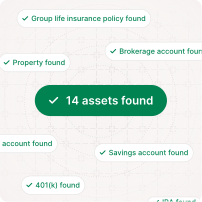
Elayne searches for unclaimed assets and hidden accounts across a wide range of institutions and registries. The search draws on document analysis, direct database queries, and state unclaimed property registries to surface accounts. This includes: dormant bank accounts, lost insurance policies, and eligible survivor benefits like Social Security, pension, and veterans' benefits.
Elayne analyzes records such as tax returns, bank statements, and other documents to locate interest-bearing accounts, retirement distributions, and dividend income sources that point to financial institutions holding estate assets. When accounts are located, Elayne helps coordinate the next set of steps as well. That includes notifying relevant institutions, tracking transfer and closure timelines, and logging each completed action for estate accounting. Families working with attorneys or financial advisors can share access through a single dashboard, so that no step is duplicated and everyone is able to stay on the same page.
Also, if recurring subscription charges are found in financial records, Elayne manages cancellation communications directly with providers and monitors subsequent statements to confirm charges have stopped.
FAQs
Can I find a loved one's accounts without hiring anyone?
Yes. You can locate most accounts by searching physical documents (bank statements, tax returns), checking state unclaimed property databases, and contacting banks directly with a death certificate and Letters Testamentary.
How long does the account search typically take?
The search runs throughout the entire settlement period, from start to finish. Most estates take 12 to 18 months to settle, and accounts can surface at any point during that window.
What's the difference between searching state databases vs. contacting banks directly?
State unclaimed property databases show dormant accounts and assets that institutions have turned over after years of inactivity. Contacting banks directly reveals active or recently closed accounts still held by the institution. Both searches are necessary because they cover different account statuses.
What happens if I find an account after probate closes?
An account that surfaces after probate closes typically requires the estate to be reopened or amended, which means additional court filings, delays, and sometimes attorney fees.
Searching for deceased accounts without a will vs. with one?
Without a will, the search is harder because there's no estate plan to reference and no clear list of assets. You'll need to wait for a court to appoint an administrator before most institutions will release account information. With a will, the executor can begin outreach to banks and registries immediately after receiving Letters Testamentary.
*Disclaimer: This article is for informational purposes only and does not provide legal, medical, financial, or tax advice. Please consult with a licensed professional to address your specific situation.










.svg)