

When someone dies, their life insurance policies may go unclaimed if no beneficiary knows to file a claim. Free search tools exist to help families locate policies and collect benefits. This guide covers key points for families to be aware of, including: what information is needed to search, using the NAIC locator, the MIB Policy Locator Service, and state unclaimed property databases, what happens to unclaimed proceeds, how to file a claim once a policy is found, and more.
Key Takeaways
- The NAIC Life Insurance Policy Locator is free and has matched consumers with over $16 billion in lost and unclaimed benefits from life insurance policies and annuity contracts since 2016.
- The deceased's Social Security number is the primary matching field for many search tools.
- Unclaimed proceeds transfer to state funds through escheatment.
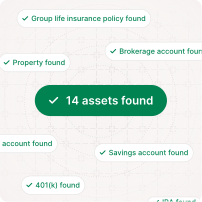
- Elayne's Verified Asset Search surfaces lost insurance policies alongside dormant accounts and unclaimed state property.
The Scale of Unclaimed Life Insurance in the United States
Since launching in November 2016, the NAIC Life Insurance Policy Locator has helped consumers connect with over $16 billion in lost and unclaimed benefits, with over $3 billion matched in the preceding 12 months alone.
Every year, families across the country miss payouts they were entitled to simply because no one knew a policy existed or where to look for it.
{{blog-cta-financial}}
What Information You Need Before Searching
Many search channels ask for the same core set of details about the deceased:
- Full legal name, including any name changes or maiden names
- Date of birth and date of death
- Social Security number
- Last known location or mailing information
The Social Security number carries the most weight. The NAIC locator and most state unclaimed property databases use it as the primary matching field.
State unclaimed property databases can often match on name and date of birth alone, and the MIB Policy Locator Service accepts searches without a Social Security number. Prior tax returns, Medicare cards, or government correspondence are good places to look if the number is missing.
A few additional details may improve results:
- Former employer names, which help trace group policy conversions
- Names of any insurers the deceased may have used
- Bank statements showing premium payments to an insurance company
The NAIC life insurance locator requires only a Social Security number, name, and date of birth to submit a request. Whatever information is available can be used across channels to build a more complete picture.
The NAIC Life Insurance Policy Locator
The NAIC Life Insurance Policy Locator is a free tool run by the National Association of Insurance Commissioners. Anyone who believes a deceased person held a life insurance policy or annuity contract can submit a request at no cost.
When a request is submitted, participating insurers search their own records for a matching policy. If a match is found and the requester is the verified beneficiary or authorized legal representative, the insurer contacts that person directly. No response does not confirm a policy never existed.
Before submitting, there are a few things to know:
- The tool covers individually purchased life insurance policies and annuity contracts, not group employer policies.
- Insurers generally aim to respond within about 90 business days.
- Each submission is limited to one deceased individual.
Submitting a request requires the deceased's full legal name, Social Security number, and date of birth, along with the requester's contact information and relationship to the deceased.
Because the locator reaches a broad network of participating carriers, it is generally the right first stop in any policy search.
| Search Tool | Who Runs It | Cost | Coverage |
|---|---|---|---|
| NAIC Life Insurance Policy Locator | National Association of Insurance Commissioners | Free | Broad network of participating carriers; individually purchased life insurance and annuity contracts |
| MIB Policy Locator Service | MIB Group | Free | ~420 U.S. and Canadian member carriers; individually underwritten policies applied for on or after January 1, 1996 |
| State Unclaimed Property Databases | State comptroller or treasury offices; aggregated at unclaimed.org | Free | Escheated life insurance proceeds transferred to the state after dormancy periods of 2 to 5 years |
The MIB Policy Locator Service
The MIB Policy Locator Service (PLS) searches for life insurance application activity across U.S. and Canadian member carriers. A result from MIB indicates application activity, not a confirmed in-force policy. It does not verify that a policy was issued, remained active, or will pay a benefit.
State Unclaimed Property Databases
When a life insurance policy goes unclaimed long enough, the proceeds transfer to the state through a legal process called escheatment. The funds move from the insurer's books into the state's unclaimed property fund, where they sit until a rightful beneficiary comes forward.
Dormancy periods vary by state, many falling between two and five years, with different rules applying depending on whether a policy matured by proof of death or simply lapsed without a claim. Funds held by a state do not expire, so a beneficiary can claim them years or decades after escheatment.
Two search options:
- unclaimed.org aggregates many state databases and lets you search by name across multiple states at once
- Individual state comptroller or treasury websites (Texas, Florida, California, and others each maintain their own portals with name and date-of-birth search)
When the deceased lived in multiple states or moved frequently, each state's database warrants a separate search. Benefits are reported to the state of the policyholder's last known location on record with the insurer, which may differ from where they actually lived at death.
Other Search Channels and Records to Review
No single search tool covers every policy. A more complete picture usually requires combining databases with direct document review and outreach.
Physical records are often a direct lead:
- Bank statements showing payments to an insurance company
- Safe deposit box contents
- Income tax returns, which may reference interest income or dividend payments from a whole life policy
Former employers are worth contacting directly, particularly if the deceased held a job with benefits. Group policies sometimes converted to individual coverage after employment ended, and HR departments or pension administrators may have records.
Financial advisors, estate attorneys, and accountants who worked with the deceased often know about policies as well.
State insurance department offices can confirm whether a specific insurer is licensed and operating in a given state, and some run their own policy search assistance programs that operate separately from the NAIC locator.
{{blog-cta-financial}}
How Elayne Supports Life Insurance Discovery as Part of Estate Settlement
Elayne's Verified Asset Search goes beyond the NAIC locator to surface lost insurance policies alongside dormant accounts, unclaimed state property, and eligible survivor benefits. Document analysis pulls financial institution clues from tax returns, bank statements, and records the family already holds, surfacing leads that public databases may miss.
For families working through the broader settlement process, Elayne organizes the full path from orientation through discovery and distribution in one shared place. Learn more about how Elayne can help at www.elayne.com.
FAQ
How do I find unclaimed life insurance policies for a deceased parent?
The NAIC Life Insurance Policy Locator is free, covers a broad network of participating carriers, and requires only the deceased's full legal name, Social Security number, and date of birth. For policies that may have escheated to a state, unclaimed.org allows searches across multiple state unclaimed property databases by name at no cost. The MIB Policy Locator Service offers a complementary free search for individually underwritten policies applied for after January 1, 1996, when a policy is believed to exist but no documentation is available.
What happens to unclaimed life insurance money if no beneficiary ever files a claim?
When a policy goes unclaimed past the applicable dormancy period, generally two to five years after the insurer learns of the policyholder's death, the proceeds are transferred to the state as unclaimed property through a process called escheatment. The funds sit in the state's unclaimed property fund with no expiration date, meaning a beneficiary can come forward years or decades later to claim them. Whether the funds accrue interest during that time depends on the state; most states pay out the original policy value at the time of escheatment and not any growth after that point.
How can I search for unclaimed life insurance without a Social Security number?
A missing Social Security number limits some tools but does not stop a search entirely. State unclaimed property databases, searchable through unclaimed.org or individual state treasury portals, can often match on name and date of birth alone, and the MIB Policy Locator Service also accepts submissions without one. Prior tax returns, Medicare cards, and government correspondence are among the records where the number may be found; bank statements showing premium payments to an insurer can also point directly to a carrier.
How do I file a claim for a life insurance policy I found through the NAIC locator or a state database?
When a policy is still held by the insurer, the claim goes through that carrier's claims department. Many insurers post claim forms on their websites and process straightforward claims within 30 to 60 days of receiving complete documentation. Standard documentation includes a certified copy of the death certificate, government-issued ID, the policy number if available, and proof of beneficiary status. If proceeds have already transferred to a state unclaimed property fund, the claim goes through that state's office instead, which can take several months depending on volume and any additional verification the state requires.
*Disclaimer: This article is for informational purposes only and does not provide legal, medical, financial, or tax advice. Please consult with a licensed professional to address your specific situation.










.svg)