

When someone dies, certain assets may need to pass through probate before they can be transferred to heirs. Whether probate is required depends on how the asset was titled and whether a beneficiary or joint owner was named. This guide covers key points for families and executors need to be aware of, including: what probate is and how it works, when it is required, how probate and non-probate assets differ, how long the process takes, what it costs, how some assets can transfer outside of court entirely, and more.
Key Takeaways
- Probate is required for assets titled solely in the decedent's name with no beneficiary or joint owner.
- Many straightforward estates take 9 to 24 months to close, with costs running 3% to 8% of gross estate value.
- A will does not avoid probate; asset titling and beneficiary designations determine what goes through court.
- Missed executor deadlines, including creditor notice windows and inventory filings, can create personal liability.
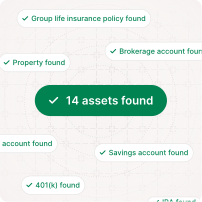
- Elayne organizes documents, deadlines, and asset records for families managing probate, including a Verified Asset Search™ to surface accounts and policies that might otherwise go unlocated.
What Is Probate and How Does It Work?
Probate is the court-supervised legal process for settling a deceased person's estate. When someone dies owning assets in their name alone, a court steps in to validate the will (if one exists), confirm who has authority to act, settle outstanding debts, and distribute what remains to the rightful heirs.
A probate court appoints and oversees the executor or administrator, who carries out the estate's administration under that court's supervision. The court creates a public record, provides a structured framework for the executor to follow, and gives creditors a formal window to file claims before any distributions happen.
The process generally follows this sequence:
- The will is filed with the probate court in the county where the decedent lived
- The court issues Letters Testamentary, granting the executor legal authority to act
- Assets are inventoried and creditors are notified
- Debts, taxes, and expenses are paid from estate funds
- Remaining assets are distributed to beneficiaries per the will or, without one, per state intestacy law
Smaller or simpler estates often qualify for abbreviated procedures, while larger or contested ones can require extended court oversight.
{{blog-cta-financial}}
When Is Probate Required?
Probate is required when a deceased person owned assets solely in their name with no beneficiary designation, joint owner, or trust directing how those assets pass. Without a transfer mechanism in place, a court steps in to determine who receives what.
Common triggers include:
- Solely owned real property with no joint tenancy or transfer-on-death deed
- Bank or investment accounts with no named beneficiary
- Personal property such as vehicles or valuables titled only in the decedent's name
- Any asset the decedent's will is needed to transfer
States set dollar thresholds below which simplified or summary procedures apply, bypassing full probate. These cutoffs range from as low as $10,000 in some states to $200,000 or more in others. For a fuller breakdown of when probate is required, the triggers vary by state and asset type. When an estate falls under the threshold, families may use an affidavit or small estate procedure instead of a full court proceeding.
Probate vs. Non-Probate Assets
Not every asset goes through probate. Non-probate assets transfer directly to a named beneficiary or co-owner outside of court. Examples of this include:
- Life insurance and retirement accounts with a named beneficiary pass directly to that person, with no court filing required.
- Bank or investment accounts with a payable-on-death (POD) or transfer-on-death (TOD) designation work the same way.
- Jointly owned property with right of survivorship transfers automatically to the surviving owner.
- Assets held in a revocable living trust bypass probate entirely.
| Asset Type | Examples | Court Involvement | Typical Transfer Time |
|---|---|---|---|
| Non-probate | Life insurance with named beneficiary; retirement accounts (IRA, 401k); POD/TOD bank or investment accounts; jointly owned property with right of survivorship; assets in a revocable living trust | None | Weeks |
| Probate | Solely owned real property; bank or investment accounts with no beneficiary; personal property (vehicles, valuables) titled only in the decedent's name; assets distributed by will | Required: court validates, appoints executor, oversees distribution | 9 to 24 months |
How Long Does Probate Take?
Many straightforward estates close in 9 to 24 months, though the actual timeline depends on several factors. This includes:
- Estate complexity
- Contested proceedings
- Court caseloads
- The presence of a valid will
How Much Does Probate Cost?
Court filing fees vary by state and county but typically run a few hundred dollars to over a thousand. For attorney fees, many states allow hourly billing, but some set statutory fees based on estate value. In California, attorneys and executors each receive a percentage of the gross estate: 4% on the first $100,000, 3% on the next $100,000, 2% on the next $800,000, and so on. On a $500,000 estate, that works out to roughly $13,000 each before any additional fees for extraordinary services.
Executors are generally entitled to reasonable compensation paid from the estate, though many family members waive the fee.
Costs rise with complexity:
- Contested wills or disputed creditor claims
- Real property in multiple states
- Hard-to-value assets like business interests or collectibles that require formal appraisals
For many mid-sized estates, total probate costs fall somewhere between 3% and 8% of the gross estate value, though that range often widens when disputes or multi-state assets are involved.
{{blog-cta-financial}}
What an Executor Often Does in the First 30 Days
In general, much of what an executor does at this stage is protective and preparatory.
The original will needs to be located and filed with the probate court in the county where the decedent lived. Many states require the original, not a copy. From there, the court opens the proceeding and eventually issues Letters Testamentary, the document granting the executor legal authority to act on the estate's behalf.
Certified death certificates are ordered in quantity early, since banks, insurers, government agencies, and transfer agents each require their own original copy.
Other steps that typically unfold in this window:
- Securing physical property, including changing locks on real estate if needed
- Notifying Social Security, the VA if applicable, and any pension administrators
- Contacting the decedent's bank to flag the account and prevent unauthorized activity
- Reaching out to an estate attorney, particularly when real property, multiple accounts, or family complexity is involved
How Elayne Supports Families Through Probate
Elayne organizes the administrative layer that sits beneath a probate matter: documents, asset records, contacts, and deadlines collected into one source-linked estate record. For families, that structure can help remove hundreds of hours of work. On average, estates working with Elayne save roughly 300 hours of administrative effort. The Verified Asset Search™ goes beyond public-record lookup to surface accounts, life insurance policies, and unclaimed property families may not know exist. Elayne has supported over 1,000 families and attorneys through estate settlement.
FAQ
What typically happens in the first 30 days of estate administration?
The first 30 days are generally focused on protection and preparation rather than distribution. The original will is filed with the probate court, certified death certificates are ordered in quantity, and physical property is secured. Assets cannot move and creditors cannot be paid until the court issues Letters Testamentary and the creditor notice period has run.
How do I find out if my deceased parent had life insurance policies I don't know about?
The NAIC Life Insurance Policy Locator is a common starting point, having connected families with more than $6 billion in unclaimed benefits since 2016. Participating insurers search their records and reach out directly when a policy exists in the decedent's name and the requestor is a designated beneficiary or authorized legal representative. State unclaimed property databases are worth checking as well, since lapsed policy proceeds are held there indefinitely. Bank statements, prior tax returns, and employer records are also common places where policies may be identified.
Probate assets vs. non-probate assets?
Non-probate assets (life insurance with a named beneficiary, retirement accounts, POD/TOD accounts, jointly owned property, and trust assets) transfer directly to the recipient with no court filing required, often within weeks. Probate assets are owned solely in the decedent's name with no transfer mechanism attached, and they require court oversight before anyone receives them, a process that typically runs 9 to 24 months. Many estates include both types of assets.
What tools should I use to track deadlines when settling an estate?
Whatever system you use, it needs to capture four distinct deadline types from the start: the creditor notice publication window (typically 2 to 6 months from appointment, depending on state), the estate inventory due date (often 60 to 90 days), federal and estate income tax return deadlines, and any inherited retirement account RMD dates under SECURE Act 2.0, which carry a 25% penalty for missed distributions as of 2026. Elayne's estate record tracks these deadlines proactively and flags when action is needed.
Which estate settlement service can help a surviving spouse who has never managed finances before?
Elayne is built for exactly this situation: a surviving spouse who needs to understand what exists, confirm nothing has been missed, and work through each step without prior financial management experience. The Verified Asset Search surfaces accounts, policies, and unclaimed property the spouse may not know existed, while the shared dashboard gives any family members or attorneys involved a single place to coordinate.
*Disclaimer: This article is for informational purposes only and does not provide legal, medical, financial, or tax advice. Please consult with a licensed professional to address your specific situation.










.svg)