
New York has an estate tax, paid by the estate before assets reach beneficiaries, but no inheritance tax on the people who receive them. This guide covers key points for families and executors to be aware of, including: the 2026 exemption amount, how the estate tax cliff works, the three-year gift lookback rule, how married couples are affected, how New York compares to the federal estate tax and to New Jersey, how to file Form ET-706, strategies that may reduce exposure, and more.
Key Takeaways
- New York has an estate tax paid by the estate before distribution; it has no inheritance tax on recipients.
- In 2026, the New York exemption is $7,350,000. Estates crossing it by more than 5% are taxed on the full value.
- A $9 million estate owes no federal estate tax in 2026 but still faces a New York bill.
- Gifts made within three years of death are added back to the estate for New York tax purposes.
- Elayne searches 100+ financial sources to surface accounts and support executors managing Form ET-706 preparation.
Estate Tax vs. Inheritance Tax: Understanding the Difference
Estate tax and inheritance tax are two different things, though people often use the terms interchangeably.
An inheritance tax is paid by the person receiving assets, with rates that typically depend on how closely related that person was to the deceased. An estate tax is paid by the estate itself before any assets are distributed to beneficiaries.
New York has an estate tax. It does not have an inheritance tax.
{{blog-cta-financial}}
Does New York State Have an Inheritance Tax?
New York does not impose an inheritance tax. If you inherit money, property, or other assets from someone who died in New York, you personally owe no state tax on that inheritance simply for receiving it. What New York does have is an estate tax, paid by the estate before assets reach beneficiaries.
How the New York State Estate Tax Works in 2026
For deaths occurring in 2026, New York's basic exclusion amount is $7,350,000. Estates at or below that threshold owe no New York estate tax. The threshold is measured against the federal gross estate plus any gifts made in the three years before death.
The New York Estate Tax Cliff Explained
New York uses something called a cliff: once an estate exceeds the $7,350,000 exemption by more than 5%, the exemption phases out entirely. The example below shows how the cliff operates:
| Estate Value | Exemption Applied | New York Tax Owed |
|---|---|---|
| $7,349,000 | Full $7,350,000 exemption | $0 |
| $7,720,000 (exceeds exemption by >5%) | Exemption phases out entirely | Tax on full $7,720,000 |
New York Estate Tax Rates: The 2026 Rate Table
New York's estate tax uses a graduated rate structure, with rates ranging from 3.06% up to 16.0% on the largest estates.
| Taxable Estate | Rate |
|---|---|
| $0 to $500,000 | 3.06% |
| $500,000 to $1,000,000 | 5.0% |
| $1,000,000 to $1,500,000 | 5.5% |
| $1,500,000 to $2,100,000 | 6.5% |
| $2,100,000 to $2,600,000 | 8.0% |
| $2,600,000 to $3,100,000 | 8.8% |
| $3,100,000 to $3,600,000 | 9.6% |
| $3,600,000 to $4,100,000 | 10.4% |
| $4,100,000 to $5,100,000 | 11.2% |
| $5,100,000 to $6,100,000 | 12.0% |
| $6,100,000 to $7,100,000 | 13.0% |
| $7,100,000 to $8,100,000 | 14.0% |
| $8,100,000 to $9,100,000 | 15.0% |
| Over $9,100,000 | 16.0% |
How the Federal Estate Tax Compares in 2026
Following the Working Families Tax Cuts Act, the federal exemption is $15,000,000 per individual in 2026, with a top rate of 40% on amounts above that threshold.
Who Files and Pays the New York Estate Tax?
The executor or personal representative files Form ET-706 and pays any tax owed before assets are distributed to beneficiaries, along with other executor of estate paperwork required during settlement. The filing deadline is nine months from the date of death, with extensions available.
New York's Three-Year Gift Lookback Rule
Taxable gifts made within three years of death are added back to the federal gross estate when calculating New York estate tax. A gift made in 2023 or 2024 by someone who died in 2026 could push an estate over the $7,350,000 exemption, even if no federal gift tax was ever owed.
Exceptions to note: the add-back does not apply to gifts made while the decedent was a nonresident of New York, gifts made before April 1, 2014, or gifts involving real or physical property located outside New York at the time of the gift.
How New York and New Jersey Inheritance and Estate Tax Rules Compare
New York and New Jersey take different approaches to taxing what passes at death.
New York has an estate tax paid by the estate, no inheritance tax, and a $7,350,000 exemption for 2026. New Jersey eliminated its estate tax for deaths occurring on or after January 1, 2018. What New Jersey does have, and New York does not, is a NJ inheritance tax paid by the person receiving assets.
Who pays the NJ inheritance tax depends on the beneficiary's relationship to the decedent:
- Class A beneficiaries (spouses, children, parents, grandchildren) are fully exempt with no tax owed
- Class C beneficiaries (siblings, sons- and daughters-in-law) receive the first $25,000 exempt, with amounts above that taxed at 11% to 16%
- Class D beneficiaries (most other recipients) face rates up to 16%
Filing Form ET-706
Form ET-706 is New York's estate tax return, filed by the executor on behalf of the estate. The return is due within nine months of the date of death, though a six-month extension is available for filing. Any tax owed remains due within nine months regardless of whether an extension is granted.
The return calculates the taxable estate, applies the applicable credit, and arrives at the net amount owed. Schedules cover the federal gross estate, includible gifts, deductions, and the credit calculation that reduces gross tax to the final liability.
Once the return is filed and taxes are paid, the estate can request a closing letter from New York confirming the account is settled.
{{blog-cta-financial}}
How Elayne Helps Families Through New York Estate Settlement
For New York families working through a taxable estate, the tax calculation is only one part of the process. Gathering documents, locating accounts, and organizing the full estate record can take months of administrative work.
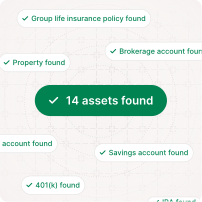
Elayne helps carry that load. Through Verified Asset Search™ across 100+ financial sources, Elayne surfaces accounts and assets that might otherwise go unnoticed, supporting the diligent-search obligation that comes with the executor role. Also, a shared dashboard keeps the executor and their attorney aligned throughout.
Elayne has worked alongside 1,000+ families and attorneys through estate settlement, with many estates seeing hundreds of hours of administrative work reduced. Elayne is billed as an eligible estate expense, so the cost comes out of estate funds and not from the executor's own pocket.
See how Elayne can help families and the attorneys supporting them manage the work that comes with settling a New York estate.
FAQ
Does New York State have an inheritance tax?
New York does not have an inheritance tax. The state has an estate tax, paid by the estate before assets are distributed, but beneficiaries who receive an inheritance owe no New York state tax simply for receiving it. New Jersey, by contrast, does have an inheritance tax paid by the person receiving assets, with rates depending on the beneficiary's relationship to the deceased.
What is the New York estate tax cliff and how does it work?
The New York estate tax cliff means that once an estate exceeds the $7,350,000 exemption by more than 5%, the exemption disappears entirely and the full estate value is taxed.
How much is New York's estate tax exemption in 2026?
For deaths occurring in 2026, the New York estate tax exemption is $7,350,000, meaning estates at or below that amount owe no New York estate tax. Above that threshold, graduated rates from 3.06% to 16% apply, and if the estate exceeds the exemption by more than 5%, the cliff provision phases out the exemption entirely. The federal exemption is $15,000,000 per individual in 2026, so a New York estate can face state tax liability even if no federal estate tax is owed.
Is an inheritance tax waiver form required in New York, and what do banks ask for?
New York no longer requires a formal inheritance tax waiver. What financial institutions sometimes request is a release letter or consent from the New York Department of Taxation and Finance before transferring certain assets, particularly for estates that were required to file Form ET-706. For estates below the $7,350,000 filing threshold, institutions generally release assets once they receive appropriate documentation of authority, such as Letters Testamentary.
What tools help an executor manage a New York estate tax filing and the full administrative process in 2026?
Executors filing Form ET-706 can face months of document gathering, asset location, and record organization before a tax return can be prepared. Elayne supports that process through Verified Asset Search across 100+ financial sources, a shared dashboard for coordinating with attorneys, and structured estate organization that prepares the full estate record. Elayne is billed as an eligible estate expense.
*Disclaimer: This article is for informational purposes only and does not provide legal, medical, financial, or tax advice. Please consult with a licensed professional to address your specific situation.










.svg)