
You're trying to complete your mom's bank account checklist, but the process keeps hitting walls. One bank won't confirm anything without a death certificate and proof of executor status. Another mentions a merged institution from 2019 and transfers you three times. A third asks for account numbers you don't have because your mom handled everything online with no paper trail. The average person maintains 5.3 accounts across institutions, and each one follows slightly different verification rules and timelines. Some release funds to beneficiaries within days, others freeze everything until probate courts issue letters of authority months later, and forgotten accounts may already have been transferred to state unclaimed property offices. Knowing which documents unlock which account types and where banks actually hide information makes the difference between a systematic search and months of frustration.
Key Takeaways:
- Start by securing certified death certificates and notifying Social Security within 48 hours
- Joint accounts and POD accounts transfer directly without probate; sole accounts freeze until probate
- Search tax returns, mail, email, and state unclaimed property databases to locate all accounts
- Elayne locates accounts, manages bank notifications, and tracks closures so families can focus on healing
Where to Begin: Immediate Steps After a Loss
After the loss of a parent, the first 48 to 72 hours matter for securing accounts and preventing identity theft. Before searching for bank accounts, three steps create a stable foundation.
First, obtain multiple certified copies of the death certificate. Order at least 10 to 15 copies through the funeral home or county public records office. Banks, insurance companies, and government agencies will each require an original certified copy.
Second, secure the home and any valuable documents. Look for a safe, filing cabinet, or desk drawer where financial records might be kept. Bank statements, tax returns, and investment documents often reveal account locations.
Third, notify the Social Security Administration within 48 hours if possible. This flags the Social Security number in federal systems, reducing the risk of fraudulent account openings.
Understanding What Happens to Bank Accounts After Death
When a bank learns someone has died, what happens next depends on how the account was structured.
Joint accounts with rights of survivorship pass directly to the surviving account holder. The bank will freeze the account temporarily until a death certificate is provided, then remove the deceased owner's name and restore full access to the survivor. No probate is required.
Payable-on-death (POD) accounts work similarly. These accounts name a beneficiary who receives the funds directly upon the owner's death. The beneficiary presents a death certificate and valid identification, and the bank releases the funds outside of probate.
Sole ownership accounts are different. Banks freeze these accounts immediately upon notification of death. The funds remain frozen until an executor provides letters testamentary or letters of administration from the probate court. Only then can the executor access the account to pay estate debts and distribute remaining assets.
Documents You Need to Locate Bank Accounts
Finding and accessing bank accounts requires specific documentation. Banks and financial institutions have strict identity verification rules, so gathering these documents early saves time and prevents delays.
You'll need the deceased's Social Security number, date of birth, and last known residence. These appear on tax returns, Social Security statements, or driver's license records.
Your own government-issued photo ID is required at every institution. If you're the executor or administrator, bring your probate court appointment letters. These grant legal authority to access accounts and request information on behalf of the estate.
If the estate enters probate, you'll need a copy of the will (if one exists) and any trust documents. Banks may ask for these to verify beneficiary designations or confirm the estate structure before releasing account details.
Keep a folder with copies of everything. You'll reference these documents repeatedly as you contact different banks, and having them organized in one place makes each call or visit faster.
How to Find Your Parents' Bank Accounts: A Step-by-Step Search
Start with paper records. Check incoming mail for at least two weeks to catch bank statements, investment notices, or credit card bills. The average person maintains 5.3 accounts across different institutions, so expect to find multiple relationships.
Pull the most recent tax return. Schedule B lists every bank and brokerage that paid interest during the year. Form 1099-INT and 1099-DIV documents provide the same information.
Search the home systematically. Check desks, filing cabinets, and bedroom drawers for checkbooks, deposit slips, debit cards, or monthly statements.
If your parent used online banking, access their email and search for terms like "statement" or "account alert." Password managers or saved logins in web browsers can unlock accounts directly.
{{blog-cta-financial}}
Searching State Unclaimed Property Databases
When a bank account goes untouched for several years, state law requires the bank to turn it over to the state treasury as unclaimed property. An estimated $70 billion is held by state treasurers, awaiting owners or heirs to claim it.
Start your search at missingmoney.com, which searches multiple state databases at once. Enter your parents' names exactly as they appeared on legal documents, then try variations with middle initials, maiden names, or nicknames. Search every state where your parent lived, worked, or owned property.
If missingmoney.com returns no results, visit individual state treasury websites. Each state maintains its own database, and search functions vary in quality.
Contacting Banks Directly: What to Say and What They Need
Once you've located a likely bank, call the customer service line and ask for the estate services or deceased accounts department. Most banks have dedicated staff for these situations.
The representative will ask for the deceased's full name, Social Security number, date of birth, and last known residence. Have your own identification ready, along with the death certificate and any legal documents showing your authority to act.
Your role determines what happens next. Joint account holders typically receive immediate access after providing a death certificate. Named beneficiaries on payable-on-death accounts follow a similar path: present the death certificate and ID, complete a claim form, and receive the funds within days.
Executors face more steps. Banks cannot release account information or funds until you provide letters testamentary or letters of administration from the probate court.
Notifying Banks of a Death: Timeline and Requirements
Banks need formal notification of death even if you've already accessed account information. The timing matters: preventing fraud and stopping ongoing charges that can drain the account.
Notify each bank within two weeks of receiving certified death certificates. Call first to stop automatic payments and flag the account, then follow up with a written notification and a certified death certificate by mail or in person.
When you notify a bank, the account freezes to prevent unauthorized withdrawals. Automatic bill payments stop. Debit cards linked to the account are deactivated. Direct deposits bounce back to the sender.
Most banks require a certified death certificate, the account number (if you have it), and proof of your legal authority if you're not a joint owner or named beneficiary.
{{blog-cta-financial}}
Closing or Transferring Bank Accounts
The process of closing or transferring accounts depends on the account type and titling.
Joint accounts and payable-on-death accounts move quickly. After the bank receives a death certificate and verifies your identity, funds typically release within 5 to 10 business days. Some banks issue a check, others transfer funds to an account you specify.
Accounts requiring probate take longer. The executor must wait for the court to issue letters of authority, then present those letters to the bank along with the death certificate. The bank then releases funds to the estate account.
Before closing any account, review the last three months of statements for pending transactions. Outstanding checks, automatic payments, or scheduled transfers can cause overdrafts if the account is closed too soon.
The Probate Process and Bank Account Access
Probate is necessary when bank accounts are held solely in the deceased's name, without a named beneficiary. The court must grant legal authority before accessing these accounts.
The executor files the will with the probate court, which reviews it and issues letters testamentary. These letters serve as proof of legal authority to act on behalf of the estate. Banks accept them as authorization to release account information and funds.
Probate timelines average 3 to 6 months for straightforward estates, but complex situations can stretch out longer. Some states offer small estate affidavits for estates below a certain value threshold, bypassing formal probate and allowing heirs to claim assets with a simplified sworn statement instead.
Common Obstacles and How to Work Through Them
Banks refusing to confirm account existence without proof creates a circular problem. Ask to speak with the estate services team, not the general customer service team. Estate teams better understand executor access rules and can often verify accounts with a death certificate and Social Security number alone.
Merged or closed banks transfer accounts to successor institutions. Search the FDIC's BankFind tool to trace bank mergers. Call the successor bank's estate department with your parents' information. Records transfer with the accounts, though older mergers may require written requests to retrieve archived records.
Online-only accounts leave no paper trail, but email does. Search your parents' inbox for account confirmations, password resets, or monthly statements. Browser history and saved passwords reveal active accounts. If two-factor authentication blocks access, contact the bank directly with a death certificate to reset security settings.
Accounts across state lines follow the same process as local accounts. Expect longer processing times for mailed documents. Most banks accept scanned death certificates by secure email once you've made contact.
How Elayne Helps Families Find and Manage Bank Accounts After Loss
Finding and managing bank accounts after a loss involves dozens of phone calls, document requests, and follow-ups across multiple institutions. Elayne handles this weight so families can focus on what matters most.
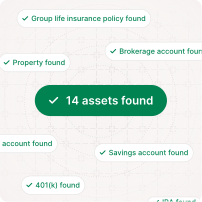
We use document analysis and direct database searches to uncover accounts your parent may have held, including forgotten accounts and unclaimed assets sitting with state treasuries. Instead of piecing together clues from tax returns and old statements yourself, we locate accounts and verify them with the institutions.
Once accounts are identified, we manage the notification process. We contact banks, submit required documentation, and track each closure or transfer through completion. The secure family dashboard shows every account's status in real time, so executors, family members, and advisors stay aligned without repeated phone calls or email chains.
Final Thoughts on Managing Bank Accounts After Death
Searching for your parents' bank accounts after death requires organization, persistence, and multiple document requests across institutions. You'll move through it step by step with the right paperwork and follow-through. If the administrative burden feels overwhelming, Elayne handles the entire process so you can focus on healing and spending time with the people who matter most.
If you would like help turning a long list of banks and accounts into one organized plan, you can get started with Elayne’s estate settlement support and let us shoulder more of the work.
{{blog-cta-financial}}
FAQs
How quickly should I notify banks after my parents' death?
Contact banks within two weeks of receiving certified death certificates to prevent fraud and stop automatic payments that can drain accounts. Call first to flag the account, then follow up with a written notification and a certified death certificate.
What's the difference between a joint account and a payable-on-death account after someone dies?
Joint accounts with rights of survivorship pass directly to the surviving account holder and require only a death certificate to restore full access. Payable-on-death accounts similarly transfer to the named beneficiary outside of probate, while sole ownership accounts freeze until an executor provides letters from the probate court.
Can I access my parents' bank account if I'm not listed on it?
You cannot access accounts where you're not a joint owner or named beneficiary until you receive letters testamentary or letters of administration from the probate court. Banks have strict rules and cannot release funds or detailed information without proper legal authority.
How do I find bank accounts if my parent kept no records?
Start with the most recent tax return: Schedule B and Forms 1099-INT list every institution that paid interest. Search incoming mail for two weeks, check email for account alerts or statements, and visit your state's unclaimed property database at missingmoney.com to find dormant accounts turned over to the state treasury.










.svg)