.webp)

After the loss of a parent, one of the first administrative steps for many families face is locating their loved one's financial accounts. Bank accounts, CDs, credit union memberships, and online-only accounts can be spread across multiple institutions and states.
The search tends to begin with home records: tax returns, old checkbooks, and email inboxes can surface account names and numbers. From there, the process moves to state unclaimed property databases, former employer benefit offices, and resources like the NAIC Life Insurance Policy Locator. In this article, we'll provide an overview of the associated tasks, and the steps that can be taken to manage them.
Key Takeaways:
- Roughly 1 in 7 Americans have unclaimed property, with $70 billion in state treasuries.
- Use MissingMoney.com and state treasurer sites to search for dormant accounts turned over to states.
- The NAIC Life Insurance Policy Locator has matched families with over $13 billion in benefits since 2016.
- Dormant accounts are turned over to the state after three to five years of inactivity, depending on the state's escheatment rules.
- Executors typically need a certified death certificate, court-issued letters, and a government-issued photo ID to access or close accounts.
- Forensic accountants and probate attorneys can help when informal requests to institutions go unanswered or assets are disputed.
Common Types of Bank Accounts and Financial Assets to Search For
Financial accounts can take many forms, and a parent may have held several types across different institutions over the course of their lifetime. Some accounts are straightforward to locate; others are more difficult to find, especially if they were opened decades ago. Areas worth noting include:
- Checking and savings accounts at traditional banks and credit unions, which may include both active accounts and dormant ones that stopped receiving deposits years ago
- Certificates of deposit (CDs), which may have rolled over automatically for years and could now sit at a different rate or term than originally opened
- Money market accounts held through banks or brokerages, sometimes linked to investment accounts that are easy to miss if statements were paperless
- Safe deposit boxes at a bank branch, which may contain physical documents, jewelry, coins, or other valuables not listed anywhere in the estate records
- Online-only accounts at digital banks such as Ally, Marcus, or SoFi, which may not appear in mail or paper records and require searching email inboxes for electronic statements
- Prepaid debit cards or stored-value accounts, which can hold balances and may not be linked to a traditional bank
- Health savings accounts (HSAs) or flexible spending accounts (FSAs) held through a former employer's benefits plan
A note on payable-on-death (POD) accounts and joint accounts: POD accounts transfer directly to the named beneficiary outside probate, while joint accounts typically transfer to the surviving owner. However, both still need to be located and documented so that heirs receive what's theirs and the estate's records stay accurate. Even when an account passes outside of probate, the executor should note it in the estate inventory. Some states require disclosure of all accounts regardless of how they transfer, and having a complete record helps protect against disputes that may otherwise occur later on.
{{blog-cta-financial}}
Where to Start: Searching Records at Home

Start with mail. Look for recent bank statements, interest notices, CD maturity letters, and insurance premium notices. Next, focus on:
- Tax returns from the past two years, which list every account that generated interest or dividends on Schedule B
- Checkbooks, deposit slips, and old check registers that name institutions and account numbers
- Filing cabinets, desk drawers, and home safes for passbooks, signature cards, and safe deposit box keys
- Computer files, browser bookmarks, and email inboxes for electronic statements from online banks and brokerages
- Password managers or written password lists tucked into a notebook or drawer
How to Search State Unclaimed Property Databases
When a bank account is untouched for three to five years, depending on the state, it falls under escheatment. The institution turns the balance over to the state treasurer, who holds it until a rightful owner or heir steps forward. So, it's possible that a parent's dormant accounts may no longer be at the bank at all.

In those situations, these are some options to consider:
- MissingMoney.com, endorsed by the National Association of Unclaimed Property Administrators (NAUPA), searches participating states in one query
- Individual state treasurer or comptroller websites, which often hold records MissingMoney does not yet index
- NAUPA's directory at unclaimed.org, useful for states that maintain their own portals
Search every state your parent lived or worked in. A summer job in college, a brief move for work, a vacation home: each can leave a small balance behind. Search variations of their name, including maiden names, middle initials, and common misspellings.
Obtaining and Using the Death Certificate to Contact Banks
To access or close bank accounts, the executor or administrator usually needs to bring:
- A certified death certificate
- Letters testamentary (if there was a will) or letters of administration (if there wasn't), issued by the probate court
- Government-issued photo ID
- The account number or last statement
It's important to call ahead and confirm each institution's exact requirements, since smaller banks and credit unions sometimes request additional affidavits or notarized forms.
Work History
Group life insurance, pension plans, 401(k) balances from jobs held decades ago, unclaimed final paychecks, and accrued PTO payouts may be unaccounted for.
Reach out to:
- The HR or benefits departments of employers, asking about 401(k) balances, pensions, group life insurance, and any owed wages
- Union offices, which often administer separate pension and death benefit programs
- Third-party plan administrators such as Fidelity, Empower, or Vanguard, if names appear on old statements
For employers that have closed or merged, the Department of Labor's abandoned plan search and the PBGC's unclaimed pensions database can help locate benefits.
How to Use the NAIC Life Insurance Policy Locator
Since 2016, the free NAIC Life Insurance Policy Locator has matched consumers with more than $13 billion in benefits.
The tool works by sending a single request to participating insurers across the country. To submit a search, you'll need:
- Your parent's full legal name, date of birth, date of death, and Social Security number
- A certified death certificate
- Proof you are a legal representative or beneficiary
{{blog-cta-financial}}
What Happens to Different Account Types After Death
| Account Type | What Happens | Probate Required? |
|---|---|---|
| Payable-on-death (POD) | Funds transfer to the named beneficiary on presentation of a death certificate and ID | No |
| Joint with rights of survivorship | Surviving owner retains full access; bank updates ownership records | No |
| Trust-held accounts | Successor trustee manages and distributes per the trust document | No |
| Individual accounts (no beneficiary) | Frozen until the executor presents letters testamentary or letters of administration | Yes |
Working With Probate Attorneys and Estate Professionals
- Probate attorneys can file a citation to identify assets, a court order compelling a person or institution to disclose what they hold or know about
- Forensic accountants trace transfers across accounts, reconstruct missing statements, and follow paper trails through years of activity
- Subpoenas issued through the probate court can reach banks, brokerages, and third parties that will not respond to informal requests
Executors carry a fiduciary duty to locate and protect every asset. Working with qualified professionals documents that good-faith effort and helps reduce personal liability if an heir later questions the search.
How Elayne Helps Families Locate and Manage Accounts
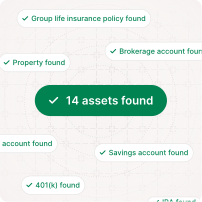
Elayne is an estate settlement service that actively searches for unclaimed assets, lost insurance policies, dormant accounts, and eligible survivor benefits a family may not know exist. The service also handles notifications to financial institutions, coordinates account closures and transfers, and tracks deadlines across the full settlement timeline.
Settling an estate typically requires 400+ hours of administrative work. Elayne carries out many of those steps directly, pairing automation with human support so families feel confident that nothing has been overlooked.
FAQ
Can I find bank accounts of a deceased parent without a lawyer?
Yes. You can locate most accounts yourself using home records, tax returns, state unclaimed property databases, and direct contact with known institutions. However, legal help becomes especially valuable when you need court orders to access contested accounts or if there are disagreements between family members.
What's the fastest way to search for unclaimed accounts in multiple states?
MissingMoney.com searches participating states in one query and is endorsed by NAUPA. For the most thorough search, follow up with individual state treasurer websites, since some states maintain separate portals not yet indexed by MissingMoney.
How do payable-on-death accounts differ from individual accounts after a parent's death?
Payable-on-death (POD) accounts transfer directly to the named beneficiary with a death certificate and ID, bypassing probate entirely. Individual accounts with no beneficiary freeze until the executor presents court-issued letters testamentary or letters of administration.
Should I search old employers if my parent retired years ago?
Yes. 401(k) balances from jobs held decades ago, pension plans, group life insurance, and unclaimed final paychecks often sit untouched long after retirement. Contact HR departments at former employers, unions, and third-party plan administrators like Fidelity or Vanguard to trace where benefits ended up.
How does Elayne help locate accounts?
Elayne searches for unclaimed assets, lost insurance policies, dormant accounts, and eligible survivor benefits using document analysis, database queries, and state unclaimed property registries. The service handles notifications, account closures, and transfers while tracking deadlines.
*Disclaimer: This article is for informational purposes only and does not provide legal, medical, financial, or tax advice. Please consult with a licensed professional to address your specific situation.










.svg)