

The hours after your dad passes can feel overwhelming and unreal. You might be asking yourself what to do after your dad dies while trying to process your grief at the same time. Take a deep breath and focus on what matters in the first 24 hours. There are three things that need your attention, and we’ll walk through each one together.
Key Takeaways:
- Order 8–12 death certificates as soon as you’re able, you’ll need originals for insurance, banks, and government agencies.
- Notify Social Security within days to stop payments and begin any survivor benefit claims.
- Contact credit bureaus and banks quickly to freeze accounts and help prevent identity theft.
- Estate settlement often takes around 16 months and 500–700 hours of work across multiple institutions.
- Elayne creates a personalized roadmap and helps with notifications, asset searches, and paperwork so you don’t have to manage everything alone.
{{blog-cta-admin}}
Immediate Steps in the First 24 Hours

The first few moments can feel like a blur. It is very normal to feel unsure of what to do after your dad dies. Try to focus only on these three immediate needs.
Get a legal pronouncement
- If he passed in a hospital, hospice facility, or nursing home, the staff usually handles this for you.
- For unexpected deaths at home, call 911.
- If he was under hospice care at home, call the hospice nurse instead of emergency services to officially declare the death.
Arrange transportation
- Call a funeral home or cremation provider to bring him into their care.
- You do not need to have the full funeral or memorial planned right now. This first step is simply about the immediate transfer.
Notify close family
- Reach out to close family or a trusted friend for support.
- If you can, ask someone you trust to help notify the extended circle so you don’t have to repeat the news yourself.
Obtain Death Certificates and Important Documents
The death certificate is the legal document that allows you to manage your dad’s affairs. Without it, most institutions cannot release information or authorize changes.
- Your funeral director can often order certified copies for you, or you can request them through the state records office.
- Since organizations usually require an original certified copy instead of a photocopy, it is helpful to order 8 to 12 right away to avoid delays.
You will typically need separate originals for:
- Life insurance companies to process and pay out claims.
- Banks and other financial institutions to close or transfer accounts and investments.
- Real estate matters, such as property titles or home sales.
- Government agencies like the DMV, Social Security, and the IRS.
Plan the Funeral or Memorial Service
If you feel up to it, start by checking for any written wishes or prepaid arrangements. If your dad outlined his preferences or paid ahead of time, this part becomes more straightforward, you can contact the provider he chose.
If there is no plan:
- Try not to feel pressured to decide everything at once.
- Focus first on the main choice between burial or cremation.
- Remember that a memorial service can take place weeks or even months later, when you and your family are ready.
When meeting with a funeral director:
- Bring a friend or relative for emotional support and help with questions about costs and options.
- Mention if he was a veteran, as he may be eligible for burial benefits, a gravesite, or military honors at the service.
Notify Social Security and Government Agencies
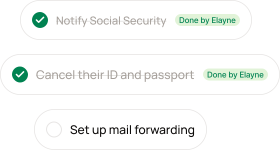
Social Security needs to be notified quickly to stop benefit payments and avoid overpayment issues later. Funeral homes often report the death, but it is wise to confirm this directly.
This step can also start the process for survivor benefits if your dad left behind a spouse or dependent children, though applying for these usually requires speaking with a representative.
To further protect his identity and prevent issues later, it helps to contact:
- The DMV to cancel his driver’s license.
- The registrar of voters to remove his name from the voter rolls.
- The IRS and, when relevant, the Department of Veterans Affairs.
Because estate settlement can take around 16 months on average, taking care of these government updates early can prevent complications later on.
| Government Agency | Why You Need to Notify | When to Contact | What You'll Need |
|---|---|---|---|
| Social Security Administration | Stop benefit payments and prevent overpayment issues; initiate survivor benefit claims for eligible family members | Within the first few days after death | Social Security number, date of death, and death certificate (funeral directors often report this, but verify personally) |
| Department of Motor Vehicles (DMV) | Cancel driver's license to prevent identity theft and fraudulent use of identification | Within the first 2-4 weeks | Death certificate, driver's license number, and state-specific forms |
| Registrar of Voters | Remove name from voter rolls to protect against identity fraud and election-related misuse | Within the first month | Death certificate and voter registration information |
| Internal Revenue Service (IRS) | File final tax returns and notify of estate tax obligations if applicable | By the tax filing deadline for the year of death | Death certificate, Social Security number, and previous tax returns |
| Veterans Affairs (if applicable) | Stop benefit payments, claim burial benefits, and arrange military honors for the funeral | Within the first week for burial benefits; within months for other claims | DD-214 form, death certificate, and VA claim number if available |
Locate Important Financial and Legal Documents
Finding your dad’s will or trust is one of the most important early milestones. This document confirms who has legal authority to handle the estate and outlines his wishes.
Good places to check:
- Home safes or lockboxes.
- Filing cabinets or desk drawers.
- Safe deposit boxes (you may need documentation to access these).
- His attorney, financial advisor, or accountant.
Once you locate the will, trust, or estate plan, begin gathering records that help you understand assets and debts:
- Financial accounts: Bank and credit card statements, retirement accounts, investment portfolios.
- Property records: Real estate deeds, vehicle titles, and any loan documents.
- Tax history: Copies of tax returns from the last few years.
- Digital records: Check computers and email accounts for paperless billing or online-only accounts.
Notify Banks, Creditors, and Financial Institutions
Reaching out to financial institutions helps protect your dad’s accounts from fraud and stops automatic withdrawals that no longer make sense.
- In the beginning, a phone call is often enough to place a temporary freeze on accounts; official closure or transfers usually require a death certificate and additional paperwork.
- When you call, ask for the “estate department” or “survivor support” team. These teams are used to supporting families after a death and may help you avoid repeating your story multiple times.
You can start with these three contacts:
- Credit bureaus: Contact Equifax, Experian, or TransUnion to place a “deceased alert,” which can help reduce the risk of identity theft.
- Primary bank: Notify the bank where his main checking account was held so they can pause new transactions and guide you on next steps.
- Credit card issuers: Let them know about his death so they can stop new charges, interest, and late fees while the estate is being settled.
File Life Insurance Claims and Search for Unclaimed Benefits
If you know your dad had life insurance, reach out to the insurance company to start the claims process. They will explain which forms they need and how to submit the death certificate.
If you are not sure what coverage exists, look for clues:
- Bank or credit card statements with recurring payments to insurance companies.
- Pay stubs or HR records from past employers that might show group life coverage.
- Email accounts or physical files with annual policy statements.
If you still cannot find details, you can use the free life insurance policy locator from the National Association of Insurance Commissioners (NAIC). This tool has helped connect families with over $6 billion in benefits since 2016.
It is also worth checking unclaimed property databases in every state where your dad lived. These sites can reveal forgotten savings accounts, old paychecks, insurance refunds, or other funds that belong to his estate
Close or Transfer Accounts and Cancel Subscriptions
As you move further into the process, you will eventually need to close or transfer ownership of your dad’s accounts.
- Joint accounts often pass directly to the surviving owner.
- Sole accounts may be moved into an estate account that is used to pay remaining bills and distribute what is left to heirs, according to the will or state law.
Take time to review statements and digital records for recurring charges:
- Subscriptions, memberships, and streaming services can quietly drain funds if they stay active.
- Many subscriptions can be canceled online, though some companies may ask for a death certificate.
- Think about his digital presence and deciding whether to memorialize or close social media accounts can both protect his identity and create a space for remembrance.
How Elayne Can Support You After Your Dad’s Death
Losing a parent changes so much at once. You shouldn’t have to carry complex paperwork and logistics on top of everything you are feeling. That’s where we come in.

At Elayne, we create a personalized roadmap based on your situation, showing you which steps to take and in what order. We help with sending notifications to government agencies and financial institutions, searching for unclaimed assets and benefits, and preparing and organizing key documents so you don’t have to manage every detail on your own.
Our tool combines clear, simple guidance with human support from our team. We focus on the administrative burden, so you can focus more on your family, your memories, and your own well-being.
Final Thoughts on Moving Forward After Your Dad's Passing
Grief and paperwork rarely fit together well. Knowing what to do after your dad dies can at least give you a roadmap through the confusion, even if you take it one small step at a time.
You do not have to do everything today. When you’re ready, lean on people you trust, ask for help when you need it, and remember that it is okay to move through this process at the pace that feels right for you.
Try Elayne when you’re ready to have a steady partner by your side. Get started in just a few minutes and see how much lighter this process can feel.
{{blog-cta-admin}}
FAQs
How many death certificates should I order after my dad passes away?
It is usually helpful to order 8 to 12 certified copies as early as you can. You will likely need originals for life insurance claims, banks, real estate transfers, and government agencies, and many of these will not accept photocopies.
Do I need to plan the funeral immediately after my dad dies?
No, you don't need to decide everything right away. Focus first on choosing between burial or cremation, and remember that the memorial service can happen weeks or even months later when you're ready.
How long does it typically take to settle an estate after losing a parent?
Most estates take around 16 months to settle, with executors spending between 500 and 700 hours on the process. The actual timeline depends on whether probate is required and how complex your dad's financial situation was.
Can I notify my dad's bank without a death certificate?
Yes, you can call banks immediately with just a verbal notification to freeze accounts and stop automatic payments. The death certificate will be needed later to officially close or transfer accounts.
What happens if I can't find my dad's life insurance policy?
Check his bank statements for recurring payments, review old pay stubs for employer coverage, and search his email and files for policy statements. You can also use the free NAIC policy locator service, which has helped families recover over $6 billion in unclaimed benefits.
**Disclaimer: This article is for informational purposes only and does not provide legal, medical, financial, or tax advice. Please consult with a licensed professional to address your specific situation.







.svg)