

Estate administration is a legal process that requires managing a broad set of tasks after someone passes away.
In this article, we cover what estate administration means, the core duties of an executor or administrator, the step-by-step process from day one through closing, timelines and fees, and what California's specific rules require. Whether the estate is small and straightforward or larger and more complex, this guide is designed to provide a clear overview of the path ahead.
Key Takeaways:
- Estate administration settles a person's affairs after death through inventorying assets, paying debts, and distributing what remains to beneficiaries or heirs.
- Executors are named in a will; administrators are court-appointed when no will exists.
- Most estates take nine months to two years to settle depending on size, debts, and state requirements.
- Administrator fees range from 2% to 4% of estate value in states like California, New York, and Florida.
- Elayne handles notifications, tracks deadlines, and locates dormant accounts to support families throughout the process.
What Is Estate Administration?
Estate administration is the process of settling a person's affairs after death. It covers gathering assets, paying debts, filing final tax returns, and transferring what remains to beneficiaries named in a will or to heirs identified under state law when no will exists.
A typical estate administration includes:
- Locating and inventorying assets such as bank accounts, real estate, retirement plans, and personal property
- Notifying creditors, government agencies, and financial institutions of the death
- Settling outstanding debts, medical bills, and final expenses
- Filing the deceased person's final income tax return and any estate tax returns
- Distributing remaining assets to beneficiaries or legal heirs
The person carrying out this work is the estate administrator (appointed by the court) or the executor (named in a will). Their role is fiduciary, meaning they act on behalf of the estate and its beneficiaries, following both the deceased person's wishes and state law.
Estate Administrator vs Executor: Understanding the Difference
The titles sound interchangeable, but they describe two different paths to the same role. An executor is named directly in a will. An administrator is appointed by the probate court when no will exists, when the will fails to name someone, or when the named executor declines, dies, or is disqualified.
| Role | How Appointed | When It Applies |
|---|---|---|
| Executor | Named in the will | Valid will exists and the named person can serve |
| Administrator | Appointed by probate court | No will, invalid will, or executor unable to serve |
Once appointed, the duties look nearly identical: inventorying assets, paying debts, filing taxes, and distributing what remains. The main difference is how much guidance the court provides. Administrators often work under closer supervision because they follow state intestacy rules instead of written instructions from the person who died.
{{blog-cta-legal}}
Core Responsibilities of an Estate Administrator
An administrator's work falls into four broad areas, each carrying legal obligations.

Securing and Inventorying Assets
The first part of the role is managing what the person who died owned: changing locks on real estate, freezing accounts, safeguarding valuables, and filing a formal inventory with the court.
Paying Debts and Taxes
Before beneficiaries receive distributions, the estate must settle valid creditor claims, medical bills, and tax liabilities. Administrators publish notice to creditors, review claims for legitimacy, and file the final personal income tax return along with any estate tax filings required by the IRS or state.
Distributing What Remains
Once debts and taxes are paid, the administrator transfers remaining property according to the will or, without one, state intestacy rules. Distributions usually require court approval first.
Acting as a Fiduciary
Every step is governed by fiduciary duty and legal responsibilities. Administrators must act in the best interest of the estate and its beneficiaries, keep estate funds separate from personal funds, maintain detailed records, and avoid conflicts of interest. Breach of these duties can lead to personal liability or removal by the court.
The Estate Administration Process: Key Steps

- Petition the probate court and receive letters of administration, the document that grants legal authority to act.
- Notify beneficiaries, heirs, and known creditors, then publish public notice in a local newspaper.
- Open an estate bank account and file the formal asset inventory with the court.
- Review and pay valid creditor claims, medical bills, and final taxes within statutory deadlines.
- Submit a final accounting to the court, obtain approval, and distribute remaining property to heirs.
How Long Does Estate Administration Take?
Multiple factors determine how long a settlement will last, including:
- Estate size and complexity, including real estate in multiple states or business interests
- State-mandated creditor claim periods, which often run four to six months
- Disputes among heirs or contested will challenges
- Tax filings, particularly when an estate tax return is required
- Court backlogs and how quickly the administrator can produce inventories and accountings
Estate Administrator Fees and Compensation
Administrators are entitled to reasonable compensation for their work, and how that figure is calculated depends on state law.
- Statutory percentage states (California, New York, Florida) set fees as a sliding scale of the gross estate value, often ranging from 2% to 4%.
- Reasonable compensation states (Texas, Illinois, Massachusetts) base payment on time spent, complexity, and estate size, subject to court approval.
Fees are paid from estate assets before distribution to heirs, and they count as taxable income to the administrator. Many administrators who are also beneficiaries waive their fee, since inheritance passes tax-free while compensation does not.
Estate Administration vs Probate: What You Need to Know
Estate administration is the full process of settling someone's affairs after death. Probate is the court-supervised piece: validating a will, appointing a fiduciary, and overseeing distribution of probate assets.
Not every estate requires probate. Many assets transfer outside of court, including:
- Retirement accounts and life insurance with named beneficiaries
- Bank or brokerage accounts with payable-on-death or transfer-on-death designations
- Property held in joint tenancy with right of survivorship
- Assets titled in a revocable living trust
Estate Administration Checklist: Key Items
Immediate (First 2 Weeks)
- Secure the home, vehicles, and valuables
- Order 10 to 15 certified death certificates
- Locate the will, trust documents, and financial records
- Notify Social Security, employers, and close family
Early Stage (Weeks 2 to 8)
- File the petition for probate and obtain letters of administration
- Open an estate bank account using the estate's EIN
- Notify creditors and publish public notice
Middle Stage (Months 2 to 9)
- Pay valid debts, medical bills, and ongoing expenses
- File final income tax returns and any estate tax returns
Closing
- Submit final accounting, distribute assets, and close the estate
{{blog-cta-legal}}
Estate Administration in California: State-Specific Considerations
California sets its own rules that differ meaningfully from other states. Full probate is generally required when an estate's gross value exceeds $184,500 under Probate Code Section 13100, though smaller estates can often transfer through a small-estate affidavit.
A few California-specific points to know:
- Statutory administrator fees follow a fixed sliding scale: 4% on the first $100,000, 3% on the next $100,000, 2% on the next $800,000, with lower tiers above.
- Inventory and appraisal must be filed within four months of appointment, with a court-appointed probate referee valuing non-cash assets.
- Property held in joint tenancy or community property with right of survivorship transfers outside probate by filing an affidavit of death.
- Spousal property petitions offer a faster path when assets are transferred to a surviving spouse.
Rules vary by state, so it's important to confirm local requirements before filing.
How Elayne Automates Estate Administration for Families
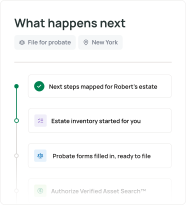
Here is how Elayne supports the steps covered throughout this guide:
- Generates a personalized checklist that updates as steps are completed
- Carries out notifications to Social Security, the IRS, and financial institutions, along with account closures and ownership transfers
- Tracks creditor claim windows, tax deadlines, and court filing dates
- Locates dormant accounts, lost insurance policies, and eligible survivor benefits
- Provides a shared, secure dashboard where executors, relatives, and advisors can collaborate with role-based permissions
Settling an estate can take 400+ hours over many months. By combining automation with human support, Elayne assists families through each stage of the process. To see how our team can help, learn more about Elayne here.
FAQ
Estate administrator vs executor: what's the difference?
An executor is named in a will, while an administrator is appointed by the probate court when no will exists or the named executor can't serve. Once appointed, both roles carry the same duties: inventorying assets, paying debts, filing taxes, and distribution to beneficiaries. The main difference is that administrators work from state intestacy law, carrying out the legal defaults that apply when the person who died did not leave written instructions.
Can an administrator of an estate take everything?
No. Administrators serve as fiduciaries and must act in the best interest of the estate and its beneficiaries. They distribute property according to state intestacy law, keep estate funds separate from personal funds, and maintain detailed records. Any breach of fiduciary duty can lead to personal liability or removal by the court.
How long does estate administration take?
Most estates take about nine months to settle, though the process can last longer depending on estate size, creditor claim periods, tax filings, and court backlogs.
Best way to handle estate administration if I'm also working full-time?
Estate settlement typically requires 400+ hours over many months. Services like Elayne handle notifications to government agencies, account closures, ownership transfers, and deadline tracking on your behalf. Our goal is to make sure that no family has to go through the settlement process alone.
When is probate required in California?
California generally requires full probate when an estate's gross value exceeds $184,500 under Probate Code Section 13100. Smaller estates can often transfer through a small-estate affidavit. Many assets transfer outside probate entirely, including retirement accounts with beneficiaries, property held in joint tenancy, and assets titled in a revocable living trust.
*Disclaimer: This article is for informational purposes only and does not provide legal, medical, financial, or tax advice. Please consult with a licensed professional to address your specific situation.










.svg)