

Everyone tells you to get your estate plan in order, but no one explains the difference between a trust and a will in terms that actually help you decide. Here's what matters: wills go through probate, which means court supervision, public records, and a year or more of waiting. Trusts skip most of that, giving your family privacy and control over the timeline. Let's look at how each one plays out in the weeks and months after you're gone.
Key Takeaways:
- Wills require probate (9-20 months, costing 4-7% of estate value); trusts skip court and finish faster.
- Executors spend roughly 570 hours over 18 months managing probate paperwork and court requirements.
- Probate creates public records of assets and inheritances; trusts keep distributions private.
- Trusts make financial sense for net worth above $1 million, but family complexity matters more than net worth.
- Elayne automates notifications, filings, and deadlines, whether you're working with a will or a trust.
What Happens to a Will vs. a Trust After Someone Passes Away
When a will exists, the estate must go through probate, a court-supervised process that validates the will, settles debts, and distributes assets according to the document's instructions. The executor must file paperwork with the local probate court, notify creditors and heirs, and wait for court approval at multiple stages before any assets can change hands.
A trust works differently. If assets were properly transferred into the trust during the person's lifetime, the successor trustee can begin distributing them almost immediately after death, without court involvement. The trust document itself provides the instructions, and the trustee follows them privately.
The distinction matters because probate adds layers of court oversight, public filing requirements, and waiting periods that don't exist with trusts. Families going through probate often wait 6 months to 2 years for hearings and approvals. Those working with a trust can move forward on their own timeline.
This difference shapes everything from how quickly beneficiaries receive assets to how much privacy the family maintains during settlement. It also determines whether you'll spend more time in court or more time coordinating directly with financial institutions and family members.
The Probate Timeline: How Long Will Settlement Take?
Probate typically takes 9 to 20 months from start to finish, with most families waiting 12 to 18 months before receiving inheritances. Trusts move faster: beneficiaries often receive assets within six to 12 months.
Several factors drive probate timelines. Court dockets vary by county, and some jurisdictions schedule hearings months apart. Creditor claim periods last several months in most states, during which the estate must remain open. If the IRS requires an estate tax return, that adds six to nine months of waiting.
Real estate sales, disputes among heirs, or missing documents can further delay things. Each complication adds weeks or months to an already slow process.
Trusts skip most of these hurdles. There's no court calendar to wait for, no mandatory creditor publication period, and no judge's signature needed to move forward. The trustee handles distributions directly with banks, title companies, and beneficiaries.
That said, trusts aren't instant. The trustee still needs to gather documents, value assets, pay final debts, and coordinate with family members. The difference is control: families working with trusts set the pace themselves.
The Real Cost of Settling an Estate With a Will vs. Trust
Probate costs between 4% and 7% of the estate's total value in most states. For a $750,000 estate, that means spending $30,000 to $52,500 before beneficiaries receive anything.
These expenses break down into several categories. Attorney fees typically range from $3,000 to $7,000 or more, depending on the complexity and hours billed. Executor compensation, often calculated as a percentage of the estate value, ranges from 2% to 4% in many jurisdictions. Court filing fees, publication costs for creditor notices, and appraisal fees add another $2,000 to $5,000. If real estate needs to be sold or disputes arise, those numbers climb quickly.
Trust administration costs less. Families typically pay $2,000 to $5,000 for legal guidance and trustee services, depending on the estate's complexity. There are no court fees, no mandatory executor percentages, and fewer required professional services.
The hidden cost in probate is time. Extended timelines mean ongoing property maintenance, insurance, and management fees that eat into the estate's value month after month. Trusts close faster, reducing these carrying costs.
Upfront trust creation costs $1,500 to $3,500, depending on location and complexity. But for estates over $500,000, those initial expenses are often recouped many times over during settlement.
The Administrative Burden: Hours Spent Settling an Estate
Serving as an executor means taking on roughly 570 hours of work over 12 to 18 months. That's the equivalent of 14 full-time work weeks spent managing someone else's affairs while trying to process your own loss.
These hours accumulate fast. Executors spend weeks tracking down financial accounts and institutions, requesting death certificates, and filling out repetitive forms for each institution. Every credit card, retirement account, and insurance policy requires separate phone calls, paperwork, and follow-up.
Then there's coordinating with the court, responding to creditor claims, managing property maintenance, filing tax returns, and keeping beneficiaries informed. Each piece generates more calls, more emails, and more waiting.
Trustees face similar work, but without the court layer. They still need to gather documents, notify institutions, and coordinate distributions. The difference is fewer mandatory steps and less time spent waiting for approvals.
For families already grieving, this administrative weight can feel overwhelming. Many executors describe the months after a loss as a second job they never wanted, one that leaves little room for rest or healing.
{{blog-cta-legal}}
Privacy Matters: Public Probate vs. Private Trust Administration
Probate creates a public record. Once a will enters the court system, it becomes accessible to anyone who wants to see it. That includes the full inventory of assets, their values, who's receiving what, and any disputes that arise during settlement.
Court filings reveal bank account balances, real estate holdings, investment portfolios, and details of personal property. In many counties, these records are searchable online. Neighbors, distant relatives, creditors, and strangers can look up what someone owned and how much their estate was worth.
Trust administration happens privately. The trust document never gets filed with a court, and asset distributions occur between the trustee and beneficiaries without public disclosure. Only the people named in the trust know its contents. Privacy is maximized through trusts because assets avoid probate and are not part of the public record.
For families dealing with complicated dynamics, blended families, or concerns about unwanted attention, this privacy offers real protection. There's no public listing of inheritances, no searchable record of family wealth, and no window into personal financial decisions during an already vulnerable time.
Who Should Consider a Trust Based on Estate Value
Trusts start making financial sense around the $1 million net worth mark, where probate costs and timing concerns outweigh setup expenses. Below that threshold, a will often serve families well.
Net worth isn't the only consideration. If you own real estate in multiple states, each property faces separate probate proceedings, and a trust can simplify this considerably. Families with minor children, beneficiaries who may need help managing inheritances, or blended family situations often benefit from trusts regardless of total estate value.
The right choice depends on your family's specific needs beyond account balances. A will might feel simpler now, but thinking through who would manage assets and when they'd receive them can guide you toward the option that brings the most clarity.
| Will | Trust | |
|---|---|---|
| Probate Required | Yes, court-supervised process | No, private administration |
| Settlement Timeline | 9-20 months (typically 12-18 months) | 6-12 months |
| Cost to Settle | 4-7% of estate value ($30,000-$52,500 for a $750k estate) | $2,000-$5,000 |
| Privacy | Public record, accessible to anyone | Private, only known to named parties |
| Administrative Hours | ~570 hours over 12-18 months | Far fewer hours, no court requirements |
| Upfront Setup Cost | $300-$1,000 | $1,500-$3,500 |
| Multi-State Property | Separate probate in each state | Single administration for all states |
| When It Takes Effect | After death | Immediately upon funding |
{{blog-cta-legal}}
How Elayne Simplifies Estate Settlement Regardless of Planning

Whether your loved one created a trust, left a will, or made no estate plan at all, the settlement process still requires coordinating with institutions, filing paperwork, tracking deadlines, and making sense of what needs to happen when.
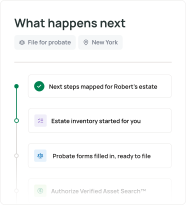
We built Elayne to handle those steps for you. Our service automates notifications to banks, government agencies, and creditors. We help you locate assets, file necessary documents, and guide you through probate or trust administration with a personalized roadmap that updates as you go.
Families using Elayne save hundreds of hours by letting us manage the repetitive, time-consuming parts of settlement. We handle account closures, benefit claims, and deadline tracking so you can focus on healing and family.
If you're facing estate settlement and feeling uncertain about where to start, we're here to walk with you through every step with less stress and more support.
Final Thoughts on Planning With Clarity and Care
Deciding between a will and a trust isn't about picking the perfect document; it's about choosing the one that best protects your family. Each option shapes how quickly and privately your loved ones can settle things after a loss. The right answer comes from thinking through your specific situation, not following a formula. We can help you understand your choices and move forward with less uncertainty.
If you are ready to turn your will‑versus‑trust choice into a clear plan for your family, you can get started with Elayne’s guided estate planning support to map out your next steps.
FAQs
Can you have both a will and a trust?
Yes, and many people do. The trust holds assets transferred into it during your lifetime, while a "pour-over" will capture anything left outside the trust and direct it to the trust after death, making sure nothing is overlooked.
At what net worth should I consider creating a trust?
Trusts typically make financial sense for net worth above $1 million, where probate costs and delays outweigh setup expenses. However, owning property in multiple states, having minor children, or being part of a blended family can make a trust worthwhile regardless of the total estate value.
How much does probate actually cost compared to trust administration?
Probate typically costs 4% to 7% of your estate's value (meaning $30,000 to $52,500 for a $750,000 estate), while trust administration usually runs $2,000 to $5,000 in total. The upfront cost to create a trust is $1,500 to $3,500, but larger estates often recoup this during settlement.
Why does probate take so much longer than settling a trust?
Probate requires court supervision at each stage, with mandatory waiting periods for creditor claims, scheduled hearings months apart, and judge approval before any distributions. Trusts skip these court requirements, allowing the trustee to work directly with institutions on the family's timeline.
What happens if my loved one dies without an estate plan?
The estate goes through probate according to your state's intestacy laws, which determine who inherits what based on family relationships. We can guide you through this process step by step, handling notifications, asset discovery, and court filings so you don't have to manage it alone.







.svg)