
Medicaid estate recovery is a state program that seeks repayment from a deceased person's estate for certain Medicaid benefits, primarily long-term care costs. Whether a claim reaches a particular asset depends on how the state defines an estate. Some states include only probate property, while others also include assets such as joint accounts, trusts, and accounts with named beneficiaries. This guide explains key points for families and executors to be aware of, including: who recovery applies to, which services are covered, what counts as an estate, who is protected, how liens and hardship waivers work, claim deadlines, and more.
Key Takeaways
- Medicaid estate recovery seeks repayment for certain care costs from an estate after death.
- Assets outside probate can still face recovery under expanded state estate definitions.
- Surviving spouses and qualifying children have federal protections; hardship waivers vary by state.
- Elayne surfaces ownership records for probate review and tracks recovery notice deadlines.
What Is the Medicaid Estate Recovery Program (MERP)?
The Medicaid Estate Recovery Program (MERP) requires states to seek repayment for certain Medicaid benefits from a person’s estate after death, primarily for long-term care costs. Every state and the District of Columbia has a recovery program.
Recovery helps fund Medicaid by reclaiming money spent on a deceased enrollee’s care. The federal estate recovery rules set the baseline for required recovery, while state law shapes how claims affect the property someone leaves behind.
{{blog-cta-financial}}
Who Does Medicaid Estate Recovery Affect?
Medicaid estate recovery generally affects two groups, according to the National Council on Aging:
- People who received certain Medicaid benefits at age 55 or older.
- People of any age, including those under 55, who were permanently institutionalized.
Enrollment alone does not trigger recovery. The benefits received and state rules determine whether recovery applies.
What Services Are Subject to Recovery?
For services received at age 55 or older, mandatory Medicaid recovery covers:
- Nursing facility care.
- Home and community-based services.
- Hospital care and prescription drugs related to those services.
States may also recover payments for other Medicaid services.
What Counts as an "Estate" for Recovery Purposes?
A state's definition of “estate” determines which assets Medicaid can pursue.
| Definition | Potential recovery reach |
|---|---|
| Probate-only | Probate vs. non-probate property passing through probate court, such as a home or solely owned bank account. |
| Expanded | May include non-probate interests in joint accounts, life estates, trusts, and beneficiary-designated accounts, depending on state law. |
Who Is Protected From Medicaid Estate Recovery?
Federal law prohibits Medicaid estate recovery while the person who died has a surviving:
- Spouse.
- Child under age 21.
- Blind or disabled child of any age.
These mandatory federal recovery protections are separate from hardship waivers.
The estate representative documents the qualifying survivor’s status for the recovery agency. Protection may defer recovery without permanently canceling the claim. Whether the state can pursue recovery later depends on state law.
Medicaid Liens: What They Are and How They Work
A Medicaid lien is a legal claim against real property, often a home. During permanent institutionalization, a state may place a lien before death, subject to notice requirements and protections for certain relatives living there. After required notice and an opportunity for a hearing, the state agency typically records the lien in the property's county land records. It can affect a sale or transfer; a post-death Medicaid estate recovery claim seeks repayment from the estate and does not require a pre-death lien.
County land records or a title search can reveal a recorded lien. The state Medicaid agency can confirm whether it concerns Medicaid. A lien based on permanent institutionalization must be removed if the person is discharged from the facility and returns home. Other release grounds and lien duration depend on state law; removal generally involves recording an agency-issued release when the lien is satisfied or otherwise must be removed.
How the Recovery Process Works After a Death
- The death is reported to Medicaid, often by the estate representative or through agency records.
- The state reviews benefits paid and sends a Medicaid estate recovery notice or questionnaire to the executor or administrator named in a letter of administration.
- The representative responds with corrections or applicable protections by the stated deadline.
- Where probate applies, the state files a claim following notice to creditors requirements. State law determines payment priority.
- A valid claim is paid from available estate assets as part of how executors manage estate debt before remaining property is distributed to heirs.
Medicaid Estate Recovery Time Limits
There is no national Medicaid estate recovery time limit. State statutes of limitations, claim-filing deadlines, and probate creditor rules govern when agencies can seek repayment. Medicaid-specific rules and notice requirements can affect those deadlines.
The applicable state's filing and notice rules determine when the recovery deadline begins. The filing deadline differs from how long Medicaid estate recovery takes to resolve. Disputes or deferred recovery can extend the process.
The Undue Hardship Waiver
Federal law requires states to offer a Medicaid estate recovery hardship waiver process. Eligibility varies by state. Criteria may include an heir’s limited income or reliance on a home, family farm, or business as a primary income-producing asset.
The heir submits the state recovery agency’s application by its deadline. Supporting records typically include income statements, tax returns, and proof of property ownership or income. Records must show how the request meets the state’s hardship criteria.
{{blog-cta-financial}}
How Elayne Supports Families Managing Estate Recovery Claims
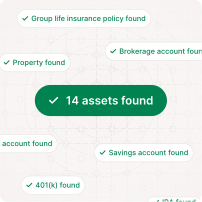
Elayne’s Verified Asset Search surfaces real property and deeds, financial accounts, vehicle records, life insurance policies, and unclaimed property connected to the person who died. Findings are added to one source-linked estate record that shows how each asset was held. That record helps provide the representative and their attorney the titling information used to sort probate property from non-probate property under the applicable state definition.
Elayne organizes the estate’s documents, contacts, and account details in one place, including property records and correspondence from state agencies. Deadline tracking records the response date stated in a recovery notice alongside other estate dates, such as creditor notice periods. Elayne's creditor notification support handles the Notice to Creditors process where probate applies. Credit bureau searches across Equifax, Experian, and TransUnion can also surface debts, so a recovery claim can be viewed alongside the estate’s other obligations.
Elayne cancels recurring charges such as streaming, gym, and software subscriptions directly with providers and monitors later statements to confirm the charges stopped.
A Medicaid estate recovery attorney provides state-specific legal advice about contested charges, property exposure, and appeal rights. Through Elayne, attorneys can access documents, account records, and progress tracking through the same shared dashboard when the representative authorizes access. Elayne keeps the underlying record organized for that review, so counsel’s review begins from organized records.
FAQ
Must heirs pay a Medicaid estate recovery claim from personal funds if the estate has no cash?
Generally, no: a Medicaid estate recovery claim seeks payment from recoverable estate assets, not an heir’s personal funds simply because of heir status. An estate with a home but no cash may still have assets subject to recovery, so the representative reviews ownership, survivor protections, and state payment rules before deciding how to resolve the claim.
How can an estate representative dispute a Medicaid estate recovery notice that includes care the person never received?
The estate representative can request an itemized payment history and dispute inaccurate charges through the state agency’s review process. A written response identifies the disputed services and includes supporting records by the notice’s deadline; requesting records does not necessarily extend that deadline.
Where is a state's Medicaid estate recovery phone number listed?
The state Medicaid agency’s official estate recovery page or the recovery notice lists the relevant contact number. When a notice names an outside contractor, the agency can confirm that contractor’s role before the estate representative shares estate documents or personal information.
What roles do Elayne and a Medicaid estate recovery attorney have when a claim is disputed?
A Medicaid estate recovery attorney provides state-specific legal advice about contested charges, property exposure, and appeal rights. Elayne supports estate organization, ownership-record review, and deadline tracking, giving families and counsel a shared record for that legal work.
Does Medicaid have to be paid back after death?
Medicaid is not a loan, and enrollees do not repay benefits during their lifetimes. After death, federal law requires states to seek repayment from the estate for certain benefits received by people who were 55 or older, and by people of any age who were permanently institutionalized. Enrollees who received other Medicaid benefits before age 55 and were not permanently institutionalized are generally outside recovery.
Which federal law requires Medicaid estate recovery?
Section 1917(b) of the Social Security Act, found at 42 U.S.C. 1396p(b), requires each state to operate an estate recovery program. The Omnibus Budget Reconciliation Act of 1993 made recovery mandatory; before that, states could choose whether to recover. Federal law sets the minimum categories of recovery, and each state's law defines the estate and decides whether to recover for optional services.
*Disclaimer: This article is for informational purposes only and does not provide legal, medical, financial, or tax advice. Please consult with a licensed professional to address your specific situation.