

Filing a life insurance claim means gathering certified death certificates, locating the policy, contacting the insurer, and keeping track of deadlines. Here's how the process works, what you need to prepare, and what to do if something goes wrong.
Key Takeaways:
- Life insurance claims typically process in 14 to 60 days once complete documentation is submitted.
- You need a certified death certificate, completed claim form, photo ID, and policy number to file.
- Roughly 40% of denied claims are overturned on appeal, making it worth challenging denials.
- Elayne automates life insurance claims filing while handling related steps like closing accounts and locating unclaimed benefits.
How to File a Life Insurance Claim: The Step-by-Step Process
Step 1: Locate the Policy
Check filing cabinets, safe deposit boxes, email accounts, or financial records. If the policy is missing, the insurer's name may appear on old bank statements or mail.
Step 2: Request Death Certificates
Families will need certified copies of the death certificate, usually several.
Step 3: Contact the Insurance Company
Reach out to the insurer's claims department directly by phone or online. Ask for their specific claims form, often called a "proof of loss" or "claimant's statement."
Step 4: Submit the Claim Package
Send in the completed claim form, a certified death certificate, and the original policy if requested. Some insurers accept online filing; others require mail.
Step 5: Follow Up
After submission, confirm receipt and ask for a claim number. Keep a record of every conversation, including the date, representative name, and what was discussed.
What Documents You Need to File a Claim

Here is what most insurers will ask for:
- Certified death certificate (original, not a copy): Order multiple copies since banks, government agencies, and other institutions will each need one. Most families need at least five to ten.
- Completed claim form: Provided by the insurer, sometimes called a "claimant's statement" or "proof of loss" form.
- Your photo ID: A government-issued ID to verify you are the named beneficiary.
- The policy number or original policy document: If you cannot locate the document itself, the policy number is often enough to get started.
- Proof of relationship: Some insurers request a marriage certificate, birth certificate, or similar document depending on how the beneficiary is listed.
Certified death certificates come from the county or state records office, and funeral homes can usually help families order them at the time of burial or cremation. The cost per copy is typically a small fee, but ordering enough upfront saves time later.
If the policy lists a trust or estate as the beneficiary, additional documents like letters testamentary may be required. When in doubt, call the insurer's claims department before submitting to confirm exactly what they need.
{{blog-cta-financial}}
How Long Does It Take to Receive a Life Insurance Payout?
Most claims are paid within 14 to 60 days of submission. Where a claim falls in that range depends on a few key factors.
The process for claims with complete documentation, no contestability concerns, and a named living beneficiary tends to move fastest. Missing documents are the most common reason for delays, and each round of follow-up adds days or weeks to the timeline.
State law also plays a role: most states require insurers to pay approved claims within 30 days of receiving all required documents or face interest penalties.
| Claims Stage | Typical Duration | What Happens | Common Delays |
|---|---|---|---|
| Initial Contact and Form Request | 1-3 days | Contact insurer's claims department, receive claim forms and instructions, obtain claim number for tracking | Difficulty reaching claims department, waiting for forms by mail instead of downloading online |
| Document Gathering | 3-14 days | Order certified death certificates from county records office, locate policy documents, gather beneficiary identification, complete claim forms | Delayed death certificate processing, missing policy documents, incomplete beneficiary information |
| Claim Submission and Receipt Confirmation | 1-2 days | Submit complete claim package to insurer, receive confirmation of receipt and assigned claim representative | Mailed submissions taking longer than electronic filing, submission during holidays or weekends |
| Initial Review and Verification | 7-14 days | Insurer verifies policy status, confirms premium payments current, validates beneficiary information, checks for contestability issues | Lapsed policies requiring payment verification, beneficiary designation disputes, deaths within two-year contestability period |
| Contestability Investigation (if applicable) | 30-90 days | Insurer reviews original application for material misrepresentations, requests medical records, investigates cause of death if policy under two years old | Delayed medical record requests, incomplete application information, need for autopsy reports or additional documentation |
| Final Approval and Payout Processing | 3-7 days | Claim approved, beneficiary selects payout method, funds transferred via check or direct deposit | Beneficiary contact delays, payout method selection requiring additional forms, bank processing time for large deposits |
Common Reasons Life Insurance Claims Are Delayed or Denied
- Contestability period: If the insured passed within the first two years of the policy, the insurer has the right to review the application for any errors or omissions. This does not mean automatic denial, but it does mean a slower review.
- Material misrepresentation: If the original application contained inaccurate information, like understating health conditions or tobacco use, the insurer may reduce or deny the benefit entirely.
- Lapsed policy: Missed premium payments can void coverage. If payments stopped before the death, the policy may no longer be active, even if the lapse was recent.
- Incomplete documentation: A missing certified death certificate or unsigned form is one of the most common causes of delays.
- No named beneficiary: If the policy lists the estate instead of a named person, or if the named beneficiary has already died, the claim may need to go through probate before any payout can happen.
When a claim is flagged for review, insurers are generally required to notify the claimant in writing and explain what additional information is needed. If a delay stretches beyond 30 days without explanation, it is worth following up directly and asking for a written status update.
What Happens If You Can't Find the Life Insurance Policy
Start with these search steps:
- Check personal files, safe deposit boxes, email archives, and any digital storage the deceased used
- Review bank statements for premium payments to an insurer
- Contact former employers, since group life insurance is often provided as an employee benefit
- Reach out to any financial advisors or estate attorneys the deceased worked with
Also, the NAIC Life Insurance Policy Locator Service is a free tool that allows families to submit a search request, prompting member insurers to check their records against the deceased's name and Social Security number. It won't find every policy, but it covers a wide range of participating companies.
In addition, state unclaimed property databases are another option. When insurers cannot locate a beneficiary, policy proceeds are eventually turned over to the state. Searching your state's unclaimed property registry can surface benefits that have been sitting dormant for years.
How Beneficiaries Are (and Aren't) Notified About Policies
What Some States Require
Some states have passed laws requiring insurers to cross-reference death records and proactively reach out to known beneficiaries. However, these laws vary widely and are far from universal, which means families in many states receive no outreach at all.
- Waiting to be contacted is not a reliable approach, regardless of where the deceased lived.
- If someone close to you has passed, it is important to assume that there may be a policy, and initiate the process of locating it.
Understanding Death Benefit Payout Options
Common Payout Structures
- Lump sum: The full benefit paid at once, tax-free in most cases. The most straightforward option and what most beneficiaries choose.
- Installments: The benefit paid out in fixed amounts over a set period.
- Life annuity: Payments spread across the beneficiary's lifetime.
- Interest income option: The insurer holds the principal and pays out only the interest earned, leaving the full amount accessible later.
{{blog-cta-financial}}
What to Do If Your Claim Is Denied
Here is how to respond:
- Request a written denial letter explaining the specific reason, as insurers are required to provide one.
- Compare the denial reason against the actual policy language, since denials sometimes rest on a misreading of the terms.
- File a formal internal appeal with the insurer and submit any documentation that counters the stated reason.
- Contact your state's insurance commissioner if the appeal stalls or the denial feels unjustified, as regulators can intervene.
- Consult an attorney who handles life insurance disputes if the benefit amount warrants it.
Act within any deadlines the insurer specifies for appeals. Missing a window can limit options considerably.
How Elayne Helps Families Handle the Full Claims Process
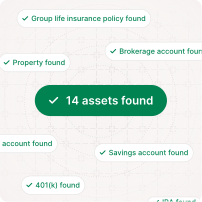
Elayne helps families uncover policies, as well as managing claims and tracking deadlines throughout the process. At the same time, Elayne coordinates the dozens of other administrative steps happening in parallel: notifying Social Security, closing financial accounts, locating unclaimed assets, and more.
Everything is located in one secure platform, visible to authorized family members and advisors. For support with estate settlement, our team is available to help.
FAQ
Can I file a life insurance claim without the original policy document?
Yes, you can start the claims process with just the policy number or the insurer's name. Most insurers can look up the policy using the deceased's name and Social Security number, though having the original document can make the process move faster. If you can't find any policy information, the NAIC Life Insurance Policy Locator Service offers a free search tool that checks participating insurers' records.
How long does it take to get a life insurance payout after filing?
Most claims are paid within 14 to 60 days of submission, depending on how complete your documentation is and whether the policy is under contestability review. Claims with all required documents, a named living beneficiary, and no red flags move fastest. To avoid delays, submit a complete package from the start: certified death certificate, completed claim form, your photo ID, and the policy number.
What's the main reason life insurance claims get delayed?
Incomplete documentation is the most common reason. A missing certified death certificate or unsigned form can add weeks to the process. Other frequent delays include contestability period reviews (if death occurred within two years of policy issuance), lapsed policies due to missed premium payments, and cases where no beneficiary was named or the named beneficiary has already passed.
Will the insurance company contact me when a policyholder dies?
Insurers almost never reach out proactively. They generally have no way of knowing when a policyholder has passed unless someone notifies them, and privacy regulations prevent them from contacting potential beneficiaries in advance. Even in states with laws requiring insurers to cross-reference death records, coverage is inconsistent.
What should I do if my life insurance claim is denied?
Request a written denial letter explaining the specific reason, then file a formal internal appeal with supporting documentation. Roughly 40% of denied claims are successfully overturned on appeal. Compare the denial reason against the actual policy language, since denials sometimes rest on misreadings of the terms. If the appeal stalls, contact your state's insurance commissioner or consult an attorney who handles life insurance disputes.
*Disclaimer: This article is for informational purposes only and does not provide legal, medical, financial, or tax advice. Please consult with a licensed professional to address your specific situation.










.svg)