
Illinois holds unclaimed property, such as forgotten bank accounts, uncashed checks, and unpaid life insurance benefits, that may belong to a person who died. The Illinois State Treasurer's Office keeps these funds and returns them to owners or their heirs through the I-CASH search and claims portal. Who can claim the funds depends on the claimant's relationship to the person who died, and a claim requires documents showing that authority. This guide explains key points for families and executors to be aware of, including: how to search I-CASH, who is authorized to claim, which documents are required, how to file a claim, how Enhanced Money Match works, and more.
Key Takeaways
- I-CASH offers free name searches and claims at icash.illinoistreasurer.gov.
- Heirs and estate representatives need documents proving their right to claim a loved one's funds.
- Estate and heir claims require paperwork; Money Match does not pay them automatically.
- Initial claim review can take up to 90 days. Complex claims may take longer.
- Elayne Asset Search uses authorized IRS records and database searches to locate overlooked assets.
What Illinois Unclaimed Property Is
Illinois unclaimed property includes forgotten bank accounts, uncashed checks, unpaid life insurance benefits, utility deposits, and safe deposit box contents. Institutions transfer qualifying property to the state after a legally defined period without activity.
The Illinois State Treasurer's Office holds unclaimed funds for owners or their heirs:
- Funds held: more than $5 billion.
- Assets returned:
- Reporting period: 2015 through 2026.
- Total returned: over $2 billion.
Owners or their heirs can claim these funds, which is part of the broader process of finding a deceased person's assets after a loved one's death.
{{blog-cta-financial}}
What Types of Property Are Commonly Held
A loved one’s estate may have separate Illinois unclaimed property listings from different accounts. Unclaimed property categories include:
- Checking and savings balances, including certificates of deposit.
- Uncashed payroll or dividend checks.
- Life insurance proceeds.
- Safe deposit box contents.
- Utility refunds.
- Stocks or bonds.
Each potential match needs a separate review to determine whether it belonged to the person who died.
What the I-CASH Program Is
I-CASH (Illinois Cash) is the Illinois State Treasurer’s official Illinois unclaimed property search and claims portal. The Treasurer’s Office reported the following I-CASH returns in Fiscal Year 2026:
- Amount returned: roughly $308 million in missing money.
- Recipients: more than 567,000 residents, businesses, and organizations.
How to Search for a Deceased Person's Unclaimed Property in Illinois
An Illinois I-CASH unclaimed property search requires no account. The search page accepts a last name, first name, city, ZIP code, or property ID. Key points to note:
- A last-name search provides a starting point.
- Adding a first name or location narrows the results.
- Searching former names and cities can reveal other possible matches.
Heirs or the estate can claim property listed under a deceased person’s name. These claims require different documentation from claims filed by living owners.
Who Is Authorized to Claim a Deceased Person's Property
A deceased person’s Illinois unclaimed property can generally be claimed by:
- An heir who documents their relationship to the person who died and entitlement to the property.
- An estate representative, such as an executor or administrator, with court-issued authority.
The Illinois Treasurer’s Office requires proof of authority consistent with Illinois probate law. I-CASH uses different paperwork for heir and estate claims.
Being named in a will alone is insufficient; the claim requires supporting documentation, and heirs who are unsure whether a will even exists can look into finding out whether someone has a will.
What Documents Are Required for an Estate Claim
Illinois unclaimed property estate claims may require:
- A certified death certificate.
- A birth or marriage certificate showing the claimant’s relationship to the person who died.
- Court-issued letters testamentary or letters of administration proving authority to act for the estate.
Paperwork may differ without probate. The Treasurer’s estate claim documentation guidance includes an interactive tool to identify applicable documents.
Initial review can take up to 90 days after receipt. Complex claims requiring more documentation may take longer.
How to File a Claim Through I-CASH
Illinois unclaimed property claims are filed through icash.illinoistreasurer.gov using the state’s claim form. Supporting documents are uploaded directly to the site. There is no cost to claim or receive returned property.
After submission, the I-CASH claim status feature uses the claimant’s Claim ID to track the review. Keeping that ID with the claim paperwork helps with follow-up.
The Enhanced Money Match Program
Enhanced Money Match is a legitimate Illinois Treasurer program that matches state records, verifies ownership, and automatically mails checks to eligible owners without a claim being filed. The Treasurer’s Money Match notice guidance helps recipients review a letter or check they received.
Only certain property qualifies. Estate and heir claims for a deceased person’s Illinois unclaimed property fall outside Money Match. Families searching after a death still need a documented claim and cannot rely on automatic payment.
{{blog-cta-financial}}
How Elayne Asset Search Helps Families Locate Accounts and Debts
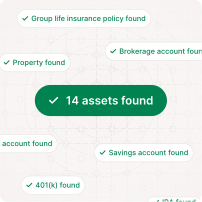
Elayne Asset Search (IRS authorization · Equifax) is a paid service that helps families search for the accounts and debts of a person who passed. The search combines IRS tax transcripts, the person's Equifax credit report, and checks of 100+ other sources. Each finding is added to an estate inventory that names the source of that finding.
IRS tax transcripts are one part of the search. An IRS tax transcript is not a tax return. An IRS tax transcript is a record of what banks, employers, insurers, and other institutions reported to the IRS about the person. Elayne holds IRS authorization to request 10 years of IRS tax transcripts. Because each reporting institution appears on the IRS tax transcripts, these records can point to institutions that held accounts for the person, which supports efforts to find bank and investment accounts after someone dies.
The same search also checks other sources:
- The person's Equifax credit report, which lists open accounts, debts, cards, and credit lines in the person's name.
- The life insurance locators: the NAIC Life Insurance Policy Locator (a policy search run by state insurance regulators) and MIB (insurance application records from about 400 carriers).
- The pension registry kept by the Pension Benefit Guaranty Corporation (PBGC), which covers pensions from terminated plans.
- The national unclaimed property database (MissingMoney.com), plus state unclaimed property searches.
- Property and vehicle records showing real estate and vehicles titled in the person's name.
- Crypto accounts and veterans benefits, including VA life insurance, when the estate record points to them.
These records form part of the process of finding accounts after a death, with the source of each finding identified. The search covers retirement accounts, bank and brokerage accounts, life insurance, property, business interests, and debts. Debts appear next to assets, so the estate inventory shows what the estate owes before any money is paid out. The search also shows whether the estate owes the IRS anything.
After the search, a 1:1 call with an Estate Expert walks through the findings. Estate Experts are an Elayne team who work with families by phone and explain the process. Families make the decisions, and attorneys advise.
Elayne's Asset Search is an eligible estate expense. Once the estate bank account is open, the fee can be paid directly from the estate account. When a family member pays the fee personally, the payment can qualify for reimbursement from an estate account.
FAQ
What other searches are available if I-CASH shows no results for a deceased loved one?
A missing I-CASH result does not prove the deceased person left no assets; the database covers property turned over to Illinois. Searching former names and cities, then checking the NAIC Life Insurance Policy Locator and the Pension Benefit Guaranty Corporation’s unclaimed pension resource, can provide other leads.
How do I-CASH and MissingMoney.com differ when a loved one lived in several states?
Both can be used: I-CASH covers Illinois unclaimed property, while MissingMoney.com searches participating states together. A search list based on the deceased person’s former homes and financial records helps families identify which state portals to check separately.
How can families tell whether an I-CASH listing with a common name belongs to a loved one?
A name match alone is not enough; the listed city, ZIP code, and reporting institution can help families compare the result with the deceased person’s records. If details are missing or inconsistent, the Illinois Treasurer’s Office can clarify what evidence is needed before the property can be claimed.
Does searching I-CASH or filing a claim cost anything?
No. I-CASH name searches are free and require no account, and there is no cost to claim or receive returned property. The search page accepts a last name, first name, city, ZIP code, or property ID. Adding a first name or location to a last-name search narrows the results, and searching former names and cities can reveal other possible matches.
Is there a deadline to claim a deceased person’s Illinois unclaimed property?
The Illinois State Treasurer’s Office is legally required to return unclaimed property to its owner or heirs, regardless of how much time has passed. A claim for a deceased person’s property still requires documents showing the claimant’s authority.
*Disclaimer: This article is for informational purposes only and does not provide legal, medical, financial, or tax advice. Please consult with a licensed professional to address your specific situation.