
Most U.S. probate courts require personal representatives to conduct a diligent search for estate assets before an estate can close. That obligation extends well beyond reviewing a bank statement or checking a single state registry.
A thorough search covers six categories: financial accounts, insurance policies, real property, unclaimed property, pension benefits, and digital assets. Each category draws on different sources, requires different levels of access, and needs a documented record of the effort.
For probate attorneys managing this work, that means knowing where to look, which searches require legal credentials, when to bring in a specialist, and how to keep records that satisfy court expectations.
Key Takeaways
- Probate courts impose a legal duty to search for estate assets; personal representatives can face personal liability for missed accounts.
- A complete search covers six categories: financial accounts, insurance policies, real property, unclaimed property, pensions, and digital assets.
- Tax returns and Form 1099 statements are the most reliable starting points, naming institutions directly before any database search begins.
- Public-record searches can locate deeds and unclaimed property; credentialed searches are required to surface brokerage accounts and life insurance policies.
- Elayne coordinates outreach to financial institutions and unclaimed property registries, consolidating results into a documented report attorneys can attach to the probate file.
The Diligent Search Obligation and Why It Drives Asset Discovery
Probate courts in most U.S. jurisdictions impose a legal duty on executors and administrators to conduct a thorough search for estate assets before closing an estate. This obligation, sometimes called the "diligent search" requirement, is not a courtesy or a best practice. It carries real legal weight.
If a beneficiary or creditor later surfaces an asset that was overlooked, the personal representative can face personal liability for a shortfall. Understanding probate vs. non-probate assets is foundational to conducting that search correctly. Courts have held executors accountable for distributions made before all assets were identified, particularly when the search was cursory or poorly documented.
The diligent search obligation is what turns asset discovery from a clerical step into a legal one. For probate attorneys, that distinction shapes how the entire process gets managed.
What Courts Generally Expect
Expectations vary by state, but most jurisdictions expect the personal representative to:
- Review the decedent's financial records, mail, tax returns, and prior years' bank statements to identify account holders and institutions
- Search public records for real property ownership, business interests, and recorded liens
- Check state unclaimed property databases, since dormant accounts are often escheated before the estate is even opened
- Contact known financial institutions directly and follow up when responses are incomplete or delayed
- Document each search step in a way that can be produced if the estate is later challenged
The standard is not perfection. It is a good-faith, documented effort that a reasonable personal representative would undertake given the information available.
{{blog-cta-attorneys}}
What a Thorough Asset Search Must Cover
Bank accounts and real estate are often the starting points, but in addition, estates routinely hold financial assets such as: uncashed checks, dormant brokerage accounts, forgotten annuities, and life insurance policies. A broader look at finding assets of a deceased person can help frame the full scope of the search:
Financial Accounts and Investment Holdings
Every bank, brokerage, and retirement account the deceased held requires direct verification. This includes checking and savings accounts, CDs, IRAs, 401(k)s, pension accounts, and any investment portfolios held through brokerages or advisors.
Insurance Policies
Life insurance is among the most commonly overlooked asset categories in probate. Policies purchased decades earlier may name beneficiaries who have since died, or may simply be unknown to surviving family members.
Real Property and Titled Assets
Real estate, vehicles, boats, and other titled property must be traced through deed and title records. Property held in other states requires separate searches in those jurisdictions.
Unclaimed Property and Dormant Accounts
States hold billions in unclaimed property and inheritance turned over by financial institutions. Every state where the deceased lived or held accounts warrants a separate search through that state's unclaimed property registry.
Digital and Miscellaneous Assets
Cryptocurrency wallets, online brokerage accounts, PayPal balances, and subscription refunds are increasingly part of estates and require targeted search methods that differ from traditional financial account searches.
Document-Based Discovery
Before any database search or public records request, a thorough review of personal documents tends to locate the majority of accounts, property holdings, and recurring financial relationships. The goal at this stage is to build a working inventory that later searches can then confirm or expand.
A few document categories that tend to yield the most:
- Prior year tax returns (Form 1040 and all schedules) reveal interest income, dividend income, rental income, and capital gains, each of which points back to a specific account or asset.
- Form 1099-INT and 1099-DIV statements name the financial institution that issued them, giving attorneys a direct lead on where accounts are held.
- Physical and digital mail, including forwarded mail, often contains account statements, annual fee notices, and insurance premium reminders.
- Safe deposit box keys, home safes, and filing cabinets frequently contain original deeds, stock certificates, savings bonds, and insurance policies.
- Address books, contacts lists, and personal calendars can help connect the estate with financial advisors, accountants, attorneys, and trustees who hold information about assets.
Public Records and Government Databases
Property and Real Estate Records
County recorder and assessor offices maintain ownership records that are searchable by name in most jurisdictions. A deed search can surface real property the deceased held individually, jointly, or through a trust that was never fully funded. Some states have centralized land record portals; others require county-by-county searches.
Unclaimed Property Databases
Every U.S. state operates an unclaimed property registry where dormant financial accounts, insurance proceeds, and utility deposits are held after the original owner cannot be located. MissingMoney.com aggregates many state databases into a single search interface.
Vital Records and Probate Court Filings
Prior probate filings, previously admitted wills, and recorded trusts can help identify assets or beneficiary designations that predate the current proceeding. Court records are searchable through state and county court portals, and many are now available through services like CourtListener or PACER for federal matters.
Pension and Federal Benefit Records
The Social Security Administration and the Department of Labor maintain records relevant to survivor benefits and unclaimed pension assets. The Pension Benefit Guaranty Corporation's pension search tool covers terminated private pension plans and is searchable by employer name.
Life Insurance Locators
Locating life insurance policies is one of the more time-intensive searches in estate asset discovery, because policies can be held across dozens of carriers with no centralized registry.
- The NAIC Life Insurance Policy Locator is a free tool administered by the National Association of Insurance Commissioners. Beneficiaries submit a request and participating insurers search their records against the decedent's Social Security number.
- The MIB Group maintains underwriting records that can confirm whether a policy application was ever submitted, even if the policy itself is no longer active.
- State insurance department locator services operate independently of the NAIC tool and cover carriers that may not participate in the national registry.
{{blog-cta-attorneys}}
Credentialed vs. Public-Record Asset Searches
How Elayne Supports the Attorney's Diligent-Search Duty
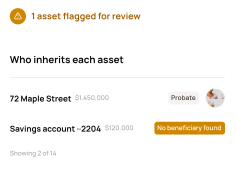
Elayne handles the asset search that sits at the center of diligent-search compliance, running automated checks across financial accounts, unclaimed property registries, and benefits databases that might otherwise require hours of manual work from the attorney or estate staff. Where attorneys typically spend time writing to institutions and waiting on responses, Elayne coordinates those outreach steps directly, tracking open requests and consolidating results into a single report the attorney can review and attach to the probate file.
FAQ
What does the "diligent search" obligation actually require probate attorneys to do?
The diligent search obligation requires personal representatives (and in practice, the attorneys coordinating their work) to review financial records and tax returns, search public databases, contact known financial institutions directly, and document every step in a way that can be produced if the estate is later challenged.
What's the fastest way to identify which financial institutions hold estate assets when no account list exists?
The decedent's prior-year tax returns (Form 1040, Form 1099-INT, and Form 1099-DIV) name the institutions that issued interest and dividend payments directly. Physical mail, safe deposit box contents, and address books can also point to financial advisors or accountants who hold information about additional accounts, all before any database search is needed.
Credentialed vs. public-record estate asset search, which do I need?
Both, and the asset category determines which applies. Public-record searches through county recorder offices, MissingMoney.com, and the PBGC pension tool surface real property, unclaimed dormant accounts, and terminated pension assets at no cost. Credentialed searches, through letters testamentary, the NAIC Life Insurance Policy Locator, direct institution inquiries, and IRS Form 4506-C tax transcripts, are required to surface brokerage accounts, active insurance policies, and income sources a decedent never disclosed. Running only public-record searches leaves significant gaps in any estate asset discovery for a probate attorney managing a thorough diligent search.
Can Elayne help probate attorneys document the diligent search process for court purposes?
Yes. Elayne runs automated checks across financial accounts, unclaimed property registries, and benefits databases, then consolidates results into a single report the attorney can attach to the probate file. Every database queried, institution contacted, and search step taken is logged, creating the documented record courts and beneficiaries expect attorneys to produce.
When should a probate attorney bring in a professional investigator instead of relying on standard estate asset search tools?
A professional investigator is worth considering when the decedent held foreign accounts, owned businesses with undisclosed interests, or when prior tax returns are inconsistent with the probate inventory. Suspected fraudulent transfers, undue influence, or assets that were retitled shortly before death also cross the threshold from administrative search into adversarial territory, where subpoena power, forensic accounting, and deed transfer reconstruction replace standard database queries.
*Disclaimer: This article is for informational purposes only and does not provide legal, medical, financial, or tax advice. Please consult with a licensed professional to address your specific situation.


without more overhead
Organize and file with the court, find accounts other search tools miss, and pay from the estate, not your own pocket.









.svg)