

When it comes to probate, beneficiary notification is a core procedural obligation. State law sets who must receive notice, how it must be delivered, and when the deadline runs. For legal teams who are managing this process, this article covers: who qualifies as a required recipient, how deadlines and triggering events vary by jurisdiction, what a proper notice must contain, and how to document and file proof of service.
Key Takeaways
- Probate notice deadlines typically fall between 20 and 60 days from letters testamentary, but the triggering event varies by state.
- Notice must reach named beneficiaries, intestate heirs, and creditors; the will alone does not define the full required recipient list.
- Defective notice can void distributions already made, restart creditor claim periods, and expose the personal representative to personal liability.
- Proof of service must be filed with the court before hearings proceed.
- Elayne organizes beneficiary contact records, tracks notice delivery and response status, and flags outstanding acknowledgments before statutory deadlines pass.
The Legal Foundation of Beneficiary Notification in Probate
Probate courts require executors and personal representatives to notify all beneficiaries named in a will, along with heirs who would inherit under intestacy laws if no valid will exists. This obligation is grounded in due process: every party with a legal interest in an estate has the right to know proceedings have begun.
Most states codify this requirement through the Uniform Probate Code or their own statutes, setting out who must be notified, how notice must be delivered, and within what timeframe.
Who Qualifies as a Required Recipient
Attorneys managing beneficiary notification probate obligations generally must reach three categories of people:
- Named beneficiaries in the will, including those who receive specific bequests, residuary shares, or conditional gifts
- Heirs at law, meaning those who would inherit under the state's intestacy statute regardless of whether a will exists
- Known creditors of the estate, who are entitled to notice so they may file claims within the statutory window
The Consequence of Incomplete Notice
Failing to notify a required party can expose the estate to legal challenges long after distribution. A beneficiary who was not properly notified may petition to reopen proceedings, contest distributions already made, or seek personal liability against the executor. Courts have little flexibility here: procedural compliance in beneficiary notification is not discretionary.
{blog-cta-attorneys}}
Who Must Receive Notice
Every state's probate code specifies who must receive formal notice when an estate enters probate. The list typically includes named beneficiaries in the will, intestate heirs who would inherit if no valid will exists, and any party with a legal interest in the estate's assets.
Most states also require notice to heirs and beneficiaries, and some extend the requirement to government agencies such as Medicaid or the department of health when the decedent received public benefits.
Attorneys should confirm the full recipient list against the applicable state statute before any notices go out, since an overlooked party can create grounds to reopen or contest the proceeding.
Probate Notice vs. Trust Beneficiary Notice
Probate and trust administration each carry their own beneficiary notification rules, and the differences matter for compliance.
In probate, notice goes to a defined set of parties: heirs, named beneficiaries, and creditors. State statutes set the timeline, the method, and often the exact form language required. These rules exist because probate is a court-supervised process, and notice is what gives interested parties the right to object.
Trust administration works differently. When a revocable trust becomes irrevocable at death, most states require the trustee to notify beneficiaries within a set window, often 60 days, but outside of court oversight. California's Probate Code Section 16061.7 is a well-known example, requiring trustees to send notice within 60 days of the settlor's death.
The practical difference for attorneys is this: probate notice failures carry court consequences, while trust notice failures can expose the trustee to personal liability. Both require documentation, but the enforcement mechanism differs.
State-Specific Timing and Deadlines
Probate notice deadlines vary, and missing them can expose an estate to legal challenges that delay distribution. Most states set a window between 20 and 60 days from the date letters testamentary are issued, but a handful impose shorter or longer requirements that fall outside that range.
Key Deadline Ranges by Jurisdiction Type
A few patterns stand out across jurisdictions:
- States following the Uniform Probate Code generally allow more flexibility, sometimes permitting notice to be given at any point before a formal hearing.
- States with stricter statutory schemes, including California and Florida, set firm deadlines that begin running from a specific triggering event, such as appointment of the personal representative or publication of the creditor notice period.
- Some jurisdictions distinguish between known and reasonably ascertainable beneficiaries, imposing tighter deadlines for individuals whose identities and contact details the executor has on hand.
Required Content of a Probate Notice
Probate notices follow a fairly consistent content framework across jurisdictions, though the specific language requirements vary by state.
A properly drafted probate notice typically includes:
- The name of the decedent and the date of their death, so recipients can confirm the notice relates to the correct estate.
- The name and contact information of the personal representative or executor, giving beneficiaries a direct point of contact for questions.
- The name and location of the probate court handling the proceeding, along with the estate's case number for reference.
- A summary of the decedent's will or, where applicable, a statement that the decedent died intestate.
- Any deadlines the recipient must observe, such as the window to contest the will or file a creditor claim, which vary considerably by state.
- Instructions for how a beneficiary can obtain copies of the will or inventory if they wish to review the full estate record.
Some states require that the notice be sent on court-approved forms, while others accept attorney-drafted letters meeting the statutory content requirements. When in doubt, checking the local probate court's self-help resources or procedural rules before drafting can help prevent a rejection that restarts the clock on required notice periods.
Accepted Methods of Delivering Notice
Common Delivery Methods
Courts generally recognize the following approaches, though state law governs which are acceptable and when:
- Personal service involves physically handing the notice to the beneficiary and is often required for known beneficiaries who can be located without unreasonable effort.
- First-class or certified mail is the most widely used method, with certified mail providing a receipt that confirms delivery, which can be important if a beneficiary later disputes receipt.
- Publication in a local newspaper is typically reserved for beneficiaries whose whereabouts are unknown after a reasonable search has been conducted.
- Electronic delivery is permitted in a small but growing number of jurisdictions, though it generally requires the recipient's prior consent and is not yet a universal option.
Proof of Service Requirements
Delivering notice is only part of the obligation. Attorneys must also document that notice was given, typically through an affidavit of service or certificate of mailing filed with the probate court. Without this proof, the court may treat the notice requirement as unsatisfied regardless of whether the beneficiary actually received it.
State requirements vary on the exact form of documentation, so confirming local court rules before filing is important.
{blog-cta-attorneys}}
Ongoing Notification Duties During Administration
Beneficiary notification during probate rarely ends at the initial filing. As administration progresses, attorneys carry ongoing duties to keep beneficiaries informed of developments that materially affect their interests.
Key Ongoing Obligations
Most states require formal notice when the estate files a probate estate inventory, when the personal representative seeks court approval for actions like selling real property, and when accountings are submitted for judicial review. Beneficiaries generally have a right to object to these filings within a set response window.
How Elayne Supports Attorneys Managing Beneficiary Coordination
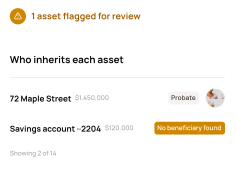
When a new estate opens, Elayne collects and organizes contact information for named beneficiaries and heirs, so legal teams have a complete, current list before any notices go out. As notices are sent, Elayne logs the delivery method and date for each recipient. When a response or acknowledgment is outstanding, Elayne flags it.
For attorneys handling multiple estates at once, that tracking happens across all open matters in one place. There is no need to pull individual files to confirm where each notice stands.
When a statutory deadline is approaching and an acknowledgment is still missing, Elayne surfaces that gap before it becomes a procedural problem. The attorney reviews the record, decides what action to take, and files. Elayne handles the record-keeping throughout.
FAQ
What are the legal consequences of missing beneficiary notification deadlines in probate?
Missing a beneficiary notification deadline can void distributions already made, expose the personal representative to personal liability, and give omitted parties standing to challenge the probate proceeding, potentially years after the estate closes. Courts carry little flexibility on procedural compliance, so the consequences depend on state law but can include restarting the creditor claim period and forcing a hearing on the final accounting.
When does the beneficiary notification clock start in probate, and does it vary by state?
The clock typically starts when the court issues letters testamentary or letters of administration, though some states run it from the date the probate petition is filed. Deadlines across jurisdictions generally fall between 20 and 60 days, but the triggering event, whether weekends count, and whether known and unknown beneficiaries face different windows all vary by state, so confirming the specific rule in the governing jurisdiction before calendaring is important.
How do I file proof of beneficiary notice with the probate court?
This can be done by filing an affidavit of service or certificate of mailing that identifies each notified party, the method and date of delivery, and a statement that notice was given within the statutory deadline. If notice by publication was used, most states require a separate proof of publication filing that includes a copy of the published notice and an affidavit from the publication itself. Many courts will not schedule a hearing on the petition until this filing is on record.
Can Elayne help attorneys track beneficiary notification deadlines across multiple probate estates?
Yes. Elayne organizes beneficiary contact records, tracks notice delivery and response status, and flags outstanding acknowledgments before statutory deadlines pass. For attorneys managing high volumes of probate matters with multiple beneficiaries across different states, that structured tracking reduces the manual coordination required to stay compliant.
*Disclaimer: This article is for informational purposes only and does not provide legal, medical, financial, or tax advice. Please consult with a licensed professional to address your specific situation.


without more overhead
Organize and file with the court, find accounts other search tools miss, and pay from the estate, not your own pocket.









.svg)