

In the US, obituaries are not required by any state law. What families choose to share, and with whom, is entirely their decision. Some families write a public tribute, while others share the news privately. This guide walks through what obituaries actually are, how they differ from death notices, what they cost, alternatives that are available, and how to confirm a death when no obituary has been published.
Key Takeaways:
- No law in the United States requires a family to publish an obituary. It is a personal choice, not a legal obligation.
- Small-town newspapers may charge under $100 to publish an obituary, while major metro papers can charge $2,500 or more.
- There are several free alternatives to newspaper obituaries, including online memorial pages and funeral home tribute pages.
- A death notice and an obituary serve different purposes. A death notice is a brief announcement, while an obituary is a fuller account of a person's life.
- When no obituary exists, death records can still be found through the Social Security Death Index, state vital statistics offices, and online databases.
Are Obituaries Required by Law?
No federal or state law in the United States requires a family to publish an obituary. Obituaries are a tradition, not a legal obligation, and families have full discretion over whether to write one, share one, or skip it entirely.
Often, there's an assumption that writing an obituary is part of the estate settlement process. That it must be submitted somewhere, approved by someone, or filed alongside a death certificate. However, that's simply not the case. An obituary is a personal choice, and families are free to approach it however feels right for them.
An important topic to note: if a death is connected to an active legal matter, such as a probate filing or a court case involving the estate, there may be a formal requirement to publish a legal notice. However, that publication is completely separate from a personal obituary. A legal notice is a court-mandated announcement, usually published in a local newspaper, that notifies creditors or interested parties that an estate is being settled. It is filed through the legal process, often by an attorney, and has no connection with whether the family chooses to write about their loved one's life in an obituary. The two processes are entirely separate, and the legal notice requirement does not create any obligation to publish a traditional obituary.
{{blog-cta-admin}}
Death Notice vs. Obituary
These two terms get used interchangeably, but they serve different purposes. A death notice is a brief announcement of the death, often placed by the funeral home. An obituary is a fuller account of the person's life, usually written by the family.
A death notice answers the basic questions: who died, when they died, and where any service will be held. Funeral homes often draft and submit these directly to local newspapers as part of their standard service. The length is typically kept to just a few lines.
An obituary does something different. It tells a story. A well-written obituary captures who the person was: what they cared about, who they loved, how they spent their time, and the legacy they left behind.
There can also be a significant difference when it comes to cost. Because newspapers charge by the line or by the word, a death notice is usually far less expensive than a full obituary. For families considering their options, it's worth asking the funeral home about this topic. Some providers include a standard death notice in their fee and charge separately for a longer obituary placement. Others offer packages that bundle both.
The timing of publication can differ as well. A death notice is often published quickly—sometimes within a day or two of the death—to announce the service before it takes place. An obituary may be published around the same time, or it may come later, especially if the family needs more time to gather information, coordinate with relatives, or simply process their grief before writing.
Some families publish both: a brief death notice in the days immediately following the death, and an obituary once there is more time to write. Others choose one or the other. And some decide not to publish either. There is no correct answer; what matters most is that the choice reflects what feels right for the family.
| Element | Death Notice | Obituary |
|---|---|---|
| Length | A few lines | Several paragraphs |
| Content | Name, date of death, service details | Life story, family, achievements |
| Author | Often the funeral home | Usually the family |
| Cost | Lower, sometimes free | Higher, priced per line or word |
How Much Does It Cost to Publish an Obituary?

- Small-town newspapers: under $100
- Mid-size regional papers: $200 to $800
- Major metro papers: $1,000 to $2,500 or more
- Photos: $25 to $300 extra
- Sunday placement: often a premium of 25% to 50%
- Online posting through the paper's site: sometimes bundled, sometimes added separately
- Free options are available as well, including funeral home websites, or memorial pages like Legacy.com.
How to Confirm a Death When No Obituary Was Published
For context, the absence of an obituary does not make a death unverifiable. Public records exist specifically for this purpose, and several reliable resources are available at no cost.
It helps to approach the search with a few pieces of identifying information: the person's full legal name, approximate date of death, and state of residence. Having these details on hand makes the process significantly more straightforward across all of the sources below:
- Social Security Death Index (SSDI): a public database listing deaths reported to the Social Security Administration, searchable through genealogy sites like Ancestry and FamilySearch. Records may take several weeks to appear after the death is reported.
- State vital statistics offices: most states allow eligible family members to request a certified death certificate. Eligibility requirements vary by state, and some offices now offer online ordering in addition to in-person or mail requests.
- County clerk and recorder offices: local death records, often searchable online by name and date. For older records or those not yet digitized, a direct call or written request to the county office may be needed.
- Online databases: free tools like FamilySearch aggregate cemetery and burial records nationwide.
{{blog-cta-admin}}
Writing an Obituary When There's No Service
The structure is the same as any obituary: full name, dates, family members, work, passions, and anything else that celebrates your loved one. The only difference is what goes in place of service information.
A single line is all that section needs. Families commonly use phrasing like:
- "A private service has been held."
- "Cremation has taken place. A celebration of life will be held at a later date."
- "At [name]'s request, no formal service will be held."
- "The family is gathering privately and welcomes cards or memories sent to [address or email]."
Alternatives to Newspaper Obituaries

- Free online memorial pages: sites like Ever Loved, GatheringUs, and Forever Missed host tribute pages where loved ones can share photos, stories, and condolences at no cost. Many of these pages remain accessible indefinitely, giving family members a lasting place to return to.
- Funeral home tribute pages: most providers include one with each service. These pages are typically published quickly and linked to the funeral home's website, making them easy to share with a broader network.
- Social media posts: a personal post on Facebook, Instagram, or a private group can reach close friends and extended family quickly. Some families create a dedicated memorial profile or group page where memories can continue to be shared over time.
How Elayne Supports Families
During estate settlement, alongside the question of whether to announce a death publicly, there are financial accounts to close, government agencies to notify, benefits to claim, and legal paperwork to manage. Elayne is designed to help families throughout that process.
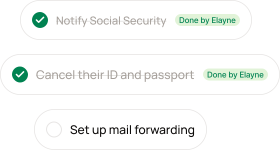
As an estate settlement service, Elayne supports families through the entire span of post-loss administration. From notifying the Social Security Administration and closing financial accounts to locating unclaimed assets and supporting final estate filings, Elayne can help with each of these steps.
Elayne also makes it easier for families to manage the settlement process together. Elayne's shared dashboard gives authorized family members a clear view of where things stand, what has been completed, and what still needs attention. For additional resources, details, and examples of how we support families, learn more about Elayne here.
FAQ
Are obituaries required?
No federal or state law in the United States requires a family to publish an obituary, and families have full discretion over whether to write one, share one, or skip it entirely.
Death notice vs obituary: what's the difference?
A death notice is a brief announcement of the death (often a few lines), typically placed by the funeral home and focused on basic facts and service details. An obituary is a fuller life story (several paragraphs), usually written by the family, that includes achievements, relationships, and personal details.
How to confirm a death without an obituary?
Start with the Social Security Death Index (SSDI), a public database searchable through sites like Ancestry and FamilySearch. You can also check state vital statistics offices for certified death certificates, county clerk and recorder offices for local death records, or free online databases like FamilySearch that aggregate cemetery and burial records nationwide.
Can I write an obituary if there's no service?
Yes. The structure stays the same, but instead of listing service times and locations, you can include a line like "A private service has been held," "Cremation has taken place, and a celebration of life will follow at a later date," or "At [name]'s request, no formal service will be held." The rest of the obituary can still honor the person's life, family, work, and passions as fully as any other obituary would.
Alternatives to a newspaper obituary?
Free online memorial pages (Ever Loved, GatheringUs, Forever Missed), social media posts, funeral home tribute pages, or personal emails to close contacts all let families share the news at no cost while giving loved ones a place to gather, share memories, and offer condolences.
*Disclaimer: This article is for informational purposes only and does not provide legal, medical, financial, or tax advice. Please consult with a licensed professional to address your specific situation.










.svg)