.webp)

When someone dies, people often say you need to get a notice in the paper, but few explain what that actually looks like or how much it will cost. You may be planning a service, answering calls from family, and suddenly trying to write a death notice that needs to run tomorrow. The good news is that this does not have to be one more confusing task. Once you know what newspapers expect, how they price notices, and how to submit on time, you can get a clear, accurate notice published without spending more than you need.
Key Takeaways:
- Death notices are brief announcements that include the name, age, date of death, and service details.
- Costs range from under $100 to $800+, with papers charging per line or column inch.
- Most notices run 50-100 words to balance information and affordability.
- Submit notices 24-48 hours before publication through newspaper portals or funeral homes.
- Elayne helps families handle notifications and paperwork after publishing death notices.
What Is a Death Notice and How Does It Differ From an Obituary?
A death notice is a brief, factual announcement of someone's passing. It includes the person's name, age, date of death, and details about funeral or memorial services. Think of it as the basic information people need to know about the death and how to announce it to pay their respects.
An obituary tells the story of someone's life through a biographical narrative. Obituaries often include childhood memories, career accomplishments, hobbies, personality traits, and surviving family members. They celebrate who the person was beyond the basic facts.
The choice between the two often comes down to budget and purpose. Death notices cost less to publish and work well for quickly and affordably notifying the community about service arrangements.
{{blog-cta-admin}}
Key Information To Include in Your Death Notice
Every death notice should include these core elements:
- Full legal name, including maiden name when relevant
- Age at time of death
- City and state of residence
- Date of death (place of death is optional, but sometimes included)
- Surviving family members, typically listed by relationship
- Service details: date, time, location of funeral or memorial
- Information about where to send flowers or charitable donations
Some newspapers require all of these fields. Others give you flexibility on what to include. Before you start writing, check with your chosen newspaper about its requirements.
If you're planning a memorial service weeks or months after the death, you can note that arrangements are pending or will be announced later.
How Much Does It Cost To Publish a Death Notice in a Newspaper?
Death notice costs vary widely depending on where you publish. An obituary can cost anywhere from under $100 to $800 or more, with newspaper pricing often determined by length and location.
Most newspapers charge by the line or by column inch. A shorter death notice with just the basic facts will cost less than a longer one with detailed service information. Larger metropolitan newspapers charge more than smaller community papers.
Before you start writing, contact the newspaper to ask about their pricing structure.
Understanding Newspaper Pricing: Per-Line Costs and Regional Variations
Newspapers typically use one of two pricing models: per-line rates or column-inch rates. Per-line pricing charges a set fee for each line of text, while column-inch pricing charges based on the physical space your notice occupies in the printed paper. Some papers also offer flat-rate packages for notices under a certain length.
The Los Angeles Times starts at $205 for a basic 5-line notice in 2026. In smaller markets, you might pay $50 to $150 for a similar length. Major metro areas like New York, Washington DC, and Chicago tend to charge more due to higher circulation and reader demand.
When comparing options, ask each newspaper for its line count estimate based on your draft to get an accurate quote before you commit.
| Publication Type | Pricing Model | Typical Cost Range | Best For |
|---|---|---|---|
| Major metropolitan newspapers (Los Angeles, New York, Chicago) | Per-line or column-inch rates | $205 to $800+ for basic to extended notices | Reaching large urban communities with high circulation, families who want a wide readership in major cities |
| Small to mid-size community newspapers | Per-line rates or flat-rate packages | $50 to $150 for standard-length notices | Local community notification with budget-conscious pricing, suburban and rural areas |
| Online-only publication (Legacy.com, Ever Loved, Funeralwise) | Free or subscription-based | $0 to $50 for basic memorial pages | Unlimited reach without geographic limits, younger audiences, families managing costs while sharing photos and memories |
| Hybrid print and online bundles | Combined per-line rate with digital access | Often 10% to 30% less than print-only pricing | Families wanting both traditional print presence and extended online reach for distant relatives and friends |
How Long Should a Death Notice Be?
Most death notices run between 50 and 100 words. This length covers the basic facts while keeping publication costs manageable.
If you're working with a tight budget, aim for the shorter end. Include only the required information: name, age, date of death, survivors, and service details. You can communicate what families need to know in 50-75 words.
Longer notices approaching 100 words give you room to add personality, like mentioning a favorite charity for donations instead of flowers. Just remember that every extra line increases cost when you're paying per-line rates.
Step-by-Step: Writing Your Death Notice
Start by gathering all the facts you'll need before you write. Confirm the exact spelling of names, double-check dates, and have service details ready. Writing with everything in front of you helps prevent errors and saves time during editing.
Draft your opening sentence with the person's full legal name and age: "John Robert Smith, 72, passed away on March 15, 2026." Add the city and state where they lived. This gives readers the core facts immediately.
Next, list survivors by relationship. Start with spouse, then children, grandchildren, and other close family. Keep this section simple and clear.
Close with service information. State the date, time, and location of any funeral or memorial service. If you prefer donations over flowers, name a specific charity here.
Read your draft aloud to catch awkward phrasing or missing details. Ask another family member to review it before submission.
How To Submit a Death Notice to a Newspaper
Most newspapers accept death notice submissions through online forms, email, phone, or fax. Check the newspaper's website for their preferred method. Many papers now offer online submission portals where you upload your text, review pricing, and pay directly.
You can also ask your funeral home to handle the submission. Funeral directors work with newspapers regularly and often submit notices as part of their services. This can save time if you're managing multiple arrangements.
Deadlines matter. Newspapers typically need notices submitted 24 to 48 hours before the publication date you want. Weekend and holiday schedules may require earlier submission. Call the newspaper's classified or obituary desk to confirm their deadline for your target date.
{{blog-cta-admin}}
Comparing Print vs. Online Death Notice Options
Print newspapers still reach older readers who check death notices regularly, while online options connect with younger family members and friends who may live far away. Many families now use both to cover all audiences.
A hybrid approach can save money while maximizing reach. You can publish a short print notice with the person's name, date of death, and service details, then direct readers to a free online memorial page for the full story, photos, condolences, and eulogies. This keeps print costs low while giving people a place to share memories.
Free online memorial sites like Legacy.com, Ever Loved, and Funeralwise let you create pages without publication fees. Readers can leave messages, view photos, and find service information without geographic limits.
If the budget allows, you can also run the same notice in both print and the newspaper's online edition. This bundled option often costs less than printing alone while appearing in both places.
Common Mistakes To Avoid When Writing Death Notices
Misspelled names create permanent records that families regret. Double-check every name's spelling, including middle names and maiden names. Cross-reference official documents, such as a death certificate or driver's license, to catch errors before publication.
Wrong dates cause confusion about when services are happening. Verify the date of death, service date, and service time against the funeral home's schedule and the death certificate. A typo here could mean people miss the memorial entirely.
Leaving out family members can hurt relationships. Review your survivors' list carefully. If you're unsure whether to include someone, ask other family members first.
Unclear service details leave readers guessing. Include the full street location of the service venue, including the name. Specify AM or PM for service times. If services are private, state that clearly.
Legal Considerations: When Death Notices Are Required
Publishing a death notice in a newspaper isn't legally required for most families. You can make funeral arrangements, notify loved ones, and settle an estate without placing a newspaper notice.
However, some states require a published notice to creditors when an estate goes through probate. This legal notice informs potential creditors that they have a limited time to file claims against the estate. Requirements vary by state. Some require publication in a general circulation newspaper for a set number of weeks, while others accept online publication.
Your probate attorney or estate administrator can tell you if your state requires this type of notice.
How Estate Settlement Connects To Death Notices
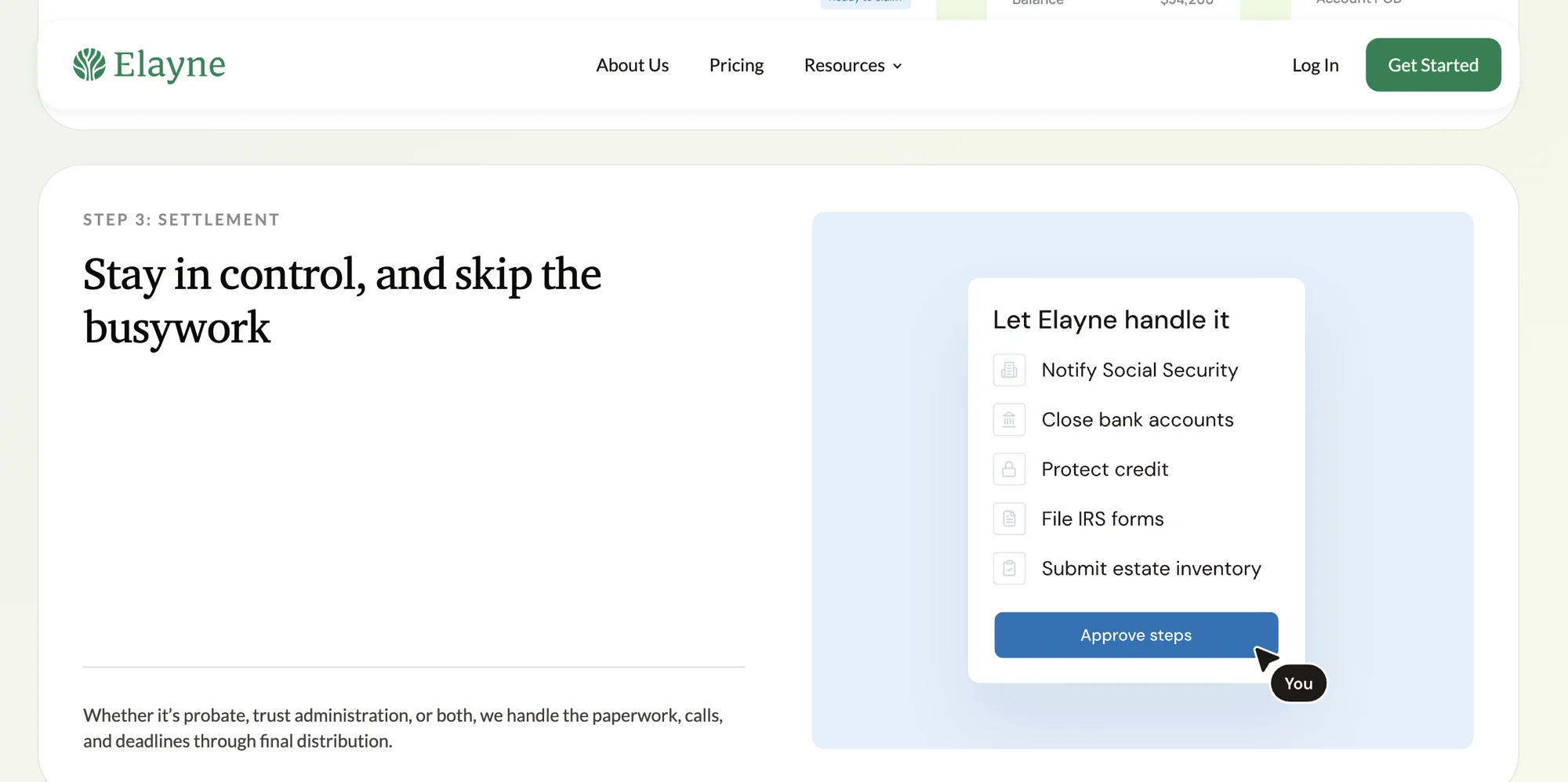
Publishing a death notice is one of the first steps after a loss. What follows is a much longer journey: notifying agencies, locating assets, filing paperwork, and managing creditor claims. Families often spend hundreds of hours on these details.
Elayne supports families through everything that comes after the notice runs. Our service helps coordinate notifications across agencies and institutions, track forms and deadlines, and surface benefits that might otherwise be missed, so you are not trying to build a checklist from scratch while you are grieving. A death notice tells your community what has happened; Elayne helps you with the next steps with greater clarity and less administrative burden.
Final Thoughts on Publishing Death Notices in Newspapers
Once your death notice in the newspaper is in place, the harder work of closing accounts, handling benefits, and working through legal steps still lies ahead. If you would like help carrying those next pieces, you can get started with Elayne’s estate settlement support to move through the rest of the process with a single, organized plan.
FAQs
How much does it cost to publish a death notice in most newspapers?
Costs typically range from under $100 in smaller markets to $800 or more in major metropolitan areas, with pricing usually based on length. The Los Angeles Times, for example, starts at $205 for a basic 5-line notice in 2026, while smaller community papers may charge $50 to $150 for a similar length.
What's the difference between a death notice and an obituary?
A death notice provides the basic facts: name, age, date of death, and service details. An obituary tells the person's life story with biographical details, memories, and personality traits, making it longer and more expensive to publish.
How quickly do I need to submit a death notice to meet newspaper deadlines?
Most newspapers need notices submitted 24 to 48 hours before your desired publication date. Call the newspaper's classified or obituary desk to confirm their specific deadline, especially if you're planning a weekend or holiday publication.
Can I publish a death notice if the memorial service is scheduled for months later?
Yes, you can note that service arrangements are pending or will be announced later. Memorial services can be scheduled weeks or months after death, giving families time to gather loved ones from distant locations.
When is publishing a death notice legally required?
Publishing a death notice isn't legally required for most families, but some states require a published notice to creditors when an estate goes through probate. Your probate attorney can tell you if your state requires this type of notice.










.svg)