

After being named executor in a will, you'll need letters testamentary from the Surrogate's Court before financial institutions or government agencies recognize your authority. This guide covers what letters testamentary are, who can apply, what documents you need, and how long courts typically take to issue them in New York.
Key Takeaways:
- Letters testamentary grant executors legal authority to manage estate accounts and property in New York.
- You need the original will, death certificate, and petition filed in the county where the person died.
- Uncontested cases take three to five weeks; NYC courts often require several months or longer.
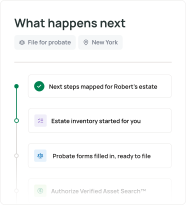
- Elayne automates post-probate steps like notifying agencies, locating assets, and tracking deadlines.
What Are Letters Testamentary in New York?
Letters testamentary are official court documents issued by the New York Surrogate's Court that give the executor named in the will legal authority to act on behalf of a deceased person's estate. Without them, the executor cannot access bank accounts, sell property, settle debts, or distribute assets to beneficiaries.
Banks, brokerages, title companies, and government agencies all ask for these letters before releasing funds or information related to the person who died.
In New York, the Surrogate's Court issues letters only after admitting the will to probate and confirming the named executor is qualified to serve.
Letters Testamentary vs. Letters of Administration: Understanding the Difference
Letters testamentary are issued when a will names an executor. Letters of administration apply when someone dies intestate (without a will), and the court appoints an administrator, usually a close relative following New York's order of priority under SCPA 1001.
| Factor | Letters Testamentary | Letters of Administration |
|---|---|---|
| Will exists | Yes, valid will | No will |
| Person in charge | Executor named in will | Court-appointed administrator |
| Governing statute | SCPA Article 14 | SCPA Article 10 |
| Asset distribution | Per the will's terms | Per New York intestacy law |
| Filing court | Surrogate's Court in county of residence | Surrogate's Court in county of residence |
If the will is contested, lost, or only partially valid, the court may require additional proceedings before issuing either document.
Who Can Apply for Letters Testamentary in New York?
Only the person named as executor in the will can apply for letters testamentary in New York. If that person declines or cannot serve, the court turns to any alternate or successor executor named in the document.
Under SCPA 707, the proposed executor must also meet eligibility requirements:
- Be at least 18 years old
- Be a US citizen or a resident alien
- Have no felony conviction
- Be mentally competent and able to manage estate affairs
- Not be deemed dishonest or otherwise unfit in the court's judgment
Non-resident executors can serve, but New York generally requires them to appoint an in-state agent for service of process.
{{blog-cta-legal}}
Documents You Need to File for Letters Testamentary
Gathering the right documents before filing can save weeks of back-and-forth with the Surrogate's Court clerk. Most rejections come from missing paperwork or incomplete information about heirs and assets.
Here is what you will need to file a probate petition in New York:
- The original signed will and any codicils
- A certified copy of the death certificate
- Form PRBT-01: Petition for Probate, signed and notarized
- Notice of Probate (Form PRBT-04) for each beneficiary and distributee
- Waivers and consents from interested parties, if available
- A list of the decedent's heirs at law with current contact information
- An estimate of the estate's value, including real and personal property
- The filing fee, ranging from $45 to $1,250 based on estate size
- Affidavit of attesting witnesses, if not already attached to the will
- Self-proving affidavit, if available
If the will is handwritten, damaged, or signed outside New York, the court may request additional proof of validity.
The Step-by-Step Process to Obtain Letters Testamentary in New York
- File the probate petition. Submit Form PRBT-01, the original will, death certificate, and supporting documents to the Surrogate's Court in the county where the decedent lived at death.
- Pay the filing fee. Fees scale with estate value and must be paid at submission.
- Serve citations on interested parties. Any heir or beneficiary who has not signed a waiver must receive formal notice and an opportunity to object.
- Attend the return date. If no one contests the will, the court reviews the file. If objections arise, a hearing is scheduled.
- Court admits the will to probate. Once the court has reviewed the file and confirmed all requirements are met, the judge signs a decree granting probate.
- Receive letters testamentary. The clerk issues certified copies, which the executor then presents to banks, agencies, and other institutions.
How Long Does It Take to Get Letters Testamentary in New York?
Timelines vary widely across New York's 62 Surrogate's Courts. In straightforward, uncontested cases, letters testamentary are typically issued within three to five weeks of filing.
New York City moves more slowly. Executors filing in Manhattan, Brooklyn, Queens, the Bronx, or Staten Island often wait several months, and contested or backlogged matters can stretch past a year.
Common sources of delay include:
- Missing or incomplete documents at filing
- Difficulty locating or serving distributees
- Will contests or objections from interested parties
- Out-of-state witnesses requiring depositions
- Court staffing shortages or county backlogs
What You Can Do with Letters Testamentary
Once letters testamentary are in hand, the executor holds full legal authority to manage and close out the estate. Certified copies serve as proof of that authority whenever an institution asks.
With letters testamentary, an executor can:
- Open an estate bank account and access the decedent's existing accounts
- Sell, transfer, or refinance real estate and other titled property
- File final personal and estate tax returns with the IRS and New York State
- Pay outstanding debts, medical bills, and funeral expenses from estate funds
- Claim life insurance proceeds, pensions, and retirement account balances
- Distribute remaining assets to beneficiaries according to the will's terms
Most banks require an original certified copy dated within the last six months, so executors often request several at issuance.
Preliminary Letters Testamentary: When You Need Immediate Access
When the standard probate timeline cannot accommodate urgent needs, SCPA 1412 allows the court to issue preliminary letters testamentary to the executor named in the will. These letters grant interim authority to act before full probate concludes.
Preliminary letters are typically reserved for situations that cannot wait, such as:
- Preventing foreclosure or property damage on real estate
- Managing a business that cannot pause operations
- Selling assets at risk of losing value
- Paying urgent debts, taxes, or funeral expenses
Preliminary letters remain valid for six months and may be extended by court order if probate is still pending.
How to File a Petition for Preliminary Letters Testamentary
Filing for preliminary letters runs parallel to the standard probate petition but requires extra documentation showing why interim authority is needed now.
To request preliminary letters under SCPA 1412, the named executor should submit:
- Form PRBT-19: Petition for Preliminary Letters Testamentary
- The original will, even if probate is still pending
- An affidavit of urgency explaining the specific reason interim authority is required
- A proposed order for the court's signature
- Notice to all distributees, unless waived
The affidavit of urgency carries the most weight. Courts look for concrete, time-sensitive justifications: a pending real estate closing, a mortgage in default, a business needing payroll, or approaching tax deadlines.
{{blog-cta-legal}}
How to Avoid Delays
- Double-check that every form is signed, notarized, and dated before submission
- Confirm the full legal names and current contact information of all distributees
- Secure signed waivers and consents early to avoid serving citations
- Respond to clerk requests as soon as possible
- Call the Surrogate's Court before filing to confirm county-specific requirements
Managing Estate Administration After You Receive Letters Testamentary
After receiving letters testamentary, an executor generally manages these steps:
- Creating a full inventory of estate assets, valued as of the date of death
- Opening an estate bank account using the estate's EIN
- Notifying creditors and publishing notice where required
- Filing the decedent's final income tax return and any fiduciary returns
- Tracking the seven-month creditor claim window under SCPA 1802
- Keeping detailed records of every transaction for the final accounting
How Elayne Simplifies the Estate Settlement Process
Understanding how to get letters testamentary in New York gives you a clearer sense of what to expect when probate begins. Once the court issues those letters, the administrative journey ahead can still feel overwhelming. Elayne helps families manage the processes that follow. We notify financial institutions and government agencies, manage account closures and transfers, track deadlines tied to tax filings and creditor claims, and locate unclaimed property, dormant accounts, and survivor benefits.
Everything is located in one secure dashboard, so executors, relatives, and advisors stay aligned throughout the settlement. To see how it works, learn more about Elayne here.
FAQ
How long does it take to get letters testamentary in New York?
In uncontested cases, letters testamentary are typically issued within three to five weeks of filing, though timelines vary across New York's 62 Surrogate's Courts. New York City courts often take several months, and contested matters can last more than a year if objections arise or documents are incomplete.
Letters testamentary vs letters of administration in New York?
Letters testamentary are issued when a valid will names an executor, while letters of administration apply when someone dies without a will and the court appoints an administrator. The key difference is whether the person who died left a will: that determines which document the Surrogate's Court issues and who receives authority to manage the estate.
Can you get preliminary letters testamentary if probate is still pending?
Yes. Under SCPA 1412, the Surrogate's Court can issue preliminary letters testamentary before full probate concludes when urgent needs arise, such as preventing foreclosure, managing a business, or paying time-sensitive debts. These letters grant interim authority for up to six months and require filing a petition with an affidavit explaining the specific urgency.
What can an executor do with letters testamentary in New York?
With letters testamentary, an executor can access the decedent's bank accounts, sell or transfer real estate, file final tax returns, pay outstanding debts and funeral expenses, claim life insurance and retirement benefits, and distribute assets to beneficiaries according to the will's terms. Most institutions require a certified copy dated within the last six months.
*Disclaimer: This article is for informational purposes only and does not provide legal, medical, financial, or tax advice. Please consult with a licensed professional to address your specific situation.










.svg)