
Alix is a concierge estate settlement service that pairs families with a dedicated advisor through the full settlement process. This post covers how Alix works, what it costs in 2026, what families have said in reviews, and how Alix compares to a few alternatives.
Key Takeaways:
- Alix guides families through estate settlement with a dedicated advisor.
- Alix charges 1% of the gross estate value: $5,000 for a $500,000 estate or $10,000 for a $1 million estate.
- Reviews for Alix note advisor availability, responsiveness, and attentiveness as consistent strengths.
- Elayne's platform handles estate settlement steps directly, including account searches and institution notifications, and charges a flat fee regardless of estate size.
What Is Alix?
Alix is a concierge estate settlement service that assigns each family a dedicated human advisor who guides them through the administrative steps that follow a death, including asset inventory, creditor notifications, probate coordination, and final distributions. Families work through the process via Alix's platform, which lets them upload documents, track progress, and message their advisor, while Alix's specialist team handles the settlement steps on their behalf. Founded in 2022, Alix is a BBB Accredited Business with an A+ rating and is led by its Head of Care Team and Partner leadership. The company is backed by Charles Schwab and Edward Jones Ventures, and raised a $20 million Series A in 2025, bringing total funding to over $30 million.
What Alix Covers
Alix covers the administrative steps after a death, with a guided service model built around a dedicated advisor who works with families from initial intake through final distribution.

Alix's specialist team manages over 150 individual steps across the settlement process. Examples of what that covers include:
- Coordinating with financial institutions to transfer or close accounts.
- Supporting families when probate is required, including filing requirements and state timelines.
- Creditor notifications and debt negotiation before assets are distributed.
- Tax preparation support for Forms 1040 and 1041, coordinated through Alix's network of attorneys and CPAs as part of its all-in-one fee.
- Arranging appraisals for estate property.
- Home deed transfers and vehicle title transfers.
- Bill payment management and subscription cancellation.
- Distributing remaining assets to heirs once debts, taxes, and administrative steps are resolved.
{{blog-cta-financial}}
Alix Pricing in 2026
Alix charges 1% of the gross estate value: $5,000 for a $500,000 estate or $10,000 for a $1 million estate. Gross estate value refers to total assets before debts are subtracted, so a $1 million estate with $400,000 in debt still produces a $10,000 fee. Families should review the full Alix pricing guide and confirm how gross estate value is calculated for their situation before committing.
Alix Cost vs. Alternatives by Estate Size
| Estate Value | Alix Cost | EstateExec Cost | Elayne Cost |
|---|---|---|---|
| $500,000 | $5,000 (1%) | $199 (flat) | $500 to $6,000 (flat, by tier) |
| $1,000,000 | $10,000 (1%) | $199 (flat) | $500 to $6,000 (flat, by tier) |
| $1,500,000 | $15,000 (1%) | $199 (flat) | $500 to $6,000 (flat, by tier) |
Flat-fee services stay fixed as estate size grows, while percentage-based costs scale with the estate value.
Alix Reviews: What Families Are Saying
Alix holds a 4.4 TrustScore out of 5 on Trustpilot based on 32 reviews as of 2025, and is a BBB Accredited Business with an A+ rating. On Trustpilot, a recurring theme is families praising consistent, proactive communication from their settlement specialist, particularly when working through probate court requirements for the first time. More mixed reviews on Trustpilot note discrepancies between what was described during initial sales contact and the scope of services covered during onboarding. About 78% of Trustpilot reviews rate Alix five stars, with advisor communication and attentiveness as the most cited strengths, though reviewing the full scope of services before committing is worthwhile.

How the Estate Settlement Process Works
Alix guides families through each step of settling an estate by pairing them with a dedicated advisor. The advisor helps coordinate paperwork, notify institutions, and move the estate toward a close.
The core steps in the estate settlement process include:
- Locating and inventorying assets, which can include bank accounts, investment accounts, real estate, and personal property held across multiple institutions
- Notifying government agencies, financial institutions, and benefit providers of the death
- Managing or closing accounts, transferring titles, and handling any outstanding debts or tax obligations
- Distributing assets to beneficiaries according to the will or applicable state law
Alix guides families through each of these steps with advisor support.
Alix Alternatives Worth Considering
EstateExec
EstateExec is self-service software designed for executors who prefer to organize and track the estate settlement process themselves. It charges a flat fee of $199. It's a strong fit for executors who are comfortable managing the settlement process independently and prefer a low-cost option. For a closer look at how these two services compare, the Alix vs EstateExec guide covers the key differences.
Elayne
Elayne handles the estate settlement work directly: searching for accounts and assets, notifying financial institutions, and coordinating survivor benefits on families' behalf. In terms of pricing, Elayne charges a flat fee.
{{blog-cta-financial}}
How Elayne Handles Estate Settlement
How Elayne's Settlement Process Works
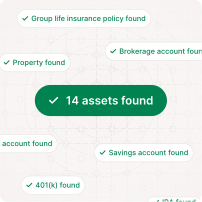
Families work through an organized, step-by-step process that covers estate orientation, financial discovery, and inheritance mapping. Elayne's Verified Asset Search actively searches for accounts, lost insurance policies, dormant financial accounts, and unclaimed state property using credentialed access to authoritative financial records. This goes beyond public-record databases to surface what families may not be aware of. Elayne also uses document analysis to review tax returns, bank statements, and financial records, surfacing interest-bearing accounts, retirement distributions, and dividend income sources that point to financial institutions holding estate assets.
What Elayne Covers
Elayne's scope covers the orientation, organization, discovery, and mapping stages of estate settlement. Elayne helps families understand what exists in the estate, organizes the full set of accounts, assets, debts, and documents, and identifies who inherits and how each asset transfers. Elayne also handles creditor notification processes and the deadlines attached to them.
In addition, Elayne actively manages subscription and recurring-charge cancellation directly with service providers, confirming charges have stopped and logging each confirmation for estate accounting.
For families with inherited retirement accounts, Elayne tracks distribution deadlines and required minimum distributions under SECURE Act 2.0, depending on beneficiary type and account. Key details for beneficiaries of inherited IRAs and 401(k)s include:
- Mandatory annual RMD requirements may apply depending on beneficiary type.
- Missed distributions carry a 25% excise tax, reduced to 10% if corrected within two years.
Elayne surfaces these deadlines and the requirements attached to them.
Also, for families with multiple executors, or family members in different locations, Elayne provides a shared dashboard where authorized family members and advisors can access documents, track progress, and coordinate steps together. For dual-role executors who serve as both executor and beneficiary, the shared dashboard also provides an auditable record of actions taken, which can help support impartial administration.
Elayne Pricing
Elayne charges flat fees by tier. The Estate Organizer tier is $500 and covers estate organization and probate readiness. The Financial Discovery tier is $3,000 and includes Verified Asset Search along with everything in the Estate Organizer tier. The Inheritance Plan tier is $6,000 and covers inheritance and distribution mapping, along with both prior tiers. Families can start at the tier that fits their situation and upgrade as needed.
| Tier | Flat Fee | What's Included |
|---|---|---|
| Estate Organizer | $500 | Estate organization and probate readiness |
| Financial Discovery | $3,000 | Verified Asset Search + everything in Estate Organizer |
| Inheritance Plan | $6,000 | Inheritance and distribution mapping + both prior tiers |
Elayne can be paid as an eligible estate expense. When a confirmed estate account is in place, Elayne can bill the estate directly, and can help families get reimbursed from estate funds when they pay out of pocket first.
Who Elayne Is a Good Fit For
Elayne is a strong fit for families who want to understand the full picture of what exists in an estate and need help with financial discovery, inheritance mapping, and estate organization. A few questions that can help families assess whether Elayne is the right fit:
- What specific steps does the family need help with, and does Elayne cover those steps?
- How important is verified financial discovery, including searching for accounts, policies, and unclaimed property the family may not know about?
- How large is the estate, and does a flat-fee structure work for this particular situation?
- Are there multiple family members, co-executors, or advisors who need shared access to estate documents and progress in one place?
- Does the estate include inherited retirement accounts, such as an IRA or 401(k), where distribution deadlines and required minimum distributions may apply?
FAQs
What is Alix and how does it charge for its services?
Alix is a concierge estate settlement service that pairs families with a dedicated human advisor who guides them through steps such as asset inventory, probate coordination, creditor resolution, and beneficiary distributions. The service charges 1% of the gross estate value, so a $500,000 estate costs $5,000, and a $1 million estate costs $10,000.
What does an estate settlement service do?
An estate settlement service helps families work through the administrative steps required after a loved one passes away. These steps typically include locating and inventorying assets, notifying financial institutions and government agencies, resolving outstanding debts, handling any required probate filings, and distributing remaining assets to beneficiaries.
Who is Alix a good fit for?
Alix tends to be a strong fit for families who prefer an advisor-guided experience. Families working through complex estates (those with multiple accounts, real estate, or probate requirements) often find the advisor relationship particularly valuable. For families with simpler estates or those who prefer a flat-fee pricing structure, the Elayne vs. Alix comparison is a worthwhile step before deciding.
How long does estate settlement typically take?
Estate settlement timelines vary depending on the size and complexity of the estate, whether probate is required, and how quickly financial institutions process requests. A straightforward estate with few accounts and no probate may close in a few months. Estates that require probate court involvement, have disputed claims, or include real estate in multiple states can take a year or more to settle.
What is Elayne and how does it work?
Elayne is an estate settlement service that handles the administrative work of settling an estate on a family's behalf. Elayne's platform handles settlement tasks directly: searching for accounts and assets, notifying financial institutions, and coordinating survivor benefits. Families work with Elayne through a digital process that helps centralize settlement tasks in one place. Elayne charges a flat fee, meaning the cost does not change based on the size of the estate.
What platform helps executors and family members collaborate on settling an estate together?
Several estate settlement platforms include shared access features so executors and family members can work through the process together, even from different locations. Elayne provides a shared dashboard where authorized family members, co-executors, and advisors can access documents, track progress, and coordinate steps in one place. Because all activity is logged with a timestamped record, the dashboard also supports impartial administration; other beneficiaries and, where relevant, the court, can see the same record the executor sees. Alix assigns a dedicated advisor who communicates with the family throughout the process, though its collaboration model is built around the advisor relationship instead of a shared digital workspace. EstateExec is designed primarily as single-executor software; it does not include a built-in shared dashboard for multiple family members. For families with co-executors, multiple beneficiaries in different locations, or a need for a documented audit trail, a platform with shared multi-user access is worth considering.
What is the best platform for organizing estate paperwork and notifying agencies after a death?
The right platform depends on how much of the work the family wants to handle versus delegate. Elayne handles the notification and discovery work directly: searching for accounts, notifying financial institutions and benefits providers, and coordinating survivor benefits on the family's behalf, while organizing documents and progress in a central dashboard. Alix pairs families with a dedicated advisor who coordinates institution notifications and guides them through each administrative step. EstateExec is self-service software that helps an executor organize and track the process independently; it does not handle notifications on the family's behalf. For families who want the paperwork and agency notifications managed for them instead of tracked by them, a full-service option like Alix or Elayne is the more relevant choice.
What should families look for when choosing an estate settlement service?
When comparing estate settlement services, a few factors are worth weighing. First, consider the pricing structure: some services charge a percentage of the estate value, while others charge a flat fee. Second, think about the level of support you prefer throughout the process. Third, look at the specifics of what each service covers: this may include account searches, institution notifications, and beneficiary distributions.
What is the best estate settlement platform for adult children managing a parent's estate remotely?
Adult children settling a parent's estate from a different city or state face the same administrative requirements as any executor, with the added complexity of coordinating across distance. Platforms that offer a digital-first process, including document uploads, progress tracking, and communication tools that work remotely, reduce the need for in-person visits to financial institutions or local offices. Elayne's process is fully remote: families work through estate orientation, financial discovery, and inheritance mapping digitally, with Elayne handling institution notifications and asset searches on their behalf. Alix provides a platform where families can upload documents and message their advisor remotely, with Alix's team managing settlement steps from a distance. EstateExec is accessible from any device as self-service software, though the executor handles all notifications and coordination independently. For adult children managing a parent's estate without local presence, a full-service platform that handles notifications and institution contact directly reduces the logistical burden considerably.
How do executors handle estate debts and creditor notifications without making costly mistakes?
Executors are generally required to notify creditors and manage estate debt before distributing assets to beneficiaries. The specific requirements, including how notice must be given and how long creditors have to file claims, vary by state. Most states require notice to known creditors directly and, in some cases, published notice in a local newspaper for unknown creditors.
Paying debts before the creditor notification period closes, or distributing assets to beneficiaries before debts are resolved, can leave an executor personally liable for the shortfall. Common mistakes include paying disputed debts without verifying them, missing secured debts such as mortgages or liens, and overlooking tax obligations, including the final income tax return and, for larger estates, estate tax filings.
Estate settlement services that include creditor resolution support, like Alix, can help executors work through this process with guidance on what to pay, when, and in what order.
What are the alternatives to hiring a probate attorney for settling a parent's estate?
Whether a probate attorney is required depends on the estate and the state. Some states allow executors to handle the probate process without an attorney, particularly for smaller or simpler estates. Alternatives families use include: estate settlement services that provide advisor-guided or platform-based support through the administrative steps; self-service software, like EstateExec, for executors who are comfortable managing the process independently; and, for estates that avoid probate entirely, direct transfers through beneficiary designations, joint ownership, or trusts. For estates that do require probate court involvement, many probate courts make their forms and procedures publicly available, and some courts offer self-help resources for unrepresented executors. The complexity of the estate, including whether it includes real property, disputed claims, or assets in multiple states, typically determines whether professional legal counsel is needed.
Being both executor and beneficiary of an estate: what conflicts should I watch out for?
Serving as both executor and beneficiary is common, particularly in family estates, but it creates a potential conflict of interest that requires careful attention. As executor, the fiduciary duty runs to all beneficiaries equally, not to the executor's own interests as a beneficiary. Self-dealing is the primary risk: using estate assets to benefit yourself ahead of other beneficiaries, paying yourself excessive compensation, or making distribution decisions that favor your share over others'. Other areas to watch include: reimbursing yourself for estate expenses without proper documentation, making decisions about asset sales or valuations that affect your share disproportionately, and taking any action that a reasonable beneficiary could challenge as preferential. Keeping a clear, documented record of every action taken (what was decided, when, and why) is one of the most practical ways to protect yourself. Estate administration platforms that provide a shared, timestamped activity log can support this, since other beneficiaries and the court can see the same record you do. When the estate is large, contested, or involves multiple beneficiaries with different interests, consulting a probate attorney before making distribution decisions is a reasonable step.
*Disclaimer: This article is for informational purposes only and does not provide legal, medical, financial, or tax advice. Please consult with a licensed professional to handle your specific situation.