

Losing someone changes everything overnight. And while grief deserves your full attention, there are also practical matters that can't wait. This complete checklist of when someone dies gives you a clear, step-by-step path through the entire process, in the right order, so nothing slips through.
Key Takeaways:
- Order 10-15 certified death certificates upfront to avoid delays with banks, insurers, and agencies.
- Contact Social Security at 1-800-772-1213 to report the death and apply for survivor benefits within two years.
- Most estates take 6-12 months to settle, but simplified probate can close in weeks for smaller estates.
- Freeze credit reports with all three bureaus to prevent identity theft during this vulnerable period.
- Elayne automates estate settlement paperwork and notifications, saving families over 400 hours of work.
Immediate Steps to Take When Someone Dies
The first hours after someone dies can feel overwhelming. Here's what to do right away.
If the death was unexpected, call 911. If your loved one was under hospice care or the death was expected at home, contact the hospice nurse or attending physician first. They will pronounce the death and walk you through what happens next. Don't move the body if the death was unexpected or unattended.
Once the death has been pronounced, contact a funeral home or cremation service to arrange transportation. They'll take care of your loved one from there.
Secure the home by locking doors and windows, particularly if it will be empty for a period. If there are dependents, pets, or anyone who relied on the deceased for care, arrange temporary support as soon as possible.
Obtaining Death Certificates and Why You Need Multiple Copies
The funeral director will typically file the death certificate with your state's records office and can order certified copies on your behalf. You can also request copies directly from the state or county health department, though timing varies by state and can take two to four weeks.
Certified copies include an official state seal and signature, which most institutions require before releasing information or closing accounts. Photocopies won't be accepted.
Order at least 10 to 15 certified copies to start. Banks, investment firms, insurance companies, Social Security, pension administrators, and the DMV will each need their own copy. Some may return them after processing, but many won't.
If you run out, you can order more later, but it will slow things down. Having enough copies upfront keeps the process moving when you're ready to notify institutions and transfer assets.
How to Report the Death to Social Security and Apply for Benefits
Contact the Social Security Administration at 1-800-772-1213 or visit a local office to confirm the death was reported, even though funeral homes typically handle this. You may qualify for a one-time payment of $255 if you're a surviving spouse who lived with the deceased or an eligible child. Apply within two years.
Monthly survivor benefits may also be available to spouses, children, or dependent parents based on the deceased's work record. Eligibility varies by age, relationship, and dependent status, so ask even if you're uncertain.
Bring a certified death certificate, Social Security numbers for you and the deceased, birth or marriage certificates, and documentation for any dependents. The SSA will review your situation and guide you through the application.
Notifying Financial Institutions and Closing Accounts
Start by creating a list of all banks, credit unions, investment firms, and credit card companies where your loved one held accounts. Contact each one directly. Many estate services teams are available by phone to walk you through the process.
Joint accounts with rights of survivorship usually remain open for the surviving account holder. The deceased's name has been removed, but you retain full access. Payable-on-death accounts transfer funds directly to the named beneficiary without probate, and the bank can help with the claim.
Sole accounts freeze once the institution learns of the death. You'll need a certified death certificate, proof of your authority as executor or administrator, and sometimes Letters Testamentary from the probate court before accessing or distributing funds.
Credit cards in the deceased's name alone should be canceled promptly. Authorized users aren't liable for the debt, but the account will close. Joint credit card holders remain responsible for any balance.
Document every account you close, including confirmation numbers and the representative's name.
{{blog-cta-admin}}
Protecting Against Identity Theft After Death
Identity theft doesn't stop at death. Studies found that 800,000 of the 2.5 million identity theft victims in 2018 were deceased persons. Criminals open new credit cards, take out loans, or file false tax returns using information from someone who has passed away.
Start by limiting what you share in obituaries. Skip birth dates, home location, and maiden names. These details answer security questions, making identity theft easier.
Next, contact all three major credit bureaus (Equifax, Experian, and TransUnion). Send a copy of the death certificate to each one and request a deceased alert on the file. This stops anyone from opening new lines of credit in the deceased's name.
Request a copy of the credit report to check for suspicious activity. If you're the executor or next of kin, monitor it for at least a year.
Understanding the Probate Process and Timeline
Probate is the legal process by which a court validates a will, appoints an executor, and oversees asset distribution. Not every estate requires it. Assets with named beneficiaries (like life insurance or retirement accounts) and jointly owned property with survivorship rights typically skip probate.
When probate is needed, most estates take 6 to 12 months, though simpler estates may close in 3 to 6 months. Complex estates with disputes or hard-to-value assets can take several years.
Timeline varies by state. Many offer simplified procedures that skip full probate if the estate value falls below a threshold, often between $50,000 and $150,000. These fast-track options can close in weeks instead of months.
Disputes among heirs, missing documents, debts, and real estate in multiple states all slow the process. Filing paperwork promptly and keeping beneficiaries informed helps maintain momentum.
Locating Important Documents and Assets
Start with the home office or any space where your loved one kept important papers. Look for filing cabinets, desk drawers, home safes, and bookshelves. Check for folders labeled with terms like "will," "trust," "insurance," or "estate planning."
Search for bank statements, investment account records, property deeds, vehicle titles, mortgage documents, and outstanding bills. Life insurance policies and retirement account statements often name beneficiaries directly, so finding them early can speed up distribution.
Check with local banks for safe deposit boxes. You may need a court order to access them if you're not listed as an authorized user, though some states allow temporary access to retrieve wills and burial instructions.
Don't forget digital records. Look through email for statements, policy renewals, and online account confirmations. Password managers, browser saved passwords, and phone apps can reveal accounts you didn't know existed.
If you can't locate a will, contact the deceased's attorney or check with the local probate court to see if one was filed.
{{blog-cta-admin}}
Filing Final Tax Returns and Handling Estate Taxes
Filing a final income tax return for the deceased covers January 1 through their date of death, due by the following year's April deadline. The executor signs this return using the same forms the person filed while alive.
If the estate earns more than $600 in income after death through rent, investments, or interest, you'll need to file a separate estate income tax return using Form 1041.
For deaths in 2026, the federal estate tax only applies to estates valued above $13.99 million. Many estates fall below this threshold. Some states maintain lower thresholds with their own estate or inheritance taxes.
Working with a CPA or tax professional who knows estate returns helps you identify deductions, meet deadlines, and handle state requirements. Missing filing dates can result in interest and penalties that reduce what your family receives.
| Institution/Agency | When to Contact | Contact Method | Required Documents |
|---|---|---|---|
| Social Security Administration | Within days of death | 1-800-772-1213 or local office | Certified death certificate, SSNs, birth/marriage certificates |
| Banks & Credit Unions | Within 1-2 weeks | Call the estate services team | Certified death certificate, Letters Testamentary (for sole accounts) |
| Credit Card Companies | Within 1-2 weeks | Call customer service | Certified death certificate, account numbers |
| Life Insurance Companies | Within 30 days (check policy) | Call the claims department | Certified death certificate, policy number, beneficiary identification |
| Credit Bureaus (Equifax, Experian, TransUnion) | Within 2-4 weeks | Mail or online submission | Certified death certificate, proof of executor status |
| IRS (Final Tax Return) | By April 15 of the following year | Mail Form 1040 | Death certificate copy, previous tax returns |
| Pension Administrators | Within 30-60 days | Call the benefits department | Certified death certificate, beneficiary documentation |
| DMV | Within 30-90 days (varies by state) | Visit the local office or mail | Certified death certificate, vehicle titles, registration |
Simplify Estate Settlement with Elayne

Settling an estate means coordinating across dozens of institutions, filling out forms, and tracking deadlines while grieving. Most families spend over 400 hours on this process across 12 to 18 months.
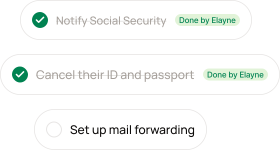
Elayne changes that by handling the work for you. Our intelligent system automates paperwork, notifies agencies like Social Security and the IRS, closes and transfers accounts, tracks deadlines, and uncovers unclaimed assets or benefits you might have missed.
You get a personalized roadmap that updates as you move through each step, plus access to real human guidance whenever you need it. Everything stays secure in one shared family dashboard with bank-level protection.
We take on the administrative weight so you can focus on what matters most.
Final Thoughts on Managing Loss and Estate Settlement
No one should have to figure out the what to do when someone dies checklist entirely on their own during such a painful time. You deserve clarity, support, and a system that keeps everything on track without adding to your stress. Elayne automates paperwork, coordinates with agencies, and provides you with a personalized roadmap that updates as you move forward. Let us handle the details so you can be present for what truly matters right now.
FAQs
How many death certificates should I order after someone passes away?
Order at least 10 to 15 certified copies initially, as banks, insurers, investment firms, government agencies, and other institutions each need their own copy. Many won't return them, so having enough upfront prevents delays later.
Do I need to go through probate if my loved one had a will?
Not always. Assets with named beneficiaries (like life insurance or retirement accounts) and jointly owned property with survivorship rights typically skip probate. Simplified procedures may also be available if the estate value falls below your state's threshold, often between $50,000 and $150,000.
When should I report a death to Social Security?
Contact the Social Security Administration as soon as possible at 1-800-772-1213, even though funeral homes typically report deaths. You may qualify for a one-time $255 payment or monthly survivor benefits, but you must apply within two years.
What happens to my loved one's credit cards and bank accounts after death?
Joint accounts usually remain open for the surviving account holder. Sole accounts freeze once the bank learns of the death, and you'll need a certified death certificate and proof of authority to access them. Credit cards in the deceased's name alone should be canceled promptly.
How can I protect my loved one from identity theft after death?
Contact all three credit bureaus (Equifax, Experian, and TransUnion) with a copy of the death certificate to place a deceased alert on each of their files. Limit personal details in obituaries, and monitor their credit report for at least a year if you're the executor or next of kin.







.svg)