.webp)

Probate in New York is the court-supervised process for settling a deceased person's estate. Many estates move through it in 7 to 18 months. How long the process takes depends on estate complexity, whether the will is contested, and which county Surrogate's Court handles the case. This guide explains key points for families and executors to be aware of, including: when probate is required, how long certain steps usually take, small estate alternatives, and more.
Key Takeaways
- New York probate often runs 7 to 18 months, with a mandatory 7-month creditor notice period that cannot be waived.
- Estates with $50,000 or less in personal property may qualify for voluntary administration, a simplified alternative to full probate.
- Assets with beneficiary designations, joint ownership with right of survivorship, or property held in trust pass outside of probate entirely.
- Elayne organizes the full estate settlement process for New York families, helping them keep track of court deadlines and locate financial accounts.
What Is Probate in New York and When Is It Required?
Probate is the legal process through which a deceased person's estate is settled under court supervision. In New York, this means filing with the Surrogate's Court in the county where the person lived, having the court validate any will, and formally appointing someone to manage and distribute the estate.
Not every estate goes through probate. New York requires it when a person owned assets solely in their own name, without a beneficiary designation or joint owner to pass those assets along automatically.
Examples: When Probate Is Required in New York
- Real property titled only in the deceased person's name, with no co-owner or transfer-on-death deed, must pass through the court before title can change hands.
- Bank or investment accounts held individually, without a named beneficiary, cannot be accessed or distributed without either a probate proceeding or a small estate alternative.
- Personal property of meaningful value, such as a vehicle or valuable personal belongings, may require probate if there is no other legal mechanism to transfer ownership.
Assets that pass outside of probate include jointly held property with right of survivorship, accounts with named beneficiaries like life insurance or retirement accounts, and assets held inside a trust. These transfer directly to the surviving owner or named recipient without court involvement.
{{blog-cta-financial}}
How Long Does Probate Take in New York?
The process for a simple estate with a clear will may take around seven months. Contested wills, unclear asset inventories, or complex tax situations can push the timeline well past 18 months.
What Shapes the Timeline
- Court backlogs vary by county. Surrogate's Courts in New York City and Long Island often move slower than upstate courts due to case volume.
- The 7-month creditor notice period is mandatory and cannot be waived.
- Tax clearance adds time when a federal or New York State estate tax return is required.
- Will contests or disputed claims between heirs can extend proceedings by months or years.
For context, here are how key parts of the probate process generally unfold in New York:
- Filing the petition and paying the filing fee. The court accepts the petition and assigns a docket number. Processing takes roughly two to six weeks depending on the county.
- Citing distributees and creditors. The court requires formal notice to all interested parties. The statutory waiting period for creditors to respond runs seven months from the date letters testamentary are issued.
- Court review and judicial qualification. A judge reviews the petition for completeness. Contested wills or missing heirs can extend this stage by months.
- Issuance of letters testamentary or letters of administration. Once approved, the executor receives legal authority to act on behalf of the estate.
- Inventorying and appraising assets. The executor manages the process of locating, valuing, and documenting all estate property. Complex or scattered assets make this stage considerably longer.
- Paying debts, taxes, and expenses. Federal and state tax returns may be required. When a federal estate tax return (Form 706) is required, the executor has nine months from the date of death to file it. A six-month extension is available upon request. If the IRS audits the return, that process can add several more months before the estate is fully resolved.
- Distributing assets and closing the estate. Once liabilities are settled, remaining assets transfer to beneficiaries and the court issues a decree closing the estate.
| Step | Typical Duration |
|---|---|
| Petition filing and docketing | 2 to 6 weeks |
| Creditor notice period | 7 months |
| Court review and approval | 1 to 3 months |
| Asset inventory and appraisal | 1 to 4 months |
| Debt and tax resolution | 1 to 12+ months |
| Final distribution and closing | 1 to 3 months |
Key Factors That Impact a Probate Timeline
Estate Complexity and Asset Type
Straightforward estates with clear beneficiaries and liquid assets tend to close faster. Estates involving real property, business interests, or assets held across multiple states often require more court involvement and typically add six months or more to the timeline.
Will Contests and Family Disputes
Objections filed by heirs or creditors put proceedings on hold until the court resolves them.
Court Scheduling and Backlog
Surrogate's Courts in New York City counties, including Kings, Queens, and Bronx, generally have more caseloads than rural courts. Scheduling delays alone can push a straightforward filing back by several months.
Creditor Claims and Tax Clearance
New York requires a seven-month creditor window after the first publication of notice. Estates that owe estate taxes must also wait for tax clearance before assets can be distributed, which can add time independent of court scheduling.
| Factor | Effect on Timeline | Typical Impact |
|---|---|---|
| Clear will, liquid assets, agreeable heirs | Speeds up | Closer to 7 months |
| NYC or Long Island court backlogs | Slows down | Adds weeks to several months |
| Real property, business interests, or out-of-state assets | Slows down | Adds 6 months or more |
| Will contest or disputed heir claims | Slows down | Adds 1 year or more |
| Federal or New York estate tax return required | Slows down | Adds months until tax clearance |
| Responsive executor with organized records | Speeds up | Fewer avoidable delays at every stage |
Small Estate Administration in New York
Not every estate in New York is required to go through the full probate process. For smaller estates, the state offers two options that can save families considerable time and cost.
Voluntary Administration (Small Estate Affidavit)
When an estate's personal property is valued at $50,000 or less, a family member can file as a voluntary administrator in the Surrogate's Court. This bypasses the formal probate process entirely. The filing fee is minimal, and the court typically issues letters within a few weeks instead of several months.
Simplified Probate
For estates that exceed the voluntary administration threshold but are not large enough to require the full process, simplified probate procedures may apply. Courts have more discretion here, and the process tends to move faster than a standard contested or complex estate.
{{blog-cta-financial}}
How Elayne Helps Families Move Through New York's Probate Process
Settling a New York estate involves dozens of moving parts: court filings, creditor notices, asset searches, tax clearances, and distributions. Elayne helps families manage that process, from locating financial accounts and unclaimed assets to monitoring court deadlines.
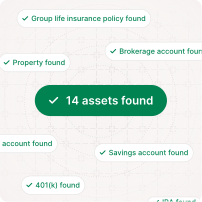
Elayne runs a Verified Asset Search, which goes beyond public record lookups to surface dormant financial accounts, unclaimed state property, lost or forgotten life insurance policies, and eligible survivor benefits such as Social Security, pension, and veterans' benefits. The search also uses document analysis. Elayne scans tax returns, bank statements, and other financial records to help identify which institutions hold accounts that may not be listed anywhere.
Creditor Notices and Court Deadlines
New York requires a seven-month creditor notice period. During that window, the executor is responsible for filing the Notice to Creditors in an approved legal publication and submitting proof of publication to the Surrogate's Court. Elayne identifies which newspapers qualify as approved publications in the relevant county, monitors the publication timeline, and flags when proof of publication needs to be submitted to the court.
A Shared Workspace for Families and Their Advisors
Elayne provides a shared dashboard where authorized family members, co-executors, and attorneys can access documents, track progress, and work through steps together.
Stopping Recurring Charges
Elayne scans financial records to identify recurring charges, manages cancellation communications with providers, and monitors subsequent statements to confirm each charge has stopped.
FAQs
How long does probate take in New York?
New York probate often lasts 7 to 18 months on average. The timeline depends on factors such as court backlogs, estate complexity, tax clearance requirements, and whether the will is contested.
Is probate required in New York state?
Probate is required when someone owned assets solely in their own name without a beneficiary designation or joint owner. Real property titled only in the deceased person's name, individual bank accounts without named beneficiaries, and valuable personal property typically need to pass through probate before ownership can transfer.
Small estate affidavit vs full probate in New York?
A small estate affidavit (voluntary administration) bypasses full probate when personal property is valued at $50,000 or less, with the court typically issuing letters within a few weeks instead of several months. Larger or more complex estates must go through the standard probate process.
What happens if someone dies without a will in New York?
When there is no will, New York's intestate succession laws determine how assets are distributed. The Surrogate's Court appoints an administrator to manage the estate instead of an executor. Assets pass to heirs in a fixed order set by state law: a surviving spouse and children are first, followed by parents, siblings, and more distant relatives.
What is the difference between an executor and an administrator in New York?
An executor is the person named in a will to manage and distribute the estate. An administrator is appointed by the Surrogate's Court when someone dies without a will, when the named executor is unable or unwilling to serve, or when no executor is named. Both roles carry the same legal responsibilities and fiduciary duties to the estate and its beneficiaries.
*Disclaimer: This article is for informational purposes only and does not provide legal, medical, financial, or tax advice. Please consult with a licensed professional to address your specific situation.










.svg)