.webp)

Running an asset search for a deceased parent or family member can become fairly complex. State unclaimed property programs, federal pension databases, insurance policy locators, and old tax returns all hold pieces of the financial picture. Some assets show up in multiple places. Others only appear if you search a specific database or contact a former employer directly. The entire process is free, but it takes time and a structured approach to make sure nothing gets missed.
Key Takeaways:
- An estimated $70 billion in unclaimed property sits across U.S. states, often including forgotten life insurance, pensions, and dormant accounts.
- Search state databases via MissingMoney.com and federal resources like TreasuryHunt.gov and the NAIC Life Insurance Policy Locator at no cost.
- Tax returns from the past 3-5 years reveal overlooked accounts through interest income, dividends, and pension distributions.
- Contact former employers and financial institutions directly with a death certificate to uncover group life insurance and retirement benefits.
- Elayne automates asset discovery and benefit searches, consolidating findings in one secure dashboard during estate settlement.
Understanding the Scope of Unclaimed Assets After a Loss
According to the National Association of Unclaimed Property Administrators (NAUPA), an estimated $70 billion in unclaimed property sits across all 50 states, with roughly 1 in 7 Americans holding unclaimed cash or property waiting to be returned.
Start With Physical Documents and Personal Records

Begin by looking through file cabinets, desk drawers, and any home safes. Safe deposit boxes at a bank often hold original insurance policies, certificates of deposit, or property deeds. Request access through the estate executor if the box is locked.
Key documents to look for:
- Bank and investment statements, especially older ones showing account numbers
- Tax returns from the past 3 to 5 years, which reveal interest income, dividends, and pension distributions
- Insurance policy documents, both life and annuity
- Mail and email from financial institutions, brokerages, or HR departments
Search State Unclaimed Property Databases

Every state runs an unclaimed property program. When a financial institution loses contact with an account holder, it is legally required to transfer those funds to the state. Property is reported to the state where the holding company is located, not where the deceased lived, so someone who spent their life in Texas could have funds sitting in Delaware if their brokerage was headquartered there.
Search multiple states beyond where your family member resided when trying to find all bank and investment accounts.
{{blog-cta-financial}}
Where to Search
- MissingMoney.com searches multiple state databases at once and is a reliable starting point for most families
- Each state treasury website allows free individual searches by name
California, New York, Texas, and Florida hold some of the highest volumes of unclaimed property nationally and are worth checking regardless of where your family member lived.
What You'll Find
State databases commonly hold dormant bank accounts, uncashed checks, forgotten utility deposits, stock dividends, and contents of abandoned safe deposit boxes.
One rule applies across every state program: the search is always free. If any website asks for payment to run a search or charges a fee to release funds, it is a scam. Legitimate state programs and MissingMoney.com charge nothing to search.
Use the NAIC Life Insurance Policy Locator
Life insurance is one of the most commonly overlooked assets after a death. For policies taken out decades ago, it's common for paperwork to be misplaced, or for beneficiaries to not be aware of the policy at all.
The National Association of Insurance Commissioners offers a free Life Insurance Policy Locator that searches across participating insurers simultaneously. To submit a request, you'll need information from the death certificate: the deceased's full legal name, Social Security number, date of birth, and date of death.
Results typically arrive within 90 days. If a match is found, the insurer contacts the beneficiary directly.
Check Federal Resources for Unclaimed Benefits
Federal databases cover a different layer of assets than state programs. All searches are free and run directly through official government websites.
Key Federal Resources
- TreasuryHunt.gov locates matured, uncashed U.S. savings bonds held in the deceased's name.
- The PBGC Missing Participants database holds pension benefits from terminated private-sector plans where the original employer no longer exists.
- HUD's FHA Refunds search covers mortgage insurance premium refunds owed to former FHA borrowers.
- The VA Benefits website covers any unpaid compensation, pension, or life insurance owed to veterans.
| Resource | What It Searches | Cost | Information Required |
|---|---|---|---|
| MissingMoney.com | Dormant bank accounts, uncashed checks, utility deposits, stock dividends, and safe deposit box contents across multiple state databases | Free | Full legal name and state(s) where the deceased lived or worked |
| State Treasury Websites | State-specific unclaimed property, including forgotten accounts and assets turned over by financial institutions | Free | Full legal name, and possibly date of birth or last known location |
| NAIC Life Insurance Policy Locator | Life insurance policies across participating insurance companies nationwide | Free | Social Security number, full legal name, date of birth, and date of death from death certificate |
| TreasuryHunt.gov | Matured, uncashed U.S. savings bonds issued after 1974 | Free | Social Security number of the deceased bond owner |
| PBGC Missing Participants | Pension benefits from terminated private-sector pension plans where the employer no longer exists | Free | Full legal name, Social Security number, date of birth |
| HUD FHA Refunds | Mortgage insurance premium refunds owed to former FHA borrowers | Free | FHA case number or property location from the original mortgage |
| VA Benefits (va.gov) | Unpaid compensation, pension benefits, or life insurance owed to veterans | Free | Veteran's full name, Social Security number, date of birth, and military service information |
Notify Social Security and Review Survivor Benefits
Funeral homes typically report a death to the Social Security Administration, but confirming this was completed is an important step.
Beyond stopping benefit payments to the deceased, notification opens a separate review: whether eligible family members qualify for survivor benefits. A surviving spouse, dependent children, or disabled dependents may receive monthly payments based on the deceased's earnings record. SSA also offers a one-time lump-sum death payment of $255 to qualifying survivors.
Contact SSA at 1-800-772-1213 or visit ssa.gov to confirm notification and ask about survivor eligibility.
Contact Financial Institutions and Former Employers
Direct outreach to banks, credit unions, and investment firms often uncovers accounts that never appeared in paper records. Be sure to have a certified copy of the death certificate and letters testamentary or letters of administration, which confirm legal authority to act on behalf of the estate.
Ask each institution about:
- All accounts held in the deceased's name, including dormant ones
- Any safe deposit box on file
- Retirement accounts such as IRAs or 401(k)s
- Named beneficiaries on any account
Consider contacting former employers as well. Group life insurance policies are commonly forgotten, and pension or deferred compensation benefits can go unclaimed as well. HR departments can confirm whether any benefits remain outstanding.
{{blog-cta-financial}}
Review Tax Returns and Credit Reports
Tax returns from the past three to five years act as a financial map. Interest income on a Schedule B points to bank or brokerage accounts. Dividend entries indicate stock holdings. A K-1 form suggests a partnership or business interest. Each line item is worth following up on with the relevant institution.
A credit report adds another layer. With proper legal authorization, such as letters testamentary, you can request the deceased's credit report from all three major bureaus: Equifax, Experian, and TransUnion. The report surfaces open accounts, creditors, and financial relationships that may not appear in personal records, and helps identify debts the estate needs to settle before assets are distributed.
Consult Professional Advisors
Attorneys, accountants, financial advisors, and insurance agents who worked with the deceased often hold records that no database search will surface. An estate attorney may have a copy of the full estate plan, including trusts, asset schedules, or beneficiary designations. A CPA or tax preparer can walk you through prior returns and flag income sources that are worth following up on. A financial advisor may hold account records or know about investments that were made decades ago.
Reaching out to each professional is straightforward: a certified copy of the death certificate and proof of authority as executor is typically all that's needed to access relevant files and receive answers.
How Elayne Simplifies the Asset Search Process
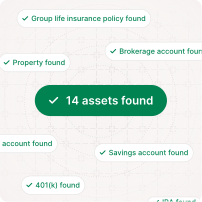
Elayne's asset and benefit discovery feature combines document analysis with direct database searches to uncover unclaimed assets, insurance policies, and eligible benefits families might otherwise miss. Every finding flows into a single secure dashboard alongside the rest of the estate's open steps.
Elayne helps families feel confident they haven't overlooked anything. See how it works at elayne.com.
Final Thoughts on Locating Unclaimed Property After a Loss
After a loss, a complete asset search helps you feel confident nothing was overlooked. The databases are free, the process is straightforward, and the results can uncover accounts or benefits your family never knew existed. Start with state unclaimed property programs and federal resources, then follow up with direct institution contact. If you'd like support managing every step in one secure place, see how Elayne simplifies asset discovery for families managing this process.
FAQ
What is the best website to find unclaimed money for a deceased family member?
MissingMoney.com searches multiple state databases at once. For federal assets, TreasuryHunt.gov for savings bonds and the PBGC Missing Participants database for pensions are worth checking separately, as each covers different asset types.
Free unclaimed money search vs paid asset search services?
All legitimate state and federal unclaimed property searches are completely free through official government websites. If any site asks for payment to run a search or release funds, it's a scam. Paid services add no value to the search itself: they simply resend information already available for free.
Can I search for unclaimed money using a deceased parent's Social Security number?
Yes. Many federal databases, including the NAIC Life Insurance Policy Locator and TreasuryHunt.gov, require the deceased's Social Security number to run a search. You'll also need information from the death certificate, such as full legal name, date of birth, and date of death.
How do I find assets of a deceased person for free?
Start with physical records at home, then search state unclaimed property databases through MissingMoney.com or individual state treasury websites. Follow up with federal resources like TreasuryHunt.gov for savings bonds and the PBGC database for pensions, contact former employers directly about life insurance or retirement accounts, and review the past three to five years of tax returns to identify income sources that are worth tracking down.
Should I search every state or just where my family member lived?
Search multiple states beyond the state of residence. Unclaimed property is reported to the state where the holding company is located, so a Texas resident could have funds in Delaware if their brokerage was headquartered there. California, New York, Texas, and Florida hold particularly high volumes of unclaimed property and are worth checking regardless of where your family member lived.
*Disclaimer: This article is for informational purposes only and does not provide legal, medical, financial, or tax advice. Please consult with a licensed professional to address your specific situation.










.svg)