

When someone you care about is grieving, finding the right words can feel incredibly difficult. There is often a fear of saying something wrong on accident, or that the words of support you share are in some way lacking.
But the truth is, the person you care for isn't expecting a perfect speech. They are looking for a sign that someone sees them, that their loss has been noticed, and that they are not going through it alone. A few simple, heartfelt words can offer exactly that.
What tends to matter most is the intention behind the words. A heartfelt "I'm so sorry" can carry more weight than a carefully rehearsed condolence.
In this guide, we offer helpful phrases and messages for a wide range of situations: the loss of a parent, a spouse, a child, a friend, or a colleague. It covers what to say in a text, a card, or in person. It addresses sudden and unexpected loss, where the shock can make words feel even harder to find. And it offers alternatives to common phrases that, though well-meaning, can sometimes land differently than intended.
None of these phrases need to be used word for word; they are starting points. Feel free to adapt them, personalize them, or simply let them serve as a reminder of how impactful reaching out to someone can be when they're going through a challenging period.
Key Takeaways:
- Simple, sincere condolences matter more than perfect words when someone dies.
- Avoid clichés like "everything happens for a reason" or vague offers of help.
- Estate settlement adds administrative weight to grief, often taking 16 months and 570 hours.
- Elayne automates post-loss administration so families can focus on remembrance and healing.
What to Say When Someone Dies: General Condolence Messages
These phrases can work across many situations, whether reaching out to a coworker, a neighbor, or someone known through a friend:
- "I'm so sorry for your loss. You're in my thoughts."
- "Wishing you peace and comfort during this difficult time."
- "My deepest condolences to you and your family."
- "There are no words, but please know I'm here for you."
- "Sending love and strength your way."
Messages for Specific Relationships: Family, Friends, and Colleagues
Loss of a Parent
- "The love you had for your mom/dad was so beautiful and clear to everyone around you. I'm so sorry for your loss."
- "Your mom/dad's kindness and warmth touched so many people. What a beautiful life they lived."
Loss of a Spouse or Partner
- "The life you built together was so beautiful. I'm deeply sorry for your loss."
- "What the two of you had was so beautiful. Please know that you are surrounded by people who love and care deeply for you."
Loss of a Child
- "Your son/daughter was so loved. That love is something that will never fade."
- "I'm holding your family in my heart. I'm so sorry for your loss."
Loss of a Colleague
- "They brought so much to this team that can't be replaced. I'm so grateful that we got to work alongside them."
- "If there's any meeting or task I can cover for you, please don't hesitate to let me know."
| Situation | What to Say | Why It Works |
|---|---|---|
| Loss of a parent | The love you had for your mom/dad was so beautiful and clear to everyone around you. I'm so sorry for your loss. | Acknowledges the unique bond without assuming details about the relationship |
| Loss of a spouse or partner | The life you built together was so beautiful. I'm deeply sorry for your loss. | Honors both the person who died and the relationship itself |
| Loss of a child | Your son/daughter was so loved. That love is something that will never fade. | Recognizes the magnitude without trying to explain or soften it |
| Sudden or unexpected death | I don't have the words. I'm just so sorry this happened. | Honest acknowledgment without attempting to assign meaning or reason |
| Professional or colleague relationship | They brought so much to this team that can't be replaced. I'm so grateful that we got to work alongside them. | Offers a way to acknowledge loss within a work context |
{{blog-cta-admin}}
What to Say When Someone Dies Unexpectedly
Sudden loss carries its own weight. In these situations, it's often best to acknowledge that weight without trying to explain or assign meaning to it. Examples include:
- "I don't have the words. I'm just so sorry this happened."
- "I'm here, no matter what you need."
Alternatives to "Rest in Peace"
If you happen to feel that "rest in peace" is a bit too generic, these are some alternatives that can be used instead:
- "May your memory be a blessing." (Jewish tradition, but widely used)
- "Rest in love."
- "Gone from our sight, never from our hearts."
- "May you rest in the light."
- "Your memory lives on in everyone you touched."
For a non-religious option, "I hope you're at peace" or "Rest well" preserves the same sentiment without invoking faith.
Short Condolence Messages for Text and Cards
For texts:
- "Thinking of you today. No need to reply."
- "I'm so sorry. I'm here."
For cards:
- "With love and deepest sympathy."
- "Wishing you gentleness in the days ahead."
What Not to Say: Common Condolence Mistakes to Avoid
Certain words and phrases, even though well-meaning, can unintentionally sting. A few phrases to avoid:
- "Everything happens for a reason."
- "At least they lived a long life."
- "I know how you feel."
- "They're in a better place."
In each of these examples, the common thread is trying to fix grief instead of simply acknowledging it.
{{blog-cta-admin}}
How Estate Settlement Adds to the Weight of Loss

Most estates take months to settle, with executors spending hundreds of hours on the administrative work that follows a loss: forms, phone calls, agency notifications, account closures, and deadline tracking, all while trying to process the grief of losing a loved one.
For additional context: multiple copies of certified death certificates must be ordered. Banks need to be notified. Social Security must be contacted. Insurance policies need to be located and claims submitted. Online accounts, subscriptions, and utilities all require attention. Each of these steps involves its own forms, its own wait times, and its own set of rules that vary by institution and by state.
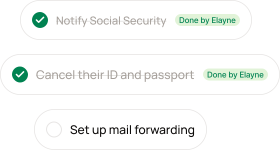
This is where Elayne was designed to help. Every one of those steps—the notifications, the account closures, the paperwork—is something Elayne handles on behalf of families.
For example, when it comes to financial accounts, Elayne works through the process of notifying banks, credit unions, and investment institutions. Closing or transferring accounts involves specific forms and waiting periods that differ from one institution to the next. Elayne knows what each institution requires and helps families move through those steps in the right order.
Insurance policies are another area where families frequently face challenges. Locating a policy, understanding its terms, and submitting a claim is a multi-step process that can take weeks on its own. Elayne helps locate policies— including ones that may have been forgotten or misplaced—and supports families through the claims process so benefits are not left unclaimed.
Perhaps most importantly, Elayne brings everything into one place. Instead of coordinating across dozens of institutions and tracking deadlines manually, families have a single, secure space where the settlement process is visible and the next step is always clear.
Final Thoughts on Offering Condolences and Support
Sharing words of kindness and compassion can make a real difference for someone who's just lost a loved one. Every heartfelt message is a reminder for someone who's grieving that they're remembered, supported, and cared for. That matters deeply, especially in the earliest days of grief.
In the weeks and months that follow a funeral, families often end up dealing with settlement paperwork, phone calls, and administrative steps at a time when they're still in mourning. Estate settlement can take hundreds of hours and stretch over many months, and sometimes even years.
Elayne was built with that context in mind. It handles the administrative steps that follow a loss—notifying agencies, closing accounts, locating unclaimed assets and benefits, tracking deadlines, and protecting against identity theft—so that families have the space they need to focus on healing, remembering, and supporting one another.
FAQ
What to say when someone dies: "My deepest condolences" vs short condolence message?
"My deepest condolences" is formal and appropriate across most situations, especially for professional relationships or when you don't know the grieving person well. A short condolence message like "I'm so sorry for your loss. You're in my thoughts" feels warmer and more personal for friends and family.
What can I say instead of rest in peace?
Alternatives include: "May your memory be a blessing," "Rest in love," "Gone from our sight, never from our hearts," or simply "I hope you're at peace."
What to say when someone dies unexpectedly?
Acknowledge the shock without trying to assign meaning: "I don't have words. I'm just so sorry this happened."
*Disclaimer: This article is for informational purposes only and does not provide legal, medical, financial, or tax advice. Please consult with a licensed professional to address your specific situation.










.svg)