
When you start thinking about who should step in after you, choosing a successor trustee can feel like one of the hardest decisions in your plan. It is about more than who you trust today; it is about who will have the time, skills, and steadiness to manage money and relationships when you are no longer the one holding everything together. This guide walks through what a successor trustee actually does, how to weigh family members against professional options, and how to build a backup plan so your trust continues to work for your loved ones even when life does not go as expected.
Key Takeaways:
- A successor trustee manages trust assets when the original trustee dies, becomes incapacitated, or resigns.
- Successor trustees can also be beneficiaries, which is both legal and common in family trusts.
- Professional trustees usually charge a percentage of assets each year; family members often serve for smaller fees or none at all.
- Choose based on financial judgment, fairness, and availability, not birth order or family hierarchy.
- Elayne helps successor trustees handle paperwork, deadlines, and notifications so they can focus on the family.
What Is a Successor Trustee and When Do They Take Over?
A successor trustee manages a trust when the original trustee is no longer able to serve. The original trustee handles day‑to‑day management while able; the successor steps in when that changes.
Three events usually trigger this transition. First, incapacity, when illness or injury prevents the original trustee from managing affairs. Second, the death of the original trustee. Third, resignation, when a trustee voluntarily steps down.
The timing for this handoff varies. For incapacity, the trust document often spells out how it is to be proven, usually through medical documentation. For death, the successor’s authority begins under the trust terms, but they still need death certificates and other paperwork to act.
{{blog-cta-legal}}
Successor Trustee vs. Executor: Understanding the Key Differences
While both handle estate matters after death, successor trustees and executors work in different spaces.
A successor trustee manages the assets held in a revocable living trust in accordance with the instructions in that document. An executor (sometimes called a personal representative) handles assets that must pass through probate.
The court involvement differs. Executors must file paperwork with the probate court, follow court timelines, and often need court approval for major decisions. Successor trustees usually work without court oversight, following the trust document's instructions directly.
The same person can serve as both executor and trustee, which many estate plans do for consistency.
{{blog-cta-legal}}
Can a Successor Trustee Also Be a Beneficiary?
Yes, a successor trustee can also be a beneficiary. This is legal in all states and common in family trusts, especially when adult children or spouses manage the trust.
For revocable living trusts, this dual role is usually straightforward. The trustee follows the trust terms and distributes assets as written, even if they are among the beneficiaries. Many families prefer this because the inheritor often knows the family's finances and wishes the best for the family.
This setup works well when the trust instructions are clear, and the beneficiaries trust one another. Problems tend to surface when the trustee has broad discretion about when or how much to distribute, or when relationships are already strained. For irrevocable trusts, tax and creditor rules make the design more sensitive, so legal advice becomes more important.
How Much Does a Successor Trustee Get Paid?
Successor trustee payment depends on whether you choose a professional or a family member and on what the trust document allows.
Professional trustees, such as banks, trust companies, or law firms, often charge a yearly fee based on a percentage of the assets they manage. A trust worth $ 500,000 might pay several thousand dollars in fees per year. In return, these providers bring experience with complex estates, investments, and tax filings, and they handle the administrative work.
Family members who serve as trustees often charge less or decide not to take a fee at all. Even so, most states allow “reasonable” compensation for trustees, including relatives, when the document does not spell out an amount. Some states, including California and Florida, have guidelines for what constitutes “reasonable.” Payment can be taken annually or at the end ofthe administration.
{{blog-cta-legal}}
Qualities to Look for When Choosing Your Successor Trustee
The right successor trustee needs more than a close relationship with you. They need specific skills and a temperament that match the work.
Look for comfort with money decisions first. Your successor trustee should understand basic accounting, be able to read a statement, keep a budget, and make steady choices instead of impulsive ones. They do not need to be an expert, but they should be dependable with bills and deadlines.
Organizational habits matter just as much. Trust administration involves forms, follow‑ups, and detailed records. Pick someone who keeps track of tasks, returns calls, and stays on top of paperwork.
Impartiality is important when you have more than one beneficiary. A good trustee can separate personal feelings from their duties and explain decisions in a calm, fair way.
Finally, consider time and availability. Acting as a trustee can mean months of regular work, especially right after a death.
The Risks of Naming a Family Member as Successor Trustee
Family members often seem like the natural choice because they care about your wishes and may not ask to be paid. There are real risks, though, that deserve attention.
Without a financial or legal background, even a very caring relative may struggle with tax filings, investment choices, or complex distributions. Mistakes in these areas can slow everything down or reduce what your beneficiaries eventually receive.
When a trustee is also a beneficiary or is closely tied to beneficiaries, tension is more likely. Siblings may question one another’s decisions. Relatives might worry that the trustee is favoring certain family members, even when choices follow the trust exactly.
It often makes sense to look at professional trustees if your estate includes a business, higher‑value assets, a blended family, or beneficiaries with special needs. Those situations usually require more technical knowledge and distance than a typical family trustee can offer.
{{blog-cta-legal}}
Professional Trustees vs. Family Trustees: Weighing Your Options
The choice between a professional and family trustee depends on what is in your trust and how your family relates to one another.
| Trustee Type | Typical Cost | Key Strengths | Common Limitations | Best Suited For |
|---|---|---|---|---|
| Professional Trustee (Bank, Trust Company, Attorney) | 1-2% of trust assets annually (e.g., $5,000-$10,000 per year on a $500,000 trust) | Expert knowledge of tax rules and investment management; maintains neutrality in family disputes; carries liability insurance to protect beneficiaries; handles complex administrative requirements efficiently | Higher ongoing costs; lacks personal knowledge of family history and values; may feel impersonal during emotionally sensitive decisions | Estates over $1 million; business interests requiring specialized management; blended family situations; beneficiaries with special needs; complex tax scenarios |
| Family Member Trustee | Often reduced fee or no charge (though state law allows reasonable compensation) | Deep understanding of family values and personal wishes; more accessible and responsive to beneficiary needs; typically charges lower fees or serves without compensation; personal investment in family wellbeing | May lack technical expertise in tax filings, investment decisions, or legal requirements; potential for perceived or actual bias among beneficiaries; difficulty maintaining impartiality during family disagreements | Straightforward estates with clear distribution instructions; families with strong existing trust and open communication; trustees with solid financial competency; estates under $1 million with simple asset structures |
| Co-Trustee (Professional + Family Member) | Varies by arrangement; typically lower than a solo professional trustee | Combines family knowledge with professional financial expertise; splits administrative workload; family member provides personal understanding, while professional handles technical compliance and complex decisions | Requires ongoing coordination between trustees; potential for disagreement on management decisions; slightly more complex administrative structure and communication needs | Moderate to complex estates; families wanting both personal connection and professional oversight; situations where beneficiaries value family involvement butthe estate requires expert guidance |
Professional trustees bring knowledge of tax rules, investment management, and legal requirements. They stay neutral when family disagreements surface and carry liability insurance to protect beneficiaries. The cost typically runs 1-2% of assets each year, and they won't know your family's personal history the way a relative would.
Family trustees understand your values and what matters most to your loved ones. They're easier to reach and usually charge less. But they might lack the technical skills needed for complicated estates or struggle to stay neutral during disagreements.
A co-trustee arrangement lets you split responsibilities between a family member who knows your wishes and a professional who manages the financial details.
{{blog-cta-legal}}
First Successor Trustee vs. Second Successor Trustee: Building Your Succession Plan
Naming one successor trustee is a start, but it does not handle what happens if that person cannot serve when the time comes.
Your first successor trustee is the person you would most like to step into the role. Your second successor is the next in line if the first dies, becomes ill, declines to serve, or simply is no longer in a position to carry out the work. A third successor, often an institutional trustee, can act as a final safety net.
Think about age, health, and long‑term stability when you set the order. A spouse close to your age might be your first choice now, but an adult child or younger relative may be better as a second or third successor for later years.
Your trust document should spell out exactly how each successor is appointed and what proof is required to show a prior trustee cannot serve.
Important Documents: Affidavits and Appointment Forms for Successor Trustees
When you step into the successor trustee role, you will need documents that show banks, title companies, and others that you are allowed to act.
An affidavit of successor trustee is a sworn statement confirming your legal standing to manage the trust. It typically includes the trust name, the previous trustee's name, the reason you're now serving (such as death or incapacity), and the trust language that grants you this authority. California law requires this document for real estate transfers, while Utah and Texas use similar formats tailored to their state rules.
An appointment or acceptance of a successor trustee form records that you agree to take on the role. Many institutions ask for both documents, along with identification and trust excerpts, before granting access.
Local bar associations, county recorders, and estate attorneys often provide examples that match state rules.
{{blog-cta-legal}}
Common Mistakes When Selecting a Successor Trustee (and How to Avoid Them)
Many people name successor trustees based on birth order, letting the oldest child take the role by default. This overlooks whether that person has the right mix of time, skills, and temperament. Choose based on capability, not family rank.
Another frequent mistake is naming someone without asking them first. Your chosen trustee might be dealing with health issues, distance, or work demands that make the role unrealistic. A direct conversation now can prevent surprises later.
Geographic distance can also make trust management harder. A trustee who lives far from local property, lawyers, and banks can still serve, but they may face more delays and travel.
Plan to review your trustee choices every few years and after major life events. People move, relationships shift, and health changes. Checking in on your list helps keep your plan workable.
How Elayne Simplifies Successor Trustee Responsibilities

Serving as a successor trustee often means juggling forms, deadlines, and family emotions all at once. Many people take on the role only to find that it feels like a second job.
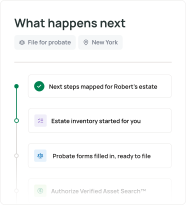
Elayne is built to lighten that load. When you serve as a successor trustee, our tool turns the trust into a clear checklist and helps manage many of the detailed tasks in the background. We organize information, prepare and route paperwork, track deadlines, and guide communications with institutions so you do not have to figure everything out on your own.
Whether you are planning ahead or have just lost someone and are trying to understand what comes next, you can lean on a structure that has helped many other families.
Final Thoughts on Successor Trustee Decisions
Your successor trustee's choice directly affects how smoothly your trust operates when you are no longer here to answer questions. Look for someone with steady financial habits, reliable follow‑through, and the fairness to manage different family interests without taking sides. Revisit this decision as your life changes, so the people you name can still step in when needed.
If you are ready to turn this into a concrete plan, you can start building your family’s custom estate roadmap and give your future trustee a clearer path to follow.
FAQs
What happens if my first successor trustee can't serve when the time comes?
Your second successor trustee automatically steps in, followed by your third if you named one. This is why building a succession plan with multiple backups protects your trust from failing if someone becomes unable or unwilling to serve.
How do I know if I should hire a professional trustee instead of naming a family member?
Consider a professional if your trust includes business interests, substantial assets of $1 million or more, blended family situations, or beneficiaries with special needs. Family members work well for straightforward estates where all beneficiaries trust each other, and the trustee has basic financial skills.
Does my successor trustee need to live near me to manage the trust?
Not required, but proximity helps with managing local property, meeting with attorneys, and handling physical paperwork. Remote management is possible today, though distance can slow certain steps and make coordination more difficult.
What documents does a successor trustee need to prove their authority to banks and institutions?
Most financial institutions request an affidavit of successor trustee (a sworn statement of your authority) and an acceptance of successor trustee form (your formal agreement to serve). California, Utah, Texas, and other states have specific formats for these documents.
Should I tell someone before naming them as my successor trustee?
Yes, always have a direct conversation first. The person you choose might be unable or unwilling to serve due to health, distance, work commitments, or other responsibilities. Confirming their willingness now prevents complications later.







.svg)