

Estate settlement is the full administrative process of closing out a person's affairs after death. For estates that go through probate, the timeline often lasts 9 to 24 months from executor appointment to final distribution. This guide covers key points for families and executors to know, including: what estate settlement involves, how long key steps may take, what happens after an estate is settled, and more.
Key Takeaways
- Probate estates often last 9 to 24 months from executor appointment to final distribution.
- Opening an estate and receiving an inheritance are separate milestones, often 12 to 18 months apart.
- Contested wills, multi-state property, and unresolved tax issues are common reasons that estates run long.
- A probate estate is legally closed when the court enters a final order and discharges the executor's Letters Testamentary.
- Elayne tracks creditor notice deadlines, beneficiary notifications, and tax filing timelines for families managing an estate.
What Estate Settlement Involves
Estate settlement is the full administrative process of managing a person's affairs after they die. The process typically includes:
- Locating and inventorying all assets and accounts
- Notifying financial institutions, government agencies, and creditors
- Paying outstanding debts, final taxes, and estate expenses
- Transferring property and closing accounts
- Distributing what remains to beneficiaries
When probate is required depends on whether assets need court supervision to transfer. Many assets, including life insurance proceeds, retirement accounts with named beneficiaries, and jointly held property, pass entirely outside of probate and can settle in weeks. The timeline and sequence depend heavily on what the estate holds and which state's laws apply.
{{blog-cta-financial}}
The Estate Settlement Timeline
How long probate takes varies, but the timeline often lasts 9 to 24 months from executor appointment to final distribution. Contested estates can last for years.
Another key point to highlight is the the time difference between opening the estate and receiving an inheritance. Opening happens early, sometimes within weeks of death. Receiving a distribution comes much later, after debts are paid, taxes are filed, and the court approves closing. The time difference between the estate's opening and an inheritance being received can be 12 to 18 months apart.
Estates administered through a trust can move considerably faster. A trust with liquid assets and a straightforward beneficiary structure may close in a few months with no court involvement at all.
Key Steps in Closing an Estate
Locating Documents and Filing for Probate (Weeks 1 to 8)
The executor begins by gathering the executor of estate paperwork, including the will, death certificates, and financial records, then files a petition with the probate court. Courts typically schedule a hearing within four to eight weeks of filing.
Notifying Heirs and Creditors (Weeks 2 to 12)
Once the court appoints the executor, formal notices go out to beneficiaries and creditors. Most states require a published Notice to Creditors and a mandatory waiting window for claims, generally three to six months depending on state law.
Inventorying and Appraising Assets (Months 2 to 6)
The executor must account for every asset, often requiring formal appraisals on real property, business interests, or collectibles. This step takes longer when assets are spread across multiple institutions or states.
Paying Debts and Filing Taxes (Months 6 to 12)
Valid creditor claims get paid first. The executor then files the decedent's final Form 1040, Form 1041 for estate income earned after death, and Form 706 for larger estates. Tax clearance alone can take several months.
Distributing Assets to Beneficiaries (Months 9 to 18)
Only after debts and taxes are resolved does distribution happen. The court then issues a final order closing the estate.
How Long It Takes to Settle an Estate With a Trust
A fully funded revocable living trust bypasses probate court. When the trust holds liquid assets and names clear beneficiaries, a trustee can begin distributions in weeks instead of months.
Trust settlement still requires real administrative work. The trustee must notify beneficiaries, marshal assets, pay outstanding debts, and file Form 1041 if the trust earned income after the grantor's death.
When an Estate Is Settled
Estate settlement has specific, documentable markers. For probate estates, it is over when the court enters a final order closing probate. Before that order, the executor files a final accounting showing all assets collected, debts paid, and distributions made. Once the court approves it and discharges the executor's Letters Testamentary, the estate is legally closed.
For trust-only estates, there is no court order. The trustee makes final distributions and collects signed receipts and releases from each beneficiary, confirming they received what they were owed and releasing the trustee from further liability.
Most states publish probate court records online. Searching the decedent's name in the county probate court's case portal will show the case status. A docket marked "closed" or "discharged" means the court accepted the final accounting and released the executor. If records are not online, the probate court clerk can confirm status by phone or in person.
{{blog-cta-financial}}
What Happens After an Estate Is Settled
Once the court discharges the executor or the trustee makes final distributions, here's a few key points to note:
Distributions typically arrive by check or wire transfer. Many executors mail checks with a cover letter confirming the amount and what it represents. Wire transfers are often used for larger sums. Beneficiaries should expect written accounting alongside payment, showing the estate's starting inventory, debts paid, and the final calculation behind their share.
There is no universal rule on how long money must sit in an estate account before distribution. Executors often hold a reserve for several months after the creditor notice period closes, releasing it once tax clearance letters arrive and no further claims appear. Releasing funds prematurely can create personal liability for the executor if an overlooked debt surfaces later.
After distribution, beneficiaries typically receive and hold onto the accounting summary, distribution letter, and signed receipt. Executors generally retain the full estate record for at least three to five years, as tax questions or accounting disputes can arise after the estate closes.
How Elayne Helps Families Move Through the Estate Settlement Process
Estate settlement can generate hundreds of hours of administrative work. Elayne functions as the operating layer for that process, supporting families from initial intake through an organized estate record, asset discovery, and a clear inheritance map.
Elayne has supported 1,000+ families and attorneys settling estates, while saving what can amount to hundreds of hours of administrative work per estate. The shared dashboard tracks creditor notice deadlines, beneficiary notifications, and tax filing timelines in one place. The estate record keeps every document, contact, and action source-linked and traceable.
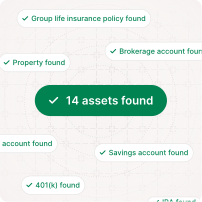
Asset discovery through Verified Asset Search™ searches across 100+ financial sources, helping families locate accounts, life insurance policies, and unclaimed property.
FAQs
How long does estate settlement take?
The probate process for many estates lasts 9 to 24 months from executor appointment to final distribution, though the process for estates with real property, contested wills, or multi-state holdings last for years. Estates administered through a trust, with liquid assets and clear beneficiaries, can close in a few months with no court involvement.
How do you know when an estate is settled?
For probate estates, settlement is complete when the court enters a final order closing the case after approving the executor's final accounting and discharging the Letters Testamentary. For trust-only estates, there is no court order. The trustee makes final distributions and collects signed receipts and releases from each beneficiary. Most states publish probate records online, so searching the decedent's name in the county probate court's case portal will show a status of "closed" or "discharged" when the estate is legally finished.
How long does it take to receive inheritance from a trust?
Inheritance from a trust typically arrives much faster than from a will going through probate. A trust with liquid assets and clear beneficiaries can begin distributions within weeks, since no court involvement is required.
How long do you have to transfer property after death?
There is no single universal deadline, but real estate held in a deceased person's name alone must go through probate before it can be transferred. Property held in joint tenancy or with a transfer-on-death deed can be recorded in the new owner's name within weeks of death, outside of probate entirely.
How do you deposit a check made out to a deceased person?
A check payable to a deceased person cannot be deposited into a personal account. The executor or court-appointed administrator must open an estate bank account to receive it. Opening the account requires a federal Employer Identification Number (EIN) for the estate, obtained from the IRS. Once the account is open, the check is endorsed with the executor's signature and deposited there.
Does power of attorney end at death?
Yes. A power of attorney, including a durable power of attorney, terminates automatically when the principal dies. After death, legal authority passes to the executor named in the will, or to an administrator appointed by the court if there is no will.
*Disclaimer: This article is for informational purposes only and does not provide legal, medical, financial, or tax advice. Please consult with a licensed professional to address your specific situation.










.svg)