

For an executor, the paperwork that needs to be managed often includes probate petitions, certified death certificates, asset inventories, tax filings, creditor notices, and closing statements. Exact requirements vary by state, so the forms and deadlines in one location may differ from those in another. This guide walks through documents that many executors need to file, from the petition for probate and Letters Testamentary through the final accounting and closing forms.
Key Takeaways:
- Important documents related to probate: the original will, certified death certificates, a petition for probate, a bond application (if required), and an asset inventory.
- Ordering at least 10 certified death certificates upfront can be helpful. Each institution keeps its own copy, and requesting more later can take several weeks.
- Letters Testamentary give you legal authority to act on behalf of the estate once the court issues them.
- Form 1041 applies when the estate earns over $600 during administration; Form 706 is required only for estates exceeding the federal exemption.
- Elayne organizes required documents and tracks filing deadlines based on your estate's specific circumstances.
Understanding the Executor's Role and Required Documents
An executor is the person named in a will to carry out its instructions, settle debts, and transfer assets to beneficiaries. Before that work can begin, the court needs to formally recognize the appointment, and that recognition requires paperwork.
The documents an executor files fall into a few broad categories: those that open the estate, those that manage it through the process, and those that close it out.
Key documents that executors need to gather before filing:
- The original will, which the court requires to verify the appointment and confirm the estate's instructions
- A certified death certificate, typically needed in multiple copies since banks, insurers, and government agencies each require their own
- A petition for probate, which formally asks the court to open the estate and confirm the executor's authority
- A bond application, required in many states unless the will waives it, which serves as a financial guarantee that the executor will act responsibly
- An inventory of assets, listing the deceased's property, accounts, and debts so the court and beneficiaries have a clear accounting
Once the court issues Letters Testamentary, the executor has the legal authority to act on behalf of the estate. That document is what most institutions will ask to see before releasing funds or transferring titles.
Obtaining Death Certificates
Certified death certificates come from the public records office in the county where the death occurred. Most funeral homes request copies on behalf of the family during initial arrangements. Most executors need at least 10 certified copies, and estates involving multiple financial institutions often require more.
Copies of the death certificate are commonly used for:
- Banks and credit unions
- Brokerage and retirement account custodians
- Life insurance companies
- The IRS and Social Security Administration
- Real estate title companies
- Vehicle title offices
- Pension or annuity administrators
{{blog-cta-legal}}
Petition for Probate and Court Appointment Forms
The petition for probate is filed with the probate court in the county where the deceased lived. Most courts require it to include the decedent's full legal name and date of death, a list of known heirs, a general description of the estate's assets and liabilities, and a copy of the will. Filing fees vary by state, ranging from a flat amount to a small percentage of the estimated estate value.
Letters Testamentary and Letters of Administration
After the probate court accepts a will or appoints an administrator, it issues one of two official documents that give an executor or administrator the legal standing to act on behalf of the estate.
Letters Testamentary are issued when the person died with a valid will. Letters of Administration are issued when someone died without a will, or when the named executor is unable or unwilling to serve.
Both documents function the same way in practice. Banks, financial institutions, government agencies, and courts require a certified copy before releasing account information, transferring assets, or closing accounts.
- Letters Testamentary confirm that the will was admitted to probate and that the named executor has court authorization to manage estate assets.
- Letters of Administration confirm that the court appointed an administrator, typically a surviving spouse or close relative, to carry out the same responsibilities without a will in place.
Inventory and Appraisal of Estate Assets
The inventory lists every probate asset at its date-of-death fair market value. Most states require it filed within 60 to 90 days of the executor's formal appointment.
Assets to include typically cover:
- Real estate holdings owned solely by the deceased
- Bank and brokerage accounts held in the deceased's name alone
- Vehicles titled to the deceased
- Personal property such as jewelry, furniture, and collectibles
- Business interests owned by the deceased
Jointly owned assets that transfer automatically to a surviving co-owner, and beneficiary-designated accounts like IRAs and life insurance, are generally not listed on the probate inventory. They may still matter for tax filings, but the probate court typically does not require them in the formal accounting.
When a Professional Appraisal Is Required
Real estate, fine art, and business interests usually require a certified appraisal to determine date-of-death value. Everyday personal property can often be self-assessed at a reasonable market value, though some states set a threshold above which a professional appraisal becomes necessary.
Notice to Creditors Forms
After a death, creditors have a legal right to file claims against the estate before assets are distributed to beneficiaries. The notice to creditors form is how executors fulfill their obligation to notify those creditors that the estate is open.
Most states require executors to publish this notice in a local newspaper for a set period, typically two to four weeks, and file proof of publication with the probate court. Some states also require direct written notice to known creditors.
Creditors then have a window to submit claims, which varies by state but commonly runs between two and six months from the date of publication.
Tax Forms and Filing Requirements
| Tax Form | What It Covers | Filing Requirement |
|---|---|---|
| Form 1040 (Final Return) | Income earned by the deceased from January 1 through the date of death | Required for all estates where the deceased would have filed a personal return |
| Form 1041 (Estate Income Tax) | Income earned by estate assets during the administration period | Required if the estate earns more than $600 in income during administration |
| Form 706 (Estate Tax Return) | Total value of the estate for federal estate tax purposes | Required only for estates exceeding the federal estate tax exemption threshold |
| Form 1310 (Refund Claim) | Tax refunds owed to the deceased when no probate proceeding is open | Required to claim a refund on behalf of a deceased person outside of probate |

Common Federal Tax Forms
- Form 1040 final income tax return, covering January 1 through the date of death
- Form 1041, the U.S. Income Tax Return for Estates and Trusts, required if the estate earns more than $600 in income during administration
- Form 706, the federal estate tax return, required for estates exceeding the federal exemption threshold
- IRS Form 1310, used to claim a tax refund on behalf of a deceased person when no probate proceeding is open
State Tax Obligations
Many states have their own estate or inheritance taxes with exemptions well below the federal level. A handful of states also require a separate state income tax return for the estate itself. Requirements vary by jurisdiction. Filing deadlines for these forms are tied to the date of death, not the calendar year, so tracking them separately from personal tax deadlines is important.
{{blog-cta-legal}}
Final Accounting and Closing Documents
Most probate courts require an accounting before formally closing the estate. It typically includes:
- A summary of all assets inventoried at the start of administration, with values as of the date of death
- Every receipt of income or asset proceeds collected during the process
- All disbursements made, including debts paid, taxes filed, and expenses reimbursed
- A final distribution schedule showing what each beneficiary received and when
Once the court approves the accounting, the executor files a petition to close the estate. Beneficiaries may be asked to sign receipts confirming they received their distributions. The court then issues a discharge order, formally releasing the executor from their duties.
How Elayne Handles Estate Paperwork From Start to Finish
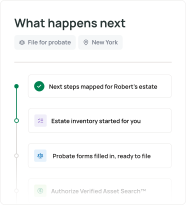
Elayne is built for exactly this process. Instead of having to search manually for the correct forms, Elayne surfaces what's needed based on the estate's specific circumstances, whether that's a formal probate filing, a small estate affidavit, or a set of creditor notices. Elayne also helps families identify accounts and assets that may be difficult to find. The goal is to create a clear picture of what the estate holds, and what still needs to be filed or closed.
FAQs
How do I become executor of an estate without a will?
When someone dies without a will, you file a petition with the probate court to be appointed administrator (the equivalent of an executor). The court typically appoints surviving spouses first, then adult children, then other close relatives based on state intestacy law. You'll need certified death certificates, an asset inventory, and often a bond application to begin the process.
Power of attorney vs executor of estate: what's the difference?
A power of attorney allows someone to act on your behalf while you're alive and ends at the moment of death. An executor is appointed through a will (or by the court if there's no will) and has authority only after death to settle the estate. The two roles never overlap in time and serve completely different functions.
What paperwork is needed for an executor of the estate?
You'll need the original will, certified death certificates (typically 10+ copies), a petition for probate, Letters Testamentary from the court, an asset inventory, Notice to Creditors forms, and tax filings which may include Form 1040 (final return), Form 1041 (estate income), and Form 706 (estate tax). Most states also require a final accounting and closing petition once debts are paid and assets are distributed.
Do I need a lawyer to become the executor of an estate?
Not always. However, legal guidance can be especially helpful when there are complex situations involving disputes, business interests, real estate in multiple states, or estates requiring Form 706 filings.
*Disclaimer: This article is for informational purposes only and does not provide legal, medical, financial, or tax advice. Please consult with a licensed professional to address your specific situation.










.svg)