

Key Takeaways
- Financial institution mail reveals bank accounts, investment portfolios, credit cards, and loans that executors must inventory as estate assets or debts requiring immediate attention
- Government correspondence from IRS, Social Security, Medicare, and state agencies often contains time-sensitive notices with strict response deadlines that cannot be missed
- Legal notices and court documents may arrive by mail with filing deadlines that, if missed, can result in default judgments or lost rights for the estate
- Insurance-related mail including policy statements, claims information, and premium notices requires prompt review to file death benefit claims and cancel unnecessary coverage
- Medical bills and healthcare correspondence represent estate debts that must be verified, negotiated, and paid according to state priority rules for creditor claims
{{blog-cta-admin}}
Why Monitoring Mail Matters for Estate Administration
Mail arriving after death provides the most reliable inventory of a deceased person's financial life, legal obligations, and ongoing business relationships. While you might find bank statements filed at home or discover accounts through password managers, mail continues revealing accounts, debts, and obligations you wouldn't otherwise know existed.
The deceased person likely interacted with dozens or hundreds of organizations during their lifetime. Each maintains independent records and continues correspondence until specifically notified of death. Financial institutions send monthly statements. Creditors send bills. Insurance companies send policy updates. Government agencies send tax forms and benefit notices. Professional organizations send membership renewals. Service providers send invoices.
This ongoing mail flow serves multiple essential purposes for executors. It reveals assets you must include in the estate inventory including bank accounts with balances, investment accounts with securities, retirement accounts with beneficiaries, insurance policies with death benefits, and real property through tax bills and mortgage statements. It identifies debts and obligations the estate must address including credit card balances, personal loans, medical bills, utility bills, and subscription services. It provides time-sensitive notices requiring prompt action such as court filings, tax deadlines, creditor claim periods, and insurance policy lapses.
Missing important mail creates serious problems for estate administration. Court notices with filing deadlines may arrive only once, missing them can result in default judgments, dismissed cases, or lost rights to contest claims. Tax documents must be filed by specific dates or the estate faces penalties and interest. Insurance policies lapse without premium payments, potentially forfeiting death benefits. Creditor claim deadlines pass, but valid debts still exist and can complicate estate settlement.
Systematically monitoring and categorizing mail as it arrives ensures you identify all estate assets, address all legitimate debts according to priority rules, respond to time-sensitive legal and financial notices, and maintain organized records for estate accounting and potential audits.
Financial Institution Mail
Bank and credit union statements arriving monthly reveal checking, savings, money market, and certificate of deposit accounts that are estate assets. Even small accounts matter for complete estate inventory. Watch for statements from institutions you recognize where the deceased banked, plus unfamiliar banks that might hold forgotten accounts.
When bank statements arrive, note the institution name and contact information, account types and numbers, current balances as of statement date, account ownership (individual, joint, payable on death), and any automatic payments or deposits shown in transaction history. This information helps you contact the bank to close or transfer accounts properly.
Investment and brokerage statements document stocks, bonds, mutual funds, ETFs, and other securities holdings. These statements typically arrive quarterly though some investors receive monthly statements. They show current market values needed for estate tax purposes and help identify brokerage firms you must contact about account disposition.
Credit card statements reveal both potential assets (credit balances or rewards points) and debts the estate must pay. Open the statements to check for fraudulent charges that might indicate identity theft, verify legitimate charges the estate should pay, note any automatic payments being charged to the card, and identify the current balance and payment due date.
Mortgage and loan statements show real estate loans, home equity lines, personal loans, auto loans, and student loans that represent estate debts. These statements are particularly important because secured debts against property must be addressed before transferring or selling assets. Note the current principal balance, monthly payment amount, whether payments are current or delinquent, and contact information for the lender.
Retirement account statements from 401(k) plans, IRAs, pensions, and other retirement vehicles arrive quarterly or annually. These accounts often have designated beneficiaries who receive funds directly without going through probate. The statements help you identify the account administrator, current account value, beneficiary designations if shown, and required minimum distributions that may be due.
Government Agency Correspondence
IRS mail requires immediate attention regardless of what it contains. The IRS sends estate tax filing requirements for large estates, final income tax return information, tax refund checks or notices, notices of examination or audit, and correspondence about outstanding tax issues. Any mail from the Internal Revenue Service should be opened immediately and reviewed carefully. Many IRS notices have strict response deadlines that cannot be extended.
Social Security Administration correspondence arrives when someone reports a death to notify beneficiaries of death benefits available to surviving spouses or children, to request return of benefits paid after death that must be repaid, to inform survivors about benefit eligibility changes, and to confirm death has been recorded in their system. This mail often contains important information about survivor benefits that families might not know they're entitled to receive.
Medicare and Medicaid mail includes final premium bills that must be paid, claims information for services provided before death, notices about coverage termination, and potentially refund checks for overpaid premiums. Healthcare mail from government programs requires careful review to ensure all legitimate bills are paid and any credits are claimed.
State revenue department mail covers state income tax matters, property tax bills on real estate, estate or inheritance tax requirements in states that impose them, and various state-specific tax obligations. Property tax bills are particularly important because they represent liens against real property that must be paid to maintain clear title.
Veterans Affairs mail for deceased veterans may include information about burial benefits and allowances, death pension eligibility for surviving spouses, life insurance proceeds from VA policies, and compensation for service-connected death. These benefits can be substantial but families must know to claim them.
State motor vehicle departments send correspondence about vehicle registrations, driver's license renewals, and title issues. While seemingly minor, this mail helps you identify vehicles that are estate assets and begin the process of transferring or selling them.
Legal Notices and Court Documents
Probate court documents arrive at the deceased person's address and executor's address if different. These include notices of hearings with specific appearance dates, creditor claim forms and deadlines for objections, petitions filed by interested parties, and orders from the court requiring action or compliance. Missing probate court deadlines can result in serious consequences including default judgments, dismissed petitions, or contempt findings.
Attorney correspondence about estate matters, creditor claims, litigation involving the deceased, and business disputes must be reviewed immediately. Letters from attorneys typically indicate legal issues requiring prompt attention and possibly your own legal counsel.
Debt collection notices from creditors attempting to collect outstanding debts represent potential estate obligations. While some collection attempts are legitimate, others involve time-barred debts or fraudulent claims. Review these carefully to determine whether debts are valid and filed within the creditor claim period your state allows.
Lawsuit notifications including summons and complaints, notices of default, and judgment notices might arrive if the deceased was involved in litigation at the time of death. These documents have extremely strict response deadlines, often 20-30 days from service. Missing these deadlines results in default judgments against the estate.
Property-related legal notices about foreclosure proceedings, property liens, code violations, or boundary disputes arrive when real estate issues exist. These notices often require immediate action to protect property that's an estate asset.
Insurance-Related Correspondence
Life insurance policy statements and death benefit claim forms arrive from insurance companies that may not have been notified of the death yet. These documents help you identify policies you need to file claims on. Even small policies through employers, credit unions, or membership organizations add up and should be claimed.
Health insurance mail includes final premium bills, explanation of benefits for pre-death services, claims information about services provided shortly before death, and coverage termination notices. Review this mail carefully to ensure all legitimate medical claims are paid and no overpayments occurred that should be refunded.
Property and casualty insurance statements for homeowners, auto, umbrella, and other property policies must be reviewed to determine whether coverage should continue during estate administration, be transferred to heirs, or be canceled. Some policies can be canceled with refunds of unused premiums while others must remain in force to protect estate assets.
Long-term care insurance correspondence might include claims information if the deceased was receiving benefits, refund information for unused premiums on policies that never paid benefits, or final premium bills for policies that were still active.
Disability insurance statements occasionally arrive if the deceased had private disability coverage that was still in force. Some disability policies include death benefits or return of premium provisions that executors should investigate.
Medical and Healthcare Mail
Medical bills from hospitals, physicians, specialists, labs, imaging facilities, and other healthcare providers arrive for weeks or months after death as services are processed through insurance and billing cycles. These bills represent estate debts that must be paid according to your state's priority rules for creditor claims.
Create a system for tracking medical bills including the provider name and service date, total charges before insurance, insurance payments and adjustments, patient responsibility amount, whether the bill is still within the creditor claim period, and your verification that services were actually provided. Medical billing errors are common and executors should verify charges before paying.
Explanation of benefits forms from insurance companies document what was billed, what insurance paid, and what remains as patient responsibility. Keep these forms with corresponding medical bills to verify that bills match insurance explanations and that you're not paying charges for insurance already covered.
Healthcare provider billing notices become more urgent over time. Initial bills are informational but later notices indicate collection activity is escalating. While you shouldn't pay bills immediately, don't ignore them entirely as legitimate healthcare debts are high-priority obligations in most states.
Pharmacy bills for prescriptions filled before death are typically small but represent legitimate estate obligations. Mail-order pharmacies sometimes continue sending medications automatically if no one canceled the subscription, resulting in charges for medications delivered after death that you should dispute.
Bills and Subscription Services
Utility bills for electric, gas, water, internet, cable, phone, and trash service continue arriving until accounts are formally closed. If someone still lives at the property, these services continue and bills must be paid. If the property is empty, you should close unnecessary services while maintaining essential utilities like electricity and water to protect the property.
Subscription service bills arrive monthly or annually for streaming services, software subscriptions, membership sites, monthly box services, and countless other recurring charges. These bills help you identify subscriptions to cancel, though you should also check bank and credit card statements for charges that might not send paper bills.
Magazine and newspaper subscriptions send renewal notices and bills throughout their prepaid terms. Contact publishers to request cancellation and potential refunds for unused portions of subscriptions, though policies vary by publication.
Membership dues for professional organizations, clubs, gyms, country clubs, and other membership-based services arrive according to their billing cycles. These organizations typically allow cancellation with a death certificate and may prorate refunds depending on their policies.
Property maintenance services including lawn care, snow removal, pool service, pest control, and security systems send bills for ongoing services. Determine whether these services should continue during estate administration (lawn care on a home being sold, for example) or be canceled immediately.
Suspicious or Fraudulent Mail
Identity theft solicitations specifically targeting deceased individuals sometimes arrive within weeks of death as criminals scan obituaries and attempt to open credit accounts, file fraudulent tax returns, or steal benefits. Watch for pre-approved credit card offers, requests for personal information, unsolicited loan offers, and unfamiliar account statements that might indicate fraudulent accounts.
Estate-related scams become more common after death as criminals target vulnerable families. Be suspicious of unsolicited offers for estate services, requests for upfront fees before providing services, official-looking mail that's actually marketing, and urgent notices pressuring quick action without time to verify legitimacy.
Debt collection scams attempt to collect time-barred debts that are no longer legally collectible, fraudulent debts that never existed, or inflated amounts that don't match actual obligations. Verify all debt claims against the deceased person's records before paying anything and request debt validation if claims seem suspicious.
When you receive suspicious mail, don't respond directly to contact information on the suspicious letter, verify the organization's legitimacy through independent research, check with credit bureaus about unfamiliar accounts, report suspected fraud to authorities, and document everything in case identity theft occurred.
Mail That Can Wait
While many types of mail require immediate attention, some correspondence can be handled later when you have time to address non-urgent matters.
Marketing mail including catalogs, promotional offers, political solicitations, and general advertising can be set aside or discarded. While you should eventually contact these organizations to stop mail, they're not urgent during the first weeks and months of estate administration.
Charitable donation requests from organizations the deceased supported might feel emotionally significant but don't require immediate action. Some families make one final donation in memory of the deceased while requesting mailing list removal, but this can wait until more pressing matters are addressed.
Magazine subscriptions and newsletters continue arriving throughout prepaid terms. Unless they're causing emotional distress, these can be ignored initially and addressed later by contacting publishers to request cancellation.
Social invitations, event announcements, and community newsletters don't require action unless they indicate memberships you should cancel or organizations that should be notified of the death.
Creating a Mail Management System
Establish a systematic approach to handling mail so nothing important is missed and you can track what you've addressed versus what still needs attention.
Set up physical organization with separate folders or boxes for financial mail requiring account closure, government correspondence needing response, legal notices with specific deadlines, insurance mail requiring claims or cancellations, medical bills to be verified and paid, bills and subscriptions to be canceled, and suspicious mail to be investigated or reported.
Create a tracking spreadsheet documenting mail received with columns for date received, sender organization, type of mail (statement, bill, notice, etc.), action required (contact institution, pay bill, file claim, etc.), deadline if applicable, action taken and date, and current status (pending, completed, no action needed).
Prioritize daily mail review by opening and sorting everything that arrives each day, immediately identifying anything with response deadlines, setting aside bills until you verify they're legitimate estate obligations, filing statements and information for later reference, and discarding obvious junk mail after quick review to ensure it's not important.
Conclusion
Mail arriving after someone dies provides critical information about assets, debts, legal obligations, and time-sensitive matters that executors must address systematically. Knowing what to watch for helps you prioritize among dozens of pieces of mail arriving weekly, ensuring you don't miss important financial documents, legal notices, or government correspondence while not wasting time on low-priority marketing mail.
By immediately reviewing financial institution statements that reveal assets and debts, opening all government correspondence that often contains time-sensitive notices, carefully examining legal notices and court documents with strict deadlines, promptly addressing insurance-related mail to file claims and adjust coverage, verifying and tracking medical bills as legitimate estate obligations, and establishing organized systems for categorizing and tracking mail, you ensure comprehensive estate administration that doesn't overlook important information or miss critical deadlines.
The volume of mail can feel overwhelming, especially during the first months after death when estate administration demands are highest. However, systematic daily mail review with clear prioritization criteria helps you focus attention where it matters most while building a complete picture of estate assets, debts, and obligations.
If daily mail sorting, categorizing dozens of pieces of correspondence, determining what requires immediate attention versus what can wait, tracking which organizations you've contacted and which still need notification, and maintaining organized records for estate documentation feels overwhelming, Elayne can help establish mail management systems, prioritize correspondence by urgency and importance, track and document all estate-related mail, and ensure nothing critical is missed during estate administration.
{{blog-cta-admin}}
FAQs
Q: Should I open all mail addressed to the deceased person?
Yes, as executor you should open everything except obvious junk mail since you cannot determine importance from outside envelopes, and missing critical notices creates legal and financial problems.
Q: How long should I save mail after addressing what it requires?
Keep financial statements, legal notices, medical bills, and tax documents for at least seven years, while general correspondence can be discarded after addressing unless it documents important estate transactions.
Q: What should I do with mail that arrives for the deceased person years after death?
Open anything that might be important such as government correspondence or financial documents, as estates can receive tax notices or other critical mail years later, but discard obvious marketing mail.
Q: Can I throw away mail without opening it if I'm sure it's junk?
While obvious catalogs and advertising can be discarded, always open anything that might contain account information, bills, or legal notices since importance cannot always be determined from outside appearance.
Q: What if I accidentally miss an important deadline from mail?
Contact the organization immediately to explain the situation and request extension or late filing acceptance, as many organizations show flexibility for executors managing deceased persons' affairs, though this isn't guaranteed.
Q: Should I forward mail to my address or check it at the deceased person's residence?
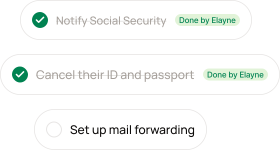
Forward mail to an address you can monitor daily through USPS mail forwarding to ensure you receive and review everything promptly without depending on access to another location.
Q: How do I know if medical bills are legitimate or inflated?
Compare bills to explanation of benefits forms from insurance to verify charges match what providers actually billed and insurance processed, and request itemized statements if charges seem excessive.
**Disclaimer: This article is for informational purposes only and does not provide legal, medical, financial, or tax advice. Please consult with a licensed professional to address your specific situation.










.svg)