.png)

Most families think the house will just pass to the people who matter most. But real estate without a will goes through probate court, gets divided according to state intestacy law, and nobody can sell or refinance it until the court closes the estate. That can take one to two years. In blended families, it gets worse. Stepchildren inherit nothing unless they were legally adopted, no matter how long the relationship lasted.
Key Takeaways:
- Real estate passes by state intestacy law when there's no will, which varies by state and often splits property among heirs you may not expect
- Probate typically takes one to two years, and no one can sell or transfer property without court approval during that time
- Joint tenancy and transfer-on-death deeds bypass intestate succession entirely, but only if they were set up before death
- Stepchildren have no inheritance rights under intestacy law unless they were legally adopted, regardless of relationship length
- Elayne automates probate paperwork, real estate transfers, and heir coordination through one shared dashboard
What Intestate Succession Means for Real Estate
When someone dies without a will, the law calls it dying "intestate." Without a will to direct what happens to property, state intestacy laws take over entirely. That includes real estate.
76% of Americans die without a will, which means millions of families face this situation every year. The home, the rental property, the land passed down for generations: none of it goes where the deceased may have intended. It goes where state law says it goes.
That distinction matters more than most people realize.
Who Controls the Estate When There's No Will
Without a will, no executor has been named. The probate court steps in to appoint someone called an administrator, who carries the same responsibilities an executor would.
Courts typically give priority to a surviving spouse, then adult children, then other close relatives. Once appointed, the administrator gains legal authority to gather assets, pay outstanding debts, and distribute property according to state intestacy law. That authority does not come automatically, though. It requires a court order, which takes time.
One thing families should know upfront: the administrator cannot sell or transfer real estate without court approval first.
{{blog-cta-financial}}
How Real Estate Passes Through Probate Court
Probate is the legal process through which a court supervises the transfer of a deceased person's assets, including real estate. When there's no will, the property cannot simply change hands. Every step requires court oversight.
The process generally follows this path:
- The administrator files a petition to open the estate
- The court issues letters of administration, granting legal authority to act on behalf of the estate
- Real estate is appraised and inventoried as part of the estate's holdings
- Outstanding debts and taxes are settled before any distribution occurs
- The court approves distribution of remaining property to heirs under state intestacy law
A summary probate can close in four months, but a typical estate runs one to two years. Disputes between heirs or property held in multiple states can push that timeline further.
During that entire window, no one can sell or refinance the home without court approval.
State Intestacy Rules: Who Inherits Your Home
Every state has its own intestacy statute, but the heir priority order follows a recognizable pattern across most of the country.
| Heir Priority | Who Qualifies |
|---|---|
| First | Surviving spouse |
| Second | Children (biological and legally adopted) |
| Third | Parents |
| Fourth | Siblings |
| Fifth | Extended relatives (aunts, uncles, cousins) |
If no relatives can be located, the property escheats, meaning it transfers to the state.
Where it gets complicated: some states split real estate between a surviving spouse and children from a prior relationship. Others treat real property differently than bank accounts or personal belongings. A spouse might inherit everything in one state and only a portion in another, depending entirely on where the property sits.
When Joint Ownership Bypasses Intestate Succession
Not all real estate goes through intestate succession. Certain ownership structures transfer property automatically, regardless of whether a will exists.
There are three main ownership arrangements that allow property to pass outside of probate entirely:
- Joint tenancy with right of survivorship: when one owner dies, the surviving owner inherits their share automatically, with no court involvement required.
- Tenancy by the entirety: available only to married couples in certain states, carrying the same automatic transfer effect as joint tenancy.
- Transfer on death (TOD) deeds: name a beneficiary directly on the deed, so the property bypasses probate upon death.
In each case, the property transfers by operation of law. The key limitation is that these structures must be set up before death. If the deed lacked survivorship language, or a TOD deed was never recorded, the property falls back into the estate and standard intestacy rules apply.
How Community Property States Handle Real Estate Differently
Nine states follow community property rules: Arizona, California, Idaho, Louisiana, Nevada, New Mexico, Texas, Washington, and Wisconsin.
In these states, most property acquired during a marriage is owned equally by both spouses, regardless of whose name is on the deed. When one spouse dies without a will, their half of that community property typically passes to the surviving spouse under intestacy law, while the surviving spouse already owns the other half outright.
Property owned before marriage, or received as a gift or inheritance during it, follows standard intestacy rules and may pass to children or other relatives instead.
The line between community and separate property is not always clear, particularly for real estate purchased with mixed funds. Courts may need to trace the origin of those funds to classify the property correctly, which adds both time and legal cost to the settlement process.
{{blog-cta-financial}}
What Happens to Real Estate with Multiple Heirs
When multiple heirs inherit real estate equally, they each hold an undivided interest in the property. No single heir owns a specific portion of the house. All of them own a share of the whole.
That arrangement creates friction fast. What if one heir wants to sell and another wants to keep the property? What if someone moves in and others do not?
When heirs cannot agree, any co-owner can file a partition action in court. A judge can then either force a physical division of the property (rare with a house) or order a sale and split the proceeds. Neither outcome is quick or inexpensive.
The more practical path, when heirs are willing to cooperate, is to reach a written buyout agreement. One heir purchases the others' shares, the title transfers, and the estate closes cleanly. This avoids litigation and preserves the property for whoever actually wants it.
A few things that commonly complicate shared inheritance:
- One heir occupying the home rent-free while others want their share liquidated
- Outstanding mortgage, property taxes, or repairs that reduce what is available to distribute
- Disagreements over the property's appraised value
Blended Families and Real Estate Inheritance Without a Will
Blended families expose one of the sharpest edges in intestacy law. The assumption that a stepchild will inherit alongside biological children is wrong in most states.
Under intestate succession, stepchildren have no inheritance rights unless they were legally adopted. That applies even if a stepparent raised them from infancy. Without a will and without adoption, the law treats them as legal strangers to the estate.
Biological children and legally adopted children inherit equally by contrast. So a home might pass entirely to a biological child from a first marriage while a stepchild of 20 years receives nothing.
Children in state care follow the same rule: no legal right to inherit unless adoption was finalized before the death. Children conceived but not yet born at the time of death may still qualify as heirs depending on state law, provided they are later born alive.
Love, presence, or financial dependency does not create inheritance rights. Intent means nothing without legal documentation.
Costs and Timeline: What to Expect During Estate Settlement
Settling an estate without a will takes longer and costs more than most families expect. Probate can run one to two years, and the administrative work surrounding it can require hundreds of hours across paperwork, court filings, creditor notices, and property management.
Common costs families encounter include:
- Court filing fees and probate costs, which vary by state and estate size
- Attorney fees, often calculated as a percentage of the estate's gross value
- Property appraisal and maintenance costs while the estate remains open
- Real estate transfer taxes upon distribution
Real estate cannot be sold during probate. For heirs carrying a mortgage or property taxes on inherited property in the meantime, that waiting period carries a real financial cost of its own.
Simplifying Real Estate Settlement with Elayne
Dying without a will adds court proceedings, longer timelines, and far more paperwork to a process that is already difficult.
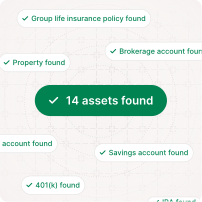
Elayne handles the full post-loss administrative weight: probate paperwork, real estate transfer coordination, agency notifications, creditor filings, and asset location. A personalized checklist builds automatically based on each family's situation and updates as steps are completed, so nothing gets missed during probate on their own.
For families managing inherited property across multiple heirs or working through a blended family situation, Elayne supports coordination between relatives and attorneys through one shared dashboard, keeping everyone aligned without the back-and-forth.
Estate settlement can require hundreds of hours across 18 months or more. Elayne carries out many of those steps directly, so families spend less time on paperwork and more time focused on what actually matters.
Final Thoughts on Real Estate and Intestate Succession
Without a will, your home doesn't go to the person you assumed it would, it goes where state law directs, and that process runs through probate court whether your family is ready for it or not. Understanding intestate real estate succession helps you see why planning ahead matters, but if you're already in the middle of settlement, you don't have to manage every form and filing alone. Elayne handles the estate administration work that typically requires hundreds of hours, keeping everything organized in one place so your family can move through probate with less confusion and less stress. See how it works and give yourself some breathing room.
{{blog-cta-financial}}
FAQ
What happens to a house when someone dies without a will?
The property passes through probate court and is distributed to heirs according to state intestacy laws, which give priority to surviving spouses, children, parents, and other relatives in a specific order. The process typically takes one to two years, and no one can sell or refinance the property without court approval during that time.
Can stepchildren inherit real estate if there's no will?
No, stepchildren have no legal inheritance rights under intestate succession unless they were legally adopted before the death. Only biological children and legally adopted children inherit equally under intestacy law, regardless of how long a stepparent raised them.
How long does it take to settle an estate with real estate when there's no will?
Most estates take one to two years to close through probate, though disputes between heirs or property in multiple states can extend the timeline further. During this period, families must manage property taxes, maintenance costs, and any existing mortgage while waiting for court approval to distribute or sell the property.
What happens when multiple heirs inherit the same property?
Each heir receives an undivided interest in the entire property, meaning all co-owners share the whole instead of owning specific portions. If heirs disagree about selling or keeping the property, any co-owner can file a partition action forcing the court to either divide the property or order a sale with proceeds split among heirs.
Does joint ownership of real estate bypass intestate succession?
Yes, property held in joint tenancy with right of survivorship, tenancy by the entirety, or with a transfer on death deed passes directly to the surviving owner or named beneficiary without going through probate. These ownership structures must be set up before death to work.









.svg)