

Probate is the legal process where a court reviews a will, confirms it's valid, and authorizes an executor to distribute assets according to its terms. The timeline depends on the state, the size of the estate, and whether anyone contests the will. This guide covers how probate works, what happens when there is no will, how long it takes by state, when probate is required, what it costs, and how to manage the process.
Key Takeaways:
- Probate is the court process that validates a will and authorizes an executor to distribute assets.
- Timelines range from 6 months in Texas to 12 to 18+ months in California, shaped by court backlog and estate complexity.
- Estates without a will still go through probate, but state law decides who inherits and the court appoints an administrator.
- Small estate thresholds let you skip full probate in many states: $184,500 in California, $75,000 in Texas.
- Elayne tracks court deadlines, manages creditor notifications, and searches for overlooked assets throughout probate.
What Does It Mean When a Will Is in Probate?
When a will is in probate, it means the document has been submitted to a court for official review. The court verifies the will is valid, appoints an executor to manage the estate, and oversees the distribution of assets to beneficiaries.
Not every estate requires probate. Small estates, jointly held property, and assets with named beneficiaries often pass outside the process entirely.
How the Probate Process Works: Step by Step
The sequence follows the same general path in most states, even when timelines differ:
- Filing the will with probate court and opening the estate
- Having the executor formally appointed by the court, a step that typically produces a document called Letters Testamentary
- Notifying creditors and publishing a public notice of the estate
- Inventorying and appraising estate assets
- Paying taxes, valid debts, and administrative costs
- Distributing remaining assets to beneficiaries
- Petitioning the court to close the estate
How Long Does Probate Take?
Probate timelines vary widely depending on the state, the size of the estate, and whether any disputes arise. A straightforward estate in a state with a simplified process can close in a few months. A contested estate or one with substantial assets can last well beyond a year.
What Shapes the Timeline
Several factors consistently affect how long probate lasts:
- The court's caseload and local filing requirements can add weeks or months before a case even gets a hearing date.
- Creditor notification periods are mandatory in most states, and families must wait during that window before distributing assets.
- Real property, business interests, or assets spread across multiple states require additional steps and can extend the process considerably.
- Disputes among beneficiaries or challenges to the validity of the will often send cases to litigation, which can add months or years to the overall process.
General Timelines by State
State rules shape probate more than almost any other factor. Here is a general picture across commonly asked-about states:
| State | Typical Probate Timeline |
|---|---|
| California | 12 to 24 months, often longer for larger estates |
| Texas | 6 to 12 months for a standard independent administration |
| Michigan | 5 to 12 months for an unsupervised estate |
| Illinois | 12 to 18 months in most counties |
| Florida | 6 to 12 months for a formal administration |
These ranges reflect uncontested cases. Litigation, real estate transfers, or missing heirs can push any of these timelines out further.
{{blog-cta-legal}}
Probate Timelines by State
Probate timelines shift considerably depending on where the estate is located. State law, court backlog, and estate complexity all shape how long the process lasts.
California
California probate is among the longest in the country. Most estates take 12 to 18 months, and contested cases or those with real property can stretch past two years. Courts in Los Angeles and other large counties often carry large backlogs that add months to the timeline.
Texas
Texas offers an independent administration option that can shorten probate to six months or less for straightforward estates. Contested or complex estates still routinely take 12 months or more.
Michigan
Michigan probate generally runs six to twelve months for uncontested estates.
| State | Typical Timeline |
|---|---|
| California | 12 to 18+ months |
| Texas | 6 to 12 months |
| Michigan | 6 to 12 months |
| Florida | 6 to 12 months |
| Massachusetts | 9 to 12 months |
| Ohio | 6 to 12 months |
What Happens in Probate When There Is No Will?
When someone dies without a will, the estate still goes through probate, but the process runs differently. State intestacy laws decide who inherits, following a fixed legal hierarchy: a surviving spouse first, then children, then more distant relatives. The deceased's wishes carry no legal weight.
The court appoints an administrator instead of confirming a named executor. Before distribution can begin, the court may require formal heirship determinations, particularly when the family structure is complicated or heirs are difficult to locate. That added step extends the timeline, often by several months beyond a standard probate.
When Is Probate Required and When Can You Avoid It?
Probate is required when assets are titled solely in the name of the person who died and have no built-in transfer mechanism. Without a named beneficiary, joint owner, or trust directing where an asset goes, a court steps in to supervise the transfer.
Not every estate goes through probate, though. Several ownership structures pass property outside of probate entirely.
Assets That Typically Bypass Probate
- Accounts with a named beneficiary, such as life insurance policies, IRAs, and 401(k)s, transfer directly to that person without court involvement.
- Jointly owned property with right of survivorship passes automatically to the surviving owner.
- Assets held in a revocable living trust are distributed according to the trust's terms, not through a court.
- In some states, accounts with a payable-on-death or transfer-on-death designation move to the named recipient outside of probate.
When a Will Does Not Prevent Probate
Having a valid will does not mean probate is avoided. A will actually goes through probate court so a judge can confirm its validity and authorize the executor to act. The will directs how assets are distributed, but the court still oversees that process.
{{blog-cta-legal}}
The Role of the Executor: Responsibilities and Timeline Pressures
The executor named in a will carries legal responsibility for moving the estate through probate. That role comes with deadlines, and missing them can complicate or delay the process.
Key responsibilities include:
- Filing the will with the probate court, typically within 30 days of death in most states
- Notifying creditors and beneficiaries, which often triggers a formal waiting period of several months
- Taking inventory of estate assets and having them appraised where required
- Paying taxes, valid debts, and expenses before making distributions to heirs
- Filing a final accounting with the court before the estate can be closed
Each of these steps has its own timeline, and they do not always run in sequence. Creditor notice periods alone can add three to six months to the process, and courts in busy jurisdictions may schedule hearings weeks or months out.
When There Is No Executor
If a person dies without a will, there is no named executor. In that situation, an interested party, often a surviving spouse or adult child, can petition the court to become administrator. The administrator carries the same responsibilities as an executor but is selected by the court instead of by the person who died.
Small Estates and Simplified Probate Procedures
Many states offer a simplified path when an estate falls below a certain dollar threshold, allowing families to skip full probate or move through an expedited version of it.
How Simplified Probate Works
The qualifying threshold varies by state. California's small estate affidavit applies to estates under $184,500. Texas allows small estate affidavits for estates under $75,000 (excluding the homestead). In Michigan, a full probate proceeding may not be needed for estates under $25,000.
These procedures typically involve:
- Filing a sworn affidavit instead of opening a full court case, which can resolve the estate in weeks instead of months
- Presenting the affidavit directly to banks, financial institutions, or title companies to transfer assets without a court order
- Skipping the creditor notice periods that extend standard probate timelines
Not every asset qualifies under simplified procedures. Real property, particularly a house with a mortgage or title complications, often still requires a formal probate filing even if the rest of the estate is small.
How Elayne Simplifies Estate Settlement When a Will Is in Probate
Probate carries administrative weight beyond the court filings: creditor notifications, deadline tracking, asset inventories, and coordination across institutions. Elayne handles those steps for families throughout the full settlement process.
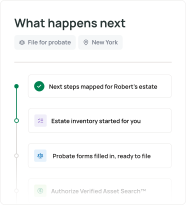
Elayne tracks court deadlines, manages creditor notification requirements, searches for assets and benefits that might otherwise go unlocated, and coordinates with attorneys.
FAQs
What does it mean when a will is in probate?
It means the will has been submitted to a court for official review and validation. The court confirms the will is valid, appoints an executor to manage the estate, and oversees asset distribution to beneficiaries.
How long does probate take in California vs Texas?
California probate typically takes 12 to 24 months due to court backlogs and mandatory inventory periods. Texas offers a faster independent administration option that can complete in 6 months for straightforward estates, though contested cases in either state can extend well beyond these timelines.
When is probate not necessary after death?
Probate isn't required for assets with built-in transfer mechanisms: beneficiary-designated accounts (life insurance, IRAs, 401(k)s), jointly owned property with right of survivorship, assets held in revocable living trusts, and accounts with payable-on-death or transfer-on-death designations. Many states also offer simplified procedures for estates below certain dollar thresholds.
How long do you have to file probate after death?
Most states require filing the will with probate court within 30 days of death, though the exact deadline varies by jurisdiction. Missing this deadline can complicate the process and, in some cases, affect the executor's authority to act on behalf of the estate.
*Disclaimer: This article is for informational purposes only and does not provide legal, medical, financial, or tax advice. Please consult with a licensed professional to address your specific situation.









.svg)