.webp)

When someone dies, access to their safety deposit box does not transfer automatically. The bank requires legal authority before unlocking it, and what that looks like depends on how the box was set up and which state you're in. A jointly held box will typically be opened after presenting a death certificate and valid ID. A box held solely in the deceased's name stays sealed until an executor or administrator presents court-issued letters testamentary. Some states allow a one-time supervised opening to search for a will before probate formally begins, but most require formal legal authority first. Here are some key points to know about gaining access, what documents to bring, and where the rules vary.
Key Takeaways:
- When someone dies, their safety deposit box is frozen until legal authority is confirmed through probate court or joint ownership documentation.
- Joint owners can access the box immediately with a death certificate and ID.
- Most states permit only wills and burial instructions to be removed before probate closes; valuables stay until formal authorization.
- Rental fees range from $20 to $150+ annually depending on size and location, with some banks offering waivers for qualifying accounts.
- Elayne can locate undisclosed boxes by scanning financial records for recurring rental fees and guides families through state-specific access requirements.
What Is a Safety Deposit Box
A safety deposit box is a locked, private storage container held inside a bank or credit union vault. Banks offer them in several sizes, typically ranging from small boxes suitable for a few documents to larger units that can hold jewelry, collectibles, or bulkier items. Access requires a key held by the box holder, and most banks also maintain a master key or drill capability for emergencies.
Families use safety deposit boxes to store items that are difficult or impossible to replace, including original wills, deeds, birth certificates, passports, stock certificates, and family heirlooms. Because the box sits inside a bank vault, it offers a level of physical security that a home safe generally cannot match.
What Gets Stored in a Safety Deposit Box
The contents vary widely, but common items include:
- Original estate planning documents such as wills, trust agreements, and powers of attorney, which families often store here because they need to be preserved exactly as signed
- Property records including deeds, titles, and mortgage documents that may be needed years after a transaction closes
- Personal identification documents like passports, Social Security cards, and birth certificates that are costly and time-consuming to replace
- Financial instruments such as savings bonds, stock certificates, and certificates of deposit
- Irreplaceable personal items including jewelry, photographs, and small family heirlooms
One important consideration: storing a will in a safety deposit box can create complications after death, since the box may be sealed until the estate is opened. Many estate attorneys suggest keeping the original will somewhere accessible or filing it with a probate court.
How Safety Deposit Boxes Work During the Owner's Lifetime
A safety deposit box is a secure, lockable storage container held inside a bank or credit union vault. Banks like Wells Fargo, Bank of America, and Chase rent these boxes to customers for a recurring annual fee, typically ranging from around $20 to over $200 depending on box size and location.
During the owner's lifetime, access is straightforward. The renter holds a key, and the bank holds a master key. Both are required to open the box. Some boxes accommodate a co-renter or designated deputy, which can matter especially after a death.
What Gets Stored Inside
Families store a range of irreplaceable or hard-to-replace items in safety deposit boxes:
- Original wills, trust documents, and powers of attorney
- Property deeds, vehicle titles, and mortgage paperwork
- Passports, birth certificates, and Social Security cards
- Stock certificates, savings bonds, and financial records
- Jewelry, coins, small heirlooms, and other valuables
Banks do not inventory or monitor box contents. The contents remain entirely private, which is why survivors often have no way of knowing what was inside until they gain access.
What Happens to a Safety Deposit Box When Someone Dies
When someone dies, access to their safety deposit box does not automatically transfer to anyone else. The box is frozen until the right legal authority is in place, which can mean weeks or months of waiting depending on the estate's circumstances.

Banks require documentation before allowing any access. What that documentation looks like depends on how the box was set up and whether the estate is going through probate.
Who Can Access the Box and When
- If the box was jointly held, the surviving co-owner can typically access it with a death certificate and valid ID. No probate is required in most cases.
- If the deceased was the sole owner, the executor or administrator of the estate must present court-issued letters testamentary or letters of administration before the bank will open the box.
- If no estate has been opened, a family member may need to begin the probate process first, which can take several months before any access is granted.
- Some states allow a one-time supervised opening to search for a will or burial instructions, even before an estate is formally opened.
{{blog-cta-financial}}
What to Do Once You Have Access
When access is granted, the bank may require a bank employee to be present during the first opening. Contents should be documented carefully, ideally with a written inventory and photographs, before anything is removed. Items inside become part of the estate and must be handled accordingly.
Who Can Legally Access the Box After Death
The rules for accessing a safety deposit box after someone dies depend on whether the box was held individually or jointly, and whether the estate is going through probate.
Joint account holders generally retain access immediately. If two people rented the box together, the surviving renter can usually walk in with a valid ID and open it without any court involvement.
For individually held boxes, the process is more involved. A few common paths families encounter:
- Named co-renter or deputy: Some box holders added a trusted person as a co-renter or authorized deputy before death. That person can access the box directly, though they are typically expected to inventory the contents and act in the estate's interest.
- Executor or administrator: Once a court appoints an executor or administrator, that person can present the letters testamentary to the bank and request access. The bank will usually require a certified copy of the death certificate alongside those court documents.
- Small estate affidavit: In some states, if the estate falls below a certain value threshold, an heir or next of kin can access the box using a small estate affidavit without going through full probate. Eligibility rules vary by state.
| Ownership Type | Who Can Access | Required Documentation |
|---|---|---|
| Jointly held box with surviving co-renter | Surviving joint owner can access immediately without court involvement | Death certificate and valid photo ID |
| Box with named co-renter or deputy | Named co-renter or authorized deputy can access directly | Death certificate, valid photo ID, and bank verification of deputy status |
| Individually held box with executor appointed | Court-appointed executor or administrator acts on behalf of the estate | Certified death certificate and court-issued letters testamentary or letters of administration |
| Individually held box in small estate (state-dependent) | Heir or next of kin in states allowing small estate procedures below certain value thresholds | Small estate affidavit and death certificate, where state law permits |
Required Documents and Legal Steps to Gain Access
Accessing a safe deposit box after someone dies requires working through a specific legal process, and the exact steps vary depending on whether the deceased had a co-renter, named a deputy, or held sole ownership of the box.

When There Is a Co-Renter or Deputy
If the deceased shared the box with a co-renter, that person can typically access it immediately using their own key and a valid photo ID. No court order or estate documents are required.
A deputy, sometimes called an authorized signer, may have similar access rights depending on the bank's policy.
When the Deceased Was the Sole Renter
This is where the process becomes more involved. The person seeking access will generally need to present:
- A certified copy of the death certificate
- Letters testamentary or letters of administration issued by the probate court, which formally authorize an executor or administrator to act on behalf of the estate
- A valid government-issued photo ID
Some states allow a surviving spouse or heir to request a supervised inventory of the box before full probate is opened, particularly to search for a will or burial instructions. The bank representative typically observes the opening, and contents are documented before anything is removed.
Wells Fargo, Bank of America, and most major banks follow this general framework, though their internal requirements for documentation can differ slightly.
{{blog-cta-financial}}
State-by-State Differences in Access Rules
State rules on safety deposit box access can vary. California and Texas both allow a surviving spouse to request a supervised opening for limited purposes, such as retrieving a will or burial instructions, before probate formally begins. New York and Florida generally require court appointment first, meaning an executor must hold formal legal authority before the bank will open the box for any reason. California's Probate Code Section 331 outlines the specific documentation required for accessing a deceased person's box.
How Elayne Helps Families With Safety Deposit Box Access After Death
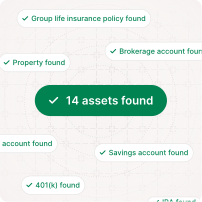
Elayne's Verified Asset Search can locate a safety deposit box by scanning financial records for the recurring annual rental fee banks charge. From there, Elayne guides families through state-specific access requirements and helps organize what an executor needs to present at the bank. Also, when court involvement becomes necessary, Elayne helps connect families with the right professionals. In addition, our secure dashboard keeps everyone with legal authority aligned on what has been found, what documentation is still pending, and who is handling each part of the process.
FAQs
Can you access a Wells Fargo safety deposit box after death without probate?
Yes, if the box was jointly held or you're named as a co-renter or deputy. The surviving joint owner can typically access it immediately with a death certificate and ID. If the deceased was the sole owner, you'll need court-issued letters testamentary or letters of administration before the bank will grant access.
What is a safety deposit box used for in estate planning?
A safety deposit box stores irreplaceable documents and valuables like property deeds, stock certificates, passports, jewelry, and family heirlooms.
How much is a safety deposit box monthly at Wells Fargo or Bank of America?
Safety deposit boxes aren't billed monthly at most banks. Fees are charged annually. A small box typically costs $20 to $75 per year, while larger boxes can run $150 or more. Both Wells Fargo and Bank of America offer fee waivers for certain account tiers, so the actual cost depends on your banking relationship and box size.
Can you find a safety deposit box you didn't know existed after someone dies?
Yes. Bank statements, tax returns, and mail often show recurring annual rental fees as a line item, which can point to a box. Banks where the deceased held accounts will typically confirm whether a box exists when presented with a death certificate and appropriate legal authority. State unclaimed property registries can also surface abandoned box contents that were transferred years earlier.
*Disclaimer: This article is for informational purposes only and does not provide legal, medical, financial, or tax advice. Please consult with a licensed professional to address your specific situation.







.svg)