.png)

When a parent dies in another state, the estate is handled under that state's laws, in that state's courts, regardless of where the executor lives. How complex the process becomes depends on factors such as where assets are held, how property is titled, and whether real estate sits in more than one state. This guide covers key points for families and executors need to know, including: which state's probate rules apply, when a second court proceeding is required, how to manage the process remotely, locating assets, tax matters, and more.
Key Takeaways
- Probate is filed where your loved one lived
- Real property owned in another state triggers a separate court proceeding called ancillary probate, governed by that state's rules
- Many probate steps can be handled remotely through e-filing, video hearings, and limited power of attorney for in-person requirements
- Elayne organizes estate administration for out-of-state executors, tracking SECURE Act deadlines and searching for assets across financial accounts, real property, and state registries
What It Means to Manage a Deceased Parent's Estate From Another State
Managing a parent's estate from another state is legally permitted, and many families do it. An out-of-state executor carries the same fiduciary duties as one who lives nearby: locating assets, notifying creditors, meeting court deadlines, and distributing the estate according to the will or applicable law.
Distance adds practical complications that a local executor does not face. Courts, financial institutions, and government agencies in the decedent's state each operate under their own rules, forms, and timelines. Those rules may differ considerably from what applies in the executor's home state.
{{blog-cta-financial}}
Understanding Probate Jurisdiction and Which State's Laws Apply
Probate is filed in the state where the decedent was legally domiciled at the time of death—not where the executor lives. If a parent lived in Florida, the estate is probated in Florida, under Florida law, in a Florida court.
Legal domicile means the state where the person permanently resided with no intent to leave. Owning property in another state does not change domicile. The domiciliary probate court validates the will, appoints the personal representative, and supervises estate administration from opening to close.
Each state sets its own rules: filing deadlines, creditor notice periods, executor bond requirements, and required court forms. Those rules can differ considerably from what applies in the executor's home state.
What Is Ancillary Probate?
Ancillary probate is a secondary court proceeding opened in any state where a decedent owned real property or titled assets at the time of death. It runs parallel to the primary probate in the domiciliary state but is governed entirely by the second state's rules, timelines, and forms.
If a parent lived in Ohio but owned a vacation home in Florida, Florida ancillary probate requires its own proceeding to transfer that property's title. Each ancillary proceeding means a separate court filing, separate creditor notice periods, and often a separate local attorney.
{{blog-cta-financial}}
How Out-of-State Executors Can Manage Probate Remotely
Many probate steps can be handled from a distance. Physical presence is not required at every stage, though some courts still expect in-person appearances for specific hearings or document signings. How much can be done remotely depends on the state and, in many cases, the individual county.
Courts that offer e-filing allow executors to submit petitions, inventories, and accountings without traveling. Many probate courts now conduct hearings by video. For documents that require a notarized signature, remote online notarization is accepted in a growing number of states, though not universally.
When an in-person step cannot be waived, an executor can grant a local agent a limited power of attorney to handle that step on their behalf. A local probate attorney often fills this role, appearing at hearings or coordinating with the clerk's office directly.
A few approaches that keep the process moving from a distance:
- Confirming early whether the county court accepts e-filing and remote hearings. Rules can vary widely even within the same state.
- Establishing a single point of contact at each financial institution to avoid starting from scratch on every call.
- Using a secure document-sharing service to keep certified death certificates, Letters Testamentary, and account statements accessible without having to mail physical copies repeatedly.
- Checking whether the state permits remote online notarization.
How Elayne Supports Out-of-State Executors Managing a Parent's Estate
Elayne helps out-of-state executors by organizing the estate from intake forward and building a shared dashboard where family members and advisors can see the same information in real time, regardless of where they are located.
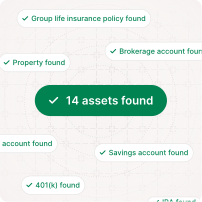
Elayne's Verified Asset Search goes beyond public-record lookup to surface real property and deeds, life insurance policies, unclaimed state property, dormant financial accounts, and credit-bureau trade-line data across all three major bureaus. The search also identifies which institutions hold estate assets, which is especially useful when an out-of-state executor cannot sort through statements or incoming mail directly. For inherited retirement accounts, Elayne tracks SECURE Act 2.0 distribution deadlines and mandatory annual RMDs, surfacing the 25% penalty risk before a deadline passes unnoticed. Recurring charges that continue billing against estate funds are handled directly: Elayne manages cancellation communications with providers, monitors confirmation that charges have stopped, and logs each outcome for estate accounting.
Learn more about how Elayne supports estate administration at elayne.com.
FAQ
How do I find out if my deceased parent had life insurance policies I don't know about?
The NAIC Life Insurance Policy Locator is a strong starting point: you submit a search request and participating insurers check their records and contact you if a matching policy is found. State unclaimed property registries can surface additional dormant accounts and forgotten assets, and prior tax returns from the past two to three years may reveal dividend income, interest, or policy-related deductions that point to institutions holding estate assets.
What happens if an executor pays beneficiaries before the creditor claim window closes?
If valid creditor claims arrive after distributions have already gone out and the estate no longer has funds to cover them, the executor can face personal liability. Many states require a formal Notice to Creditors published in a local newspaper, which opens a statutory window ranging from a few months to over a year, and the legal order of payment puts funeral expenses, administration costs, and taxes ahead of general unsecured creditors before any distribution to heirs.
How does an executor notify the IRS and Social Security after a parent dies?
The funeral home typically reports the death to the Social Security Administration, but executors should confirm this happened and ask about survivor benefits as well. If it was not reported, the SSA can be reached by phone using the decedent's name, Social Security number, date of birth, and date of death. For the IRS, the executor files the decedent's final Form 1040 covering income earned through the date of death. Accessing tax records requires a death certificate along with either Letters Testamentary or Form 56.
Can an out-of-state executor manage a deceased parent's estate without traveling?
Many steps can be handled remotely through e-filing, video hearings, and remote online notarization. Physical presence is not required at every stage, though some courts still expect in-person appearances for specific hearings or document signings. When an in-person step cannot be waived, an executor can grant a local agent a limited power of attorney to appear or coordinate on their behalf. How much can be done remotely depends on the state and, in many cases, the individual county.
What is ancillary probate and when does it apply?
Ancillary probate is a secondary court proceeding required in any state where a decedent owned real property or titled assets at the time of death. It runs parallel to the primary probate in the domiciliary state but is governed entirely by the second state's rules, timelines, and forms. If a parent lived in Ohio but owned a vacation home in Florida, Florida's courts must oversee that property's title transfer, with its own filing, creditor notice period, and often a separate local attorney.
Which state's probate laws apply when a parent dies in another state?
Probate is filed in the state where the decedent was legally domiciled at the time of death, not where the executor lives. Legal domicile means the state where the person permanently resided with no intent to leave. That state's laws govern the filing deadlines, creditor notice periods, executor bond requirements, and required court forms. Owning property in another state does not change domicile.
How does an executor handle a deceased parent's real property located in another state?
Real property in a state other than where the parent lived must go through ancillary probate in that state. Working with a local probate attorney in the property's state is often needed to file the petition, coordinate with the clerk's office, and meet local requirements. If the property was held in a revocable living trust, joint tenancy with right of survivorship, or covered by a transfer-on-death deed, it may pass outside probate entirely, with no court involvement required.
*Disclaimer: This article is for informational purposes only and does not provide legal, medical, financial, or tax advice. Please consult with a licensed professional to address your specific situation.









.svg)