

When someone dies and leaves assets that need to be managed or distributed, a separate bank account is opened in the estate's name. That account holds estate funds, collects incoming money, and pays valid debts and taxes until the estate is settled. This guide explains key points for families and executors, including: what an estate account is and how it works, what documents banks ask for, how to open an account, costs, tax filings, and more.
Key Takeaways
- An estate account is a temporary bank account opened in the estate's name, used to collect assets and pay debts before distributing to beneficiaries
- Opening one requires 4 things: a death certificate, court-issued letters of authority, an EIN from the IRS, and a photo ID
- Funds stay in the account until debts, taxes, and creditor claim periods are resolved
- Elayne supports families managing an estate account, including EIN application support, asset search, and subscription cancellation
What Is an Estate Account?
An estate account is a dedicated bank account opened in the name of a deceased person's estate. The personal representative uses it to hold and manage estate funds during settlement, paying debts and collecting incoming money in one place.
It operates under its own tax identity, an Employer Identification Number, not the decedent's Social Security number. The account is temporary, existing only until the estate is settled.
{{blog-cta-financial}}
How Does an Estate Account Work?
Once letters of authority are issued, the executor moves the decedent's cash assets into the account. Estate administration follows a structured sequence from that point. Money owed to the estate flows in. Valid debts, taxes, and expenses flow out. Whatever remains goes to the beneficiaries.
What Is an Estate Account Used For?
An estate account keeps every payment tied to the estate in one place. Common uses include:
- Funeral and burial expenses
- The decedent's outstanding medical bills
- Creditor claims and estate debt and other debts
- Property taxes, insurance, and upkeep on estate real estate
- Income and estate taxes owed
- Distributions to beneficiaries once debts are settled
Do You Need to Open an Estate Account When Someone Dies?
Many estates that hold probate assets, earn ongoing income, or carry debts to settle open an estate account. You may not need one if the estate is very small or made up entirely of non-probate assets, like beneficiary-designated accounts, jointly owned property, or a living trust. State small-estate thresholds also factor in, since some estates qualify for simplified transfer without a formal account.
What Documents Do You Need to Open an Estate Account?
Many banks ask for four things:
- A certified copy of the death certificate
- The court-issued Letters Testamentary or Letters of Administration naming the personal representative
- The estate's EIN
- Government-issued photo ID for the person opening the account
The EIN for an estate account is the estate's own tax number, issued by the IRS. After death, the decedent's Social Security number is no longer used for estate matters, so the estate operates under its own nine-digit number.
How to Open an Estate Account
- Certified copies of the death certificate are obtained from the county recorder or official records office.
- Probate is completed first, after which the court issues Letters Testamentary or a Letter of Administration naming the personal representative.
- The estate's EIN is obtained from the IRS online at no cost.
- The death certificate, letters, EIN, and photo ID are presented to a bank to open the account.
Many banks require an in-person appointment; a representative verifies the personal representative's identity and court-granted authority before the account is opened.
Can You Open an Estate Account Without Full Probate?
Full probate is not required in every case. When an estate qualifies for a small-estate affidavit, or when a state court grants summary administration, a bank may open an account on that basis. A court can also issue limited letters of authority that allow action on specific matters without a full probate proceeding.
How Long Does Money Have to Stay in an Estate Account?
No single fixed period applies. Funds generally stay until debts, taxes, and creditor claims are resolved and the court authorizes distribution. Each state sets a creditor claim period, typically ranging from a few months to about a year, during which creditors can file valid claims against the estate.
Once that window closes, the executor can petition the court to approve a final accounting and authorize distribution to beneficiaries. Estates with real property, pending litigation, or ongoing income typically take longer before the account can be closed. Some states also require a mandatory waiting period before the personal representative can file for final discharge. Distributing funds before all claim periods have run and taxes are paid can expose the personal representative to personal liability for any resulting shortfall. The account stays open until every outstanding obligation is resolved and the court issues a formal closing order.
Estate Account vs. Trust Account: What Is the Difference?
An estate account holds a deceased person's probate assets and closes once settlement finishes. A trust account holds assets titled in a trust and can run for years under a trustee. Both use their own EIN, and both prohibit commingling with personal funds.
Estate accounts exist only until debts are paid and assets are distributed to beneficiaries. Trust accounts can continue operating long after that point—sometimes for decades—when the trust terms call for it, such as when a beneficiary is a minor or when distributions are scheduled over time.
Beneficiaries of an estate are named in the will or determined by state intestate-succession law. Beneficiaries of a trust are named in the trust document itself. Trust assets bypass probate entirely, which is why they transfer faster and with less court involvement than probate assets held in an estate account. Both account types file a Form 1041 for income earned after death.
{{blog-cta-financial}}
Tax Filings and Deadlines Tied to an Estate Account
An executor may file several returns, including:
- The decedent's final Form 1040, covering personal income up to the date of death. A probate estate inventory is typically required before these returns are filed.
- The estate's Form 1041, reporting income the estate earns after death, like interest or dividends.
- Form 706, the federal estate tax return, for estates with a gross estate value exceeding the 2026 filing threshold of $15 million per individual.
The IRS guide for survivors and executors covers each return.
How Elayne Supports Families Managing an Estate Account
Elayne is the operating layer for settling an estate. We help families with administrative tasks that range from organizing the estate record to preparing for probate and supporting the steps around an estate account, including EIN application support and help opening the account.
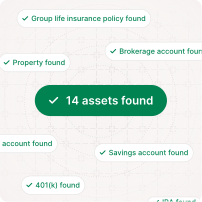
Elayne's Verified Asset Search scans unclaimed property registries, financial databases, and family documents to help surface dormant accounts, lost insurance policies, and eligible survivor benefits. Elayne's subscription discovery manages cancellation of recurring charges directly with providers, monitors statements, and logs each confirmation for estate accounting.
FAQ
What are some of the key tax deadlines for executors to be aware of?
- The decedent's final Form 1040: due by the standard April filing deadline for the year of death
- Form 1041 for estate income earned after death: due the 15th day of the fourth month after the estate's tax year ends
- Form 706 for estates with a gross estate value exceeding the $15 million filing threshold (per individual, 2026): due nine months after the date of death
Do you have to open an estate account when someone dies?
No law universally requires one, but an estate account can be especially helpful whenever the estate holds probate assets, earns income after death, or carries debts to settle. You may not need an estate account if the estate is very small, made up entirely of non-probate assets like beneficiary-designated accounts or jointly owned property, or qualifies under your state's small-estate threshold for simplified transfer.
What documents do I need to open an estate account?
Many banks require four items: a certified copy of the death certificate, the court-issued Letters Testamentary or Letters of Administration naming you as personal representative, the estate's EIN (a separate tax number the IRS issues free online), and a government-issued photo ID for the person opening the account. Requirements vary by institution, so it's important to confirm what's necessary with each organization.
How do unclaimed life insurance policies get found after someone dies?
The NAIC Life Insurance Policy Locator is the primary starting point; it searches participating insurers using the decedent's name and Social Security number. Beyond that, tax returns from prior years often show premium payments or 1099 income that point to a policy, and old bank statements can surface recurring premium charges that identify an insurer.
How much does it cost to open an estate account?
Many banks do not charge a fee to open an estate account. Standard checking or savings account fees may apply once the account is open, such as monthly maintenance fees, though many banks waive these for estate accounts. It is important to ask the bank about any fees before opening the account.
*Disclaimer: This article is for informational purposes only and does not provide legal, medical, financial, or tax advice. Please consult with a licensed professional to address your specific situation.









.svg)