

When someone dies and their property needs to be sold, the process often goes through probate court. This guide explains what a probate sale is, how the court-supervised process works, whether cash is required or financing is allowed, and what the timeline looks like in different states.
Key Takeaways
- A probate sale is a court-supervised property sale that requires judicial approval and often allows competing bids at a hearing.
- Properties are sold as-is with limited disclosures, and closings take six months to a year or more in most cases.
- Financing is allowed, but cash offers close faster and avoid appraisal delays that can complicate rate locks.
- California requires court confirmation unless IAEA authority is granted; Florida and Texas generally skip this step.
- Elayne tracks court filings, deadlines, and paperwork across probate sales.
What Is a Probate Sale?
A probate sale is a court-supervised sale of real property owned by someone who has died. The court oversees the process to protect creditors and heirs, and sale proceeds go toward settling estate debts before anything remaining is distributed.
These sales come up in several situations: the estate owes debts but lacks liquid funds to cover them, heirs need to divide proceeds from a property they cannot hold jointly, or the deceased passed without an estate plan that would have transferred the home outside of court.
What separates a probate sale from a standard home sale is court involvement. A private transaction between buyer and seller becomes a process requiring judicial approval, added procedural steps, and in many states, a public hearing where other buyers can enter competing bids.
{{blog-cta-financial}}
How Does a Probate Sale Work?
Probate sales follow a court-supervised process that differs from a conventional home sale in several ways. The estate's personal representative, sometimes called an executor or administrator, works with a probate attorney and a real estate agent to list the property. From there, the sale moves through a sequence that generally includes the following:
- The court appoints a personal representative to manage the estate, including any real property.
- The representative gets a court-approved appraisal, often called a probate referee appraisal, to set the minimum acceptable sale price.
- The property is listed, offers are collected, and the representative accepts the highest qualifying bid.
- In states that require court confirmation, the accepted offer goes before a judge. Other buyers can appear at the hearing and submit overbids, which can reopen the sale to competing offers.
- Once the court approves the sale, escrow closes and proceeds go to the estate.
Court Confirmation vs. Independent Administration
Not every probate sale requires a court confirmation hearing. Many states allow the personal representative to sell property under independent administration authority, which removes the overbidding step and shortens the timeline. California, for example, uses the Independent Administration of Estates Act to give some executors this authority. Without it, the full court confirmation process applies and adds weeks or months to closing.
Whether court confirmation is required depends on the state, the terms of the will, and whether heirs consent to independent administration.
Probate Sale vs. Regular Home Sale: Key Differences
How Long Does a Probate Sale Take?
Timelines vary widely depending on the state, the estate's complexity, and whether the court requires confirmation of the sale.
In straightforward cases with an independent administrator and no court confirmation requirement, a probate sale can close in as little as a few months. When court confirmation is required, the process typically runs six months to a year from listing to closing. Contested estates or those with title complications can last considerably longer.
How Much Does a Probate Sale Cost?
Probate sales carry costs beyond a standard real estate transaction, and the total can vary depending on the estate's complexity, the state, and whether court confirmation is required.
Common expenses include:
- Court filing fees
- Executor or administrator fees, often set by state law as a percentage of the estate's gross value
- Probate attorney fees, which in some states like California are also set by statute and calculated as a percentage of the estate
- Real estate agent commissions, generally in the same range as a conventional sale
- Property maintenance costs while the estate moves through the process, including taxes, insurance, and upkeep
Understanding Court Confirmation and the Overbid Process
In many states, probate sales require court approval before the sale can close.
How Court Confirmation Works
Once a buyer and executor agree on a price, the sale goes before a probate judge for confirmation. At that hearing, other buyers can appear and submit competing bids, a process known as overbidding. The court confirmation hearing process typically requires buyers to meet specific deposit requirements and bidding increments.
- The opening overbid is typically set at a fixed percentage above the accepted offer, often around 5% plus a set increment.
- Any overbidder must bring a cashier's check to the hearing as proof of funds.
- The highest confirmed bid wins, and the original buyer has no right of first refusal.
States That Require Court Confirmation
Not every state uses this process. California requires court confirmation unless the executor holds Independent Administration of Estates Act authority. Florida and Texas generally do not require a confirmation hearing for most residential sales.
{{blog-cta-financial}}
Are Probate Sales Cash Only?
One of the most common questions buyers have about probate properties is whether they require cash. The short answer is no: financing is generally allowed in probate sales, though the process has some features that make cash offers more competitive.
Lenders require appraisals, inspections, and underwriting timelines that can add 1-2 months or more to the process. Probate courts and estate executors often prefer faster closings because they help reduce carrying costs and simplify the estate's administration. A cash offer, even at a slightly lower price, may be selected over a financed offer simply because it closes sooner.
State-Specific Considerations: California, Florida, and Texas
Probate rules vary by state, and the differences can shape both the timeline and the cost of selling estate property.
California
California gives executors two paths: full court supervision or the Independent Administration of Estates Act (IAEA), which allows most steps without separate court approval. Estates over $184,500 generally require probate. The process typically lasts 9 to 18 months, and court confirmation hearings can add more time if required under the chosen path.
Florida
Florida requires probate for assets titled solely in the deceased's name. The state offers formal administration for larger estates and summary administration for estates under $75,000 or when the deceased passed away more than two years prior. Formal administration generally takes 6 to 12 months.
Texas
Texas uses an independent administration process that reduces court involvement after the initial appointment of an executor. Most estates complete probate in 6 to 9 months. Texas also recognizes muniment of title, a simplified option available when there are no unpaid debts, which can transfer real property without full administration.
How Elayne Supports Families Through Estate Settlement
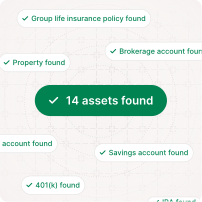
When a probate sale is underway, Elayne tracks related paperwork and court filing deadlines, flags what is coming up, and keeps a clear record of what has been completed. Beyond the sale itself, Elayne helps families locate assets, including dormant accounts, unclaimed property, and lost insurance policies. Families also receive a personalized, step-by-step checklist built around their specific situation. Each step surfaces in the right order, with guidance on what to do and who to contact.
FAQs
What is a probate sale for a house?
A probate sale is a court-supervised sale of real property owned by someone who has died, where the court oversees the process to protect creditors and heirs. Sale proceeds go toward settling estate debts first, with anything remaining distributed to heirs.
Are probate sales cash only?
No, probate sales generally allow financing, though cash offers often win because they close faster. Many probate homes are sold as-is, which can create friction with government-backed loans that have stricter property standards, making conventional loans with fewer condition requirements the more efficient financing path in most cases.
How long does selling a house in probate take?
In straightforward cases with independent administration and no court confirmation requirement, a probate sale can close in a few months. When court confirmation is required, the process typically runs six months to a year from listing to closing, with contested estates or title complications making the process last considerably longer.
Probate sale vs regular home sale?
A probate sale adds court supervision to the transaction, which reshapes the entire process: the court must approve the final sale, properties are sold as-is with limited disclosures, timelines often last six months to a year or more, and in some states competing offers can be submitted at a court hearing after an initial offer is accepted.
*Disclaimer: This article is for informational purposes only and does not provide legal, medical, financial, or tax advice. Please consult with a licensed professional to address your specific situation.










.svg)