

You know your parent had financial accounts, but figuring out which ones and where they were held is a different challenge entirely when tracking down a deceased parent’s financial accounts. You are already planning a service, talking to relatives, and trying to keep work and life afloat, so hunting for scattered accounts can feel like one task too many. The process becomes much more manageable when you break it into steps and know what to focus on first.
Key Takeaways:
- Search physical mail, tax returns, and email for statements to locate accounts
- State unclaimed property databases hold billions in forgotten assets you can claim
- You'll need certified death certificates and court-issued letters to access accounts
- Most banks take 1-3 weeks to process requests through their estate services teams
- Elayne automates account discovery across 50+ categories and handles closures for you
Why Finding All Financial Accounts Matters
After the loss of a parent, locating all financial accounts they held helps preserve the estate's value and makes sure beneficiaries receive what they're entitled to. Missing even one account can mean leaving money behind that belongs to your family.
Approximately 1 in 7 people have unclaimed property, and billions in assets go undiscovered each year. These accounts don't disappear, but they become harder to claim over time. State unclaimed property offices hold the funds, but families often don't know to look.
Finding all accounts early prevents this. It also gives you a complete picture of the estate, which matters for tax filings, debt settlement, and fair distribution among heirs.
Start With What You Have: Searching Physical and Digital Records
The most productive place to start is with the records your parent kept at home. Look through recent mail for bank statements, investment account notices, or credit card bills. Check filing cabinets, desk drawers, and safe deposit boxes for paper statements, tax documents, or account folders.
On the digital side, search your parents' email inbox for messages from financial institutions. Keywords like "statement," "account," or bank names can surface years of correspondence. If you have access to their computer, check saved files, bookmarks, and password managers for login credentials or account references.
What Documents You'll Need to Access Account Information

Financial institutions require specific legal documents before they'll share account details with family members. The most important thing is a certified death certificate. You'll need multiple copies, as most banks and brokerages require an original or certified copy instead of a photocopy.
If you're serving as executor or personal representative, you'll also need letters testamentary (if there's a will) or letters of administration (if there isn't). These are court-issued documents that prove your legal authority to act on behalf of the estate. Without them, most institutions won't release account balances or transaction history.
Bring a government-issued photo ID when contacting institutions in person. Some may also ask for proof of your relationship to the deceased.
{{blog-cta-financial}}
How to Contact Banks and Financial Institutions Directly
Once you have your legal documents in order, reach out to any financial institution your parent likely used. Start with banks where they had checking or savings accounts, then contact investment firms, credit unions, and any institutions mentioned in their records.
Most banks have dedicated estate or deceased account services departments. When you call the main customer service line, ask to be transferred to the estate services team. Have ready: the deceased's full legal name, Social Security number, date of birth, and date of death. The representative will confirm what documents they need and where to send them. Some institutions accept documents by secure upload or fax, while others require original certified copies by mail. The process can take one to three weeks per institution.
Using State Unclaimed Property Databases to Find Hidden Accounts
Every state maintains a database of unclaimed property: bank accounts, forgotten paychecks, insurance proceeds, and utility deposits that have been dormant for years. When a financial institution can't reach an account holder after a set period (typically three to five years), it turns those funds over to the state.
Unclaimed property programs returned $4.49 billion to rightful owners between July 2023 and June 2024. Many accounts belong to people who have since passed away.
Start by searching the state where your parent lived most recently. Then search any state where they previously lived or worked, as accounts from decades ago may still be registered to old locations.
When searching, try variations of your parents' names: full legal name, maiden name, nicknames, and any hyphenated versions.
Reviewing Tax Returns for Financial Clues
Tax returns create an objective paper trail of financial activity that exists whether or not your parents kept statements or mentioned accounts. Interest income, dividend payments, and capital gains distributions all appear on federal returns, along with the names of the institutions that issued them.
Look for Schedule B (interest and dividend income) and Schedule D (capital gains). Each entry typically includes the payer's name, which indicates which bank, brokerage, or mutual fund company held the account. Even small amounts can point you to accounts opened years ago and never mentioned.
If you don't have paper returns, request transcripts directly from the IRS using Form 4506-T. Review the past three to five years, if available.
When to Consider Professional Asset Search Services
If your parent left incomplete records or you suspect accounts exist that haven't surfaced through manual searching, a professional asset search service can help. These services include forensic accountants, estate research firms, and specialized asset locators who use proprietary databases and investigative methods that go beyond what families can access on their own.
Professional searches typically cost between $500 and $3,000 for a basic report, with more involved investigations reaching $10,000 or more. The cost depends on the scope of the search, the number of states or countries involved, and whether the firm charges a flat fee or an hourly rate.
These services make sense when the estate is large enough that potential recovery warrants the expense, when you have reason to believe offshore or business accounts exist, or when family disputes require an independent third party to verify what assets are present.
Understanding the Probate Timeline and Your Legal Authority
Probate determines when and how you can access your parents' financial accounts. Before the court appoints you as executor or personal representative, most institutions won't share account details or release funds, even with a death certificate. Once you receive letters testamentary or letters of administration, you gain legal authority to request information, freeze accounts, and manage estate assets.
The timeline varies by state and estate complexity. Simple estates can move through probate in six to nine months, while contested or complicated estates can take years. Starting your account search early, even before probate formally opens, helps you identify what needs attention once your authority is official.
Common Types of Accounts to Look For
Financial accounts extend far beyond checking and savings. As you search, keep this checklist in mind to avoid overlooking accounts that may hold value:
- Retirement accounts and pensions
- Brokerage and investment accounts
- Health savings accounts and flexible spending accounts
- Life insurance policies with cash value
- Safe deposit boxes
- Cryptocurrency wallets and exchange accounts
- Online payment services like PayPal, Venmo, and Zelle
- Rewards programs and airline miles accounts
- Annuities and certificates of deposit
Digital accounts are easy to miss because they rarely generate paper statements. Check email and browser history for login confirmations or transaction notices.
| Account Type | Where to Search | What to Look For |
|---|---|---|
| Checking and savings accounts | Physical mail, tax returns (Schedule B), state unclaimed property databases | Monthly statements, interest income reports, debit card correspondence, and automatic payment confirmations |
| Retirement accounts (401k, IRA, pension) | Former employer records, tax returns (Form 1099-R), Social Security statements, benefits administrators | Annual statements, beneficiary designation forms, rollover notices, and required minimum distribution letters |
| Investment and brokerage accounts | Tax returns (Schedule D and Schedule B), email confirmations, and safe deposit boxes | Trade confirmations, dividend statements, capital gains distributions, prospectus mailings |
| Life insurance policies | Insurance company correspondence, safe deposit boxes, employer benefits documents, state insurance department databases | Premium payment notices, annual policy statements, beneficiary update forms, and cash value reports |
| Digital payment accounts | Email inbox, smartphone apps, browser saved passwords, and linked bank account statements | Transaction confirmations, balance notifications, linked card alerts, and peer-to-peer payment receipts |
| Health savings and flexible spending accounts | Employer benefits materials, tax returns (Form 1099-SA), health insurance statements | Contribution statements, reimbursement forms, year-end balance summaries, and account administrator notices |
What Happens to Accounts That Go Unclaimed
When a financial account remains dormant and has no owner contact for a specified period, the institution transfers it to the state through a process called escheatment. The dormancy period varies by state and account type, typically ranging from 3 to 5 years.
The money doesn't disappear, and there's no deadline to claim it back. States hold unclaimed property indefinitely and will return it to rightful owners or heirs who file a claim. However, recovery becomes more involved the longer you wait, requiring proof of identity, relationship to the deceased, and legal authority to claim on behalf of the estate.
Claiming an account directly from the institution while probate documents are in hand is faster than filing a state claim months or years later.
{{blog-cta-financial}}
How Elayne Automates Financial Account Discovery

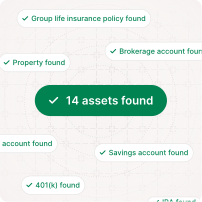
Elayne searches across 50+ financial categories, analyzes documents families upload, and runs direct database searches to uncover unclaimed assets, insurance policies, and eligible benefits. Once accounts are located, the service manages the administrative work: contacting institutions, submitting required documents, and handling closures or transfers. Everything is visible in one secure dashboard that families and authorized members can access anytime, helping reduce the worry that something has been overlooked.
Final Thoughts on Searching for a Parent's Financial Accounts
Most families successfully locate accounts by reviewing tax returns, contacting banks directly, and searching state unclaimed property databases. When tracking down deceased parents' financial accounts proves more involved than expected, services exist to handle the administrative work and consolidate everything in one place. You're not expected to manage all of this alone, and asking for help doesn't mean you've fallen behind.
If you would like help turning a scattered search into one organized plan, you can get started with Elayne’s estate settlement support, so you are not carrying all of this by yourself.
FAQs
How long does it typically take to locate all of a deceased parent's financial accounts?
The timeline depends on how organized your parents' records were and how many institutions are involved. Most families spend several weeks to a few months conducting searches, contacting institutions, and waiting for responses, though the process can extend longer if accounts surface in multiple states or through unclaimed property databases.
What should I do if I can't find any financial records at all?
Start by requesting tax return transcripts from the IRS using Form 4506-T, which will show income sources and payer names from recent years. Then run searches in state unclaimed property databases for every state where your parent lived or worked, and consider hiring a professional asset search service if the estate size warrants the cost.
Can I contact banks before probate is complete?
You can contact banks to ask whether your parent held accounts there, but most institutions won't share account details or balances until you provide letters testamentary or letters of administration from the probate court. Having a certified death certificate allows you to start the conversation, but full access requires proof of your legal authority.
What happens if I miss a financial account during the search?
The account won't be deleted, but it will eventually be transferred to the state unclaimed property office after sitting dormant for 3 to 5 years. You or other heirs can still claim it later, though the recovery process becomes more complicated and requires additional proof of relationship and legal authority.
How does Elayne help families avoid missing accounts?
Elayne runs searches across 50+ financial categories and analyzes documents you upload to uncover accounts, insurance policies, and eligible benefits. Once located, Elayne manages outreach to institutions, submits required documents, and handles closures or transfers through a single secure dashboard that shows everything in one place.










.svg)