

When someone dies, any legal notice requirements related to their death apply to the estate, not to the act of announcing the death. In many states, probate law requires an executor to publish a formal notice to creditors in a local newspaper. That notice gives creditors a set window to file claims against the estate before it closes.
Key Takeaways:
- Probate often requires a legal notice to creditors published in a local newspaper.
- You can find death records through the Social Security Death Index and public court records.
- Print obituaries are $200 to $500 on average, but can increase to $1,000+.
- Elayne helps families manage state-specific notice obligations and probate deadlines.
What Is a Death Notice and How Is It Different From an Obituary?
A death notice is a brief, factual announcement that someone has died. It typically includes the person's name, date of death, and funeral or service details. An obituary is longer, often covering the person's life story, mentioning surviving family members, and including personal tributes.
Death notices are frequently submitted by funeral homes or families to notify the public of arrangements. Obituaries are intended to honor and memorialize a loved one's life.
| Feature | Death Notice | Obituary |
|---|---|---|
| Length | Short, often under 100 words | Longer, often several paragraphs |
| Content | Name, date of death, service details | Life story, survivors, tributes |
| Who writes it | Funeral home or family | Family, funeral home, or newspaper staff |
| Cost | Usually lower | Can be higher depending on word count |
| Purpose | Inform the public of arrangements | Memorialize and celebrate a life |
Are Death Notices Required by Law?
Some states and legal processes do require a published notice, though the requirement applies to the estate, not the death announcement itself:
- Probate proceedings in many states require a legal notice to creditors published in a local newspaper, giving creditors a window to file claims against the estate.
- Some states require notice when administering a trust or distributing assets to heirs.
- Certain business or property matters tied to a deceased person's estate may have separate publication requirements under state law.
{{blog-cta-legal}}
When Are Legal Death Notices Required for Probate and Estate Settlement?
Probate courts in most U.S. states require a formal notice to creditors before an estate can be settled. This notice is typically published in a local newspaper of general circulation for a set number of weeks, giving creditors a window to file claims against the estate.
How Creditor Notice Requirements Work
Most states require the estate's executor or personal representative to publish a notice once a week for two to four consecutive weeks in a newspaper serving the county where the deceased lived. After that window closes, creditors who did not file a claim may lose the right to collect from the estate, though the exact consequences depend on state law. Probate notice requirements and timelines vary by jurisdiction, so it's important for executors to verify their local court's specific procedures.
What Happens If the Notice Is Not Published
Skipping the creditor notice step can delay or invalidate the probate process. Courts may refuse to close an estate without proof that the required notice ran in an approved publication. In some cases, creditors who were not properly notified may retain the right to pursue claims even after the estate closes.
State-by-State Variations in Notice Requirements
Notice requirements for death vary considerably depending on where someone died and what the estate involves.
How State Law Shapes Notice Obligations
| State | Creditor Notice Window | Publication Required | Notes |
|---|---|---|---|
| California | 30 days from appointment | Yes | Must run in a local adjudicated newspaper |
| Texas | 30 days from appointment | Yes | Published once per week for two consecutive weeks |
| Florida | 3 months from first publication | Yes | Two publications required |
| New York | 7 months from issuance of letters | No mandatory publication | Direct notice to known creditors |
| Illinois | 6 months from issuance | Yes | Published once per week for three successive weeks |
How to Find Out If Someone Died Without an Obituary
When no obituary exists, several public records and free databases can help confirm whether someone has died.
The Social Security Death Index (SSDI) is a commonly used starting point for death research. It contains records of deaths reported to the Social Security Administration, and is searchable through genealogy sites like FamilySearch and Ancestry.
In addition:
- Public death records are filed at the county or state level and are accessible through many state records offices, often at no cost for basic searches.
- Court records, including probate filings, are public in most states and appear when an estate enters the legal system.
- Newspaper archives, local government websites, and funeral home directories sometimes list deaths even when a formal obituary was never published.
What Information Must a Legal Notice to Creditors Include?
Most legal notices to creditors follow a standard set of required elements, though the exact specifications vary by state. Courts and probate judges generally expect the notice to contain:
- The full legal name of the person who died, along with any known aliases they used during their lifetime, information about assets and debts
- The date of death
- The name and contact information of the executor or personal representative handling the estate
- The name and location of the probate court where the estate is being administered
- A clear deadline by which creditors must submit claims, typically expressed as a number of months from the date of first publication
- A statement noting that claims filed after the deadline may be permanently barred
Some states require the notice to run in a newspaper of general circulation within the county where the deceased lived. Others specify the number of consecutive weeks the notice must appear, commonly two or three. A few states also require direct written notice to known creditors in addition to the newspaper publication.
What Counts as a Qualifying Publication?
Not every newspaper qualifies. Most states require publication in a newspaper that meets a legal definition of general circulation, which generally means it is published regularly, available to the public, and distributed throughout the relevant county or jurisdiction. Weekly community papers sometimes qualify; niche or trade publications typically do not.
If you are unsure whether a specific newspaper qualifies, the probate court clerk for the county where the estate is being administered can confirm which publications are approved for legal notices in that jurisdiction.
{{blog-cta-legal}}
How Much Does It Cost to Publish a Death Notice or Obituary?
Newspaper and online obituary costs vary. Print obituaries are typically priced by the line or by the word, and a standard notice in a mid-size daily can run anywhere from $200 to $500. In larger metro papers, that figure can increase to $1,000 or more.
Online-only death notices through legacy sites or funeral home portals tend to cost less, often in the range of $50 to $150, and some services don't charge for a basic listing.
Legal notices published for probate or creditor notification are priced separately and follow each state's statutory requirements for publication frequency and approved outlets. These typically are $100 to $300 depending on the state and the length of the required notice.
A few factors that impact the final cost:
- Print versus online publication, since print rates are usually higher
- Word or line count, which is the most common pricing unit for print notices
- Photo inclusion, which usually has an added fee
- Number of publication runs, since legal creditor notices often require multiple insertions
- The specific newspaper's circulation and market, as larger papers can charge considerably more
How to Write and Submit a Death Notice or Obituary
Most newspapers accept death notice and obituary submissions by phone, email, or through an online form on the paper's website. Before submitting, confirm:
- The word count included in the base rate, since going over even slightly can increase the final price
- Photo file requirements and any associated fee for including an image
- How proofs are reviewed and where to send corrections before the publication date
- Whether the notice will run in print, online, or both, as some papers charge separately for each
How Elayne Helps Families Through Post-Death Notification and Estate Settlement
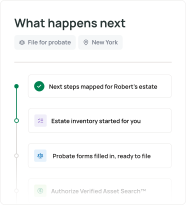
Elayne helps families understand notice obligations based on the state and the estate, guides them through the creditor notification process during probate, and tracks the publication deadlines that courts require before an estate can close. Elayne also identifies which newspapers qualify as an approved legal publication in the county where the estate is being administered. Also, when the required notice window opens, Elayne monitors the timeline and flags when proof of publication needs to be submitted to the court. Beyond creditor notices, Elayne organizes other post-death notifications, including to government agencies and financial institutions.
FAQs
Are obituaries required by law when someone dies?
No. The only mandatory publication requirements are tied to probate: legal notices to creditors that many states require when settling an estate through court.
How to find out if someone died with no obituary?
Start with the Social Security Death Index (SSDI), which is searchable for free through sites like FamilySearch and Ancestry. You can also check public death records through your state's records office, search county probate court filings, or look through local newspaper archives and funeral home directories.
Legal notice of death in newspaper for creditors vs regular obituary?
A legal notice to creditors is a probate requirement in many states, published to give creditors a formal window to file claims against the estate. A regular obituary or death notice is optional and written to inform friends and family of arrangements and to honor the person who passed.
How much does it cost to publish an obituary in 2026?
Print newspaper obituaries typically cost $200 to $500 in mid-size papers, and can increase to $1,000 or more in larger metro markets. Online-only death notices generally cost $50 to $150. Legal notices for probate usually cost $100 to $300, depending on your state's publication requirements and the length of the notice.
*Disclaimer: This article is for informational purposes only and does not provide legal, medical, financial, or tax advice. Please consult with a licensed professional to address your specific situation.










.svg)