.webp)

Organizing financial accounts after death isn't something most of us have done before, and it shows. Families spend months tracking down accounts, calling institutions multiple times for the same information, and worrying they've overlooked something important. The process doesn't have to feel that scattered, and this guide covers the practical steps you'll need, from locating key documents to managing digital accounts, so you can work through everything without constantly second-guessing yourself.
Key Takeaways:
- Organizing financial accounts after death starts with locating certified death certificates, wills, and recent statements before contacting institutions
- Joint accounts pass to survivors without probate, while POD and TOD accounts bypass the court by going directly to beneficiaries
- Billions in unclaimed assets wait in state programs; search unclaimed.org and your state treasury for overlooked funds
- Most estates settle in 12 to 18 months, with the timeline varying based on will clarity, asset complexity, and family agreement
- Elayne automates account notifications, transfers paperwork, and benefit discovery across 50+ financial categories
Key Documents You Need to Locate First
Before reaching out to banks or filing any paperwork, families should spend the first few days locating key documents. This groundwork saves time later and prevents overlooked accounts or missed deadlines.
Start with the death certificate. Most financial institutions require a certified copy, and ordering 10 to 15 copies upfront prevents delays. Next, look for the will, trust documents, and any powers of attorney that may still apply during the initial weeks.
Financial records come next. Gather recent bank statements, investment account summaries, retirement account statements, tax returns from the past three years, mortgage and loan paperwork, and insurance policies. Check filing cabinets, safe deposit boxes, and email inboxes for digital statements.
Don't overlook identification documents like the Social Security card, birth certificate, and marriage certificate if applicable. These often become necessary when claiming survivor benefits or transferring ownership.
How to Notify Financial Institutions of a Death
Once you have certified death certificates in hand, contact each financial institution where accounts are held. Most banks and investment firms require written notification along with a certified copy of the death certificate, though calling first can clarify their specific process.
When you call, ask about their notification requirements, whether they accept mailed or faxed documents, how long account freezes typically last, and what documents you'll need for transfers or closures. Write down the representative's name, date, and any reference numbers for your records.
Banks will freeze individual accounts immediately upon notification to prevent unauthorized access. Joint accounts typically remain accessible to the surviving account holder, though policies vary by institution.
Investment firms and brokerage accounts often have dedicated estate services teams that can walk families through transfer procedures and beneficiary claims, which often move faster than probate.
Keep a log of every institution contacted, including dates, contact names, and follow-up steps needed.
Understanding Joint Accounts vs. Individual Accounts
Account ownership type determines who can access funds right away and what steps come next. These differences shape which accounts families can use immediately and which require probate.
Joint accounts with survivorship rights pass directly to the surviving owner without probate. The surviving account holder retains full access, though banks may temporarily freeze withdrawals until they receive documentation. Once the bank processes the death certificate, the account continues as a single-owner account.
Bank accounts with payable-on-death (POD) designations and investment accounts with transfer-on-death (TOD) designations bypass probate. Beneficiaries can claim these funds by presenting a death certificate and identification, often within days instead of months.
Accounts held solely in the deceased person's name freeze immediately and must pass through probate before funds can be distributed. Even small balances require court authorization, and the process typically takes months.
Some accounts fall into gray areas. Retirement accounts without named beneficiaries, old or forgotten accounts, may lack current documentation. These require extra research to determine rightful heirs and appropriate next steps.
| Account Type | Access Timeline | Probate Required | Documents Needed |
|---|---|---|---|
| Joint Account with Survivorship Rights | Immediate access for the surviving owner, though a temporary freeze is possible until the death certificate is processed | No, passes directly to the surviving account holder | Death certificate to remove the deceased owner's name from the account |
| Payable-on-Death (POD) Bank Account | Days to weeks after the beneficiary submits the claim | No, bypasses probate entirely | Death certificate and beneficiary identification |
| Transfer-on-Death (TOD) Investment Account | Days to weeks after the beneficiary submits the claim | No, transfers directly to named beneficiary | Death certificate and beneficiary identification |
| Individual Account (No Beneficiary) | Several months, typically 6 to 18 months, depending on probate complexity | Yes, must pass through probate court | Death certificate, court-issued letters testamentary or letters of administration, probate court authorization |
| Retirement Account with Named Beneficiary | Weeks to months after the beneficiary files a claim | No, passes directly to the beneficiary outside of probate | Death certificate, beneficiary claim form, and identification |
| Retirement Account without Beneficiary | Several months, subject to the probate timeline | Yes, becomes part of the probate estate | Death certificate, probate court authorization, estate documentation |
What Happens to Unclaimed Assets and Benefits
When financial institutions lose contact with account holders, those assets transfer to state unclaimed property programs instead of disappearing. Unclaimed property programs returned roughly $4 billion to rightful owners in the 2025 fiscal year, though billions more remain waiting.
Search the National Association of Unclaimed Property Administrators database at unclaimed.org, which searches multiple states at once. Then check individual state treasury websites where the deceased lived and worked. Search under maiden names, nicknames, and previous locations.
Look beyond bank accounts: check the National Association of Insurance Commissioners' Life Insurance Policy Locator Service, VA benefits, and Pension Benefit Guaranty Corporation benefits.
Creating a System to Track Account Closures and Transfers

Managing dozens of financial accounts after a loss requires a tracking system that shows where you are in the process and what still needs attention. Without one, important deadlines slip by, and follow-up calls get forgotten.
Start with a simple spreadsheet or notebook. List each financial institution down the left side, then create columns for account type, account number (last four digits), date contacted, documents sent, follow-up date, and current status. Update this log after every call or mailing.
Status categories help at a glance: "waiting for paperwork," "documents submitted," "pending review," "transfer complete," or "closed." Color-coding or sorting by status makes it easy to see which accounts need immediate action versus which are moving forward.
Set weekly check-ins to review your log and make follow-up calls. Many institutions take two to four weeks to process estate paperwork, and a gentle follow-up call often speeds things along. Note the name of every representative you speak with and any new reference numbers they provide.
If multiple family members share responsibility, keep one central log that everyone can access. This prevents duplicate calls to the same institution and keeps everyone informed about progress.
{{blog-cta-financial}}
How Long Estate Settlements Actually Take
Most beneficiaries receive their inheritance within 12 to 18 months after probate begins, though this varies widely based on estate size and complexity. Simple estates with clear wills can wrap up in six months, while complex estates with disputes or tax issues may stretch to two years or longer.
The biggest factors affecting the timeline include whether a valid will exists, the number and type of assets, whether tax returns need to be filed, and whether heirs agree on distributions. Estates without a will take longer because the court must determine heirs under state law. Responding quickly to attorney or court requests, maintaining organized records, and keeping communication open among heirs all help move things forward.
Protecting Against Identity Theft After Death
The period immediately following a death creates a window for fraud. In 2018, 800,000 deceased individuals became identity theft victims, with criminals filing false tax returns or opening credit accounts before families could lock down records.
Contact all three credit bureaus (Equifax, Experian, and TransUnion) to request a deceased alert on the credit file. Send a copy of the death certificate to each bureau by certified mail. This flags the Social Security number and prevents new credit applications.
Next, notify the Social Security Administration directly. They share death records with the IRS and other agencies, which helps prevent fraudulent tax filings in the deceased person's name. Monitor mail closely during the first year for unfamiliar credit card offers, collection notices, or bills for accounts you didn't open. If anything suspicious appears, file a report with the Federal Trade Commission at IdentityTheft.gov and contact local law enforcement.
Digital Accounts and Online Financial Services
Digital-only financial services create unique challenges because there's often no paper trail. Monthly statements don't arrive in the mail, and some families don't learn about these accounts until months after the loss.
Start by checking email inboxes for account notifications from services like PayPal, Venmo, Coinbase, Robinhood, or online banks like Chime and Ally. Search for terms like "statement," "transaction," or "balance" to surface accounts that may not have been discussed.
Password managers like LastPass or 1Password can unlock access to dozens of accounts at once if you can locate the master password. Check browser saved passwords, notes apps, or secure files on the deceased person's devices.
Cryptocurrency presents the steepest hurdle. Without access to private keys or wallet recovery phrases, funds become permanently inaccessible.
{{blog-cta-financial}}
When to Hire Professional Help
Many families can handle straightforward estates without legal help. If the estate has a clear will, minimal assets, no disputes among heirs, and all accounts have designated beneficiaries, the administrative journey is manageable with careful attention and time.
Professional help becomes worth the cost when estates include property in multiple states, business ownership or partnerships, combined assets exceeding $500,000 (thresholds vary by state), or family disagreements about distributions. Tax complexity is another trigger: estates large enough to owe federal estate tax or situations requiring income tax filings benefit from accountant guidance.
Hiring professionals doesn't mean handing over everything. Some families hire attorneys for probate filing while handling account notifications themselves, reducing costs while getting expert support where it matters most.
How Elayne Simplifies Financial Account Organization After Death
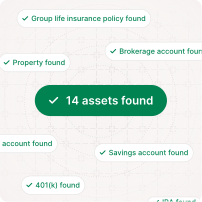
Elayne locates accounts across 50+ financial categories, notifies institutions, and manages closure and transfer paperwork. Families receive a personalized roadmap showing which accounts exist and what comes next.
Traditional estate settlement can take hundreds of hours over 12 to 18 months. Elayne automates notifications, tracks deadlines, and completes steps on behalf of families. Real human support remains available throughout, but the automation reduces the manual burden. Families gain confidence that no accounts or benefits have been overlooked, with time freed up to focus on healing.
Final Thoughts on Organizing Finances After a Death
The administrative weight of organizing financial accounts after death eases once you build momentum and see which institutions respond quickly. You won't always know the right next step, and that's okay. Asking questions, keeping notes, and giving yourself permission to learn as you go make this journey manageable.
If you would like help turning a long list of accounts and tasks into a single, organized plan, you can get started with Elayne’s estate settlement support and let us take on more of the administrative work while you focus on your family.
{{blog-cta-financial}}
FAQs
How quickly can I access funds from a joint bank account after a death?
Joint accounts with survivorship rights remain accessible to the surviving owner immediately, though banks may temporarily freeze withdrawals until you provide a death certificate. Once processed, the account continues as a single-owner account.
What's the difference between POD and TOD designations?
POD (payable-on-death) applies to bank accounts, while TOD (transfer-on-death) applies to investment accounts. Both bypass probate and allow beneficiaries to claim funds within days by presenting a death certificate and identification.
How many certified death certificates should I order?
Order 10 to 15 certified copies upfront, as most financial institutions require original certified copies for account closures, transfers, and benefit claims. Having extras prevents delays later in the process.
When should accounts held solely in the deceased person's name become accessible?
These accounts freeze immediately upon notification and must pass through probate before funds can be distributed. The probate process typically takes several months, even for small balances, and requires court authorization.
How can I find financial accounts I didn't know existed?
Check email inboxes for account notifications, search browser saved passwords, look through password managers, and search state unclaimed property databases at unclaimed.org. Review the past three years of tax returns for unreported interest or dividend income that points to unknown accounts.










.svg)