.png)

If you are looking into cremation costs, you may be planning ahead or you may be in the middle of loss right now. In both cases, the price ranges you see can be confusing. In 2026, cremation can cost anywhere from around $1,000 for a simple arrangement to more than $7,000 for a full service, and it is not always clear what you are paying for. Once you understand the main types of cremation and what drives the price, you can make choices that feel respectful without spending more than you intend. When you are ready to manage everything that comes after, having a practical roadmap can bring a little more steadiness to a difficult time.
Key Takeaways
- Direct cremation typically costs about $1,000 to $3,600 in 2026, while cremation with a full service often falls between $5,500 and $6,300 or more.
- You can lower costs by comparing providers, choosing simpler options, and holding a separate memorial that fits your budget.
- Cremation usually costs less than burial; many sources place burial with a funeral service around $7,800 to $9,400 in the U.S.
- Location, funeral home pricing, and add‑ons such as urns, viewings, and venue rentals all affect your total cost.
{{blog-cta-financial}}
Average Cremation Cost in 2026
The average cost of cremation varies depending on what is included. Several national surveys and funeral price guides now publish updated estimates for 2026.
- Direct cremation: around $1,000 to $3,600 nationwide, with many families paying close to $2,202 on average.
- Cremation with a memorial service: often between $2,000 and $4,000, depending on venue and extras such as catering or printed programs.
- Cremation with a traditional funeral and viewing: often around $6,250 to $6,280 on averageand sometimes higher in large cities.
These ranges come from sources such as After.com, Choice Mutual, and the National Funeral Directors Association data cited in cost guides.
Why Direct Cremation Costs Less
Direct cremation is usually the lowest‑cost option because it includes only the basics:
- Transport from the place of death to the funeral home or crematory.
- Required paperwork, such as permits and basic documentation.
- The cremation itself.
- Return of the ashes in a simple container.
It does not include embalming, a public viewing, or a formal service. Families who choose this path often hold a memorial later at home, outdoors, or in a community space.
Why Full‑Service Cremation Costs More
Cremation with a traditional funeral or viewing includes many of the same elements as a burial service:
- Embalming and body preparation.
- A rental casket or full casket purchase.
- Viewing or visitation hours in the funeral home.
- A formal service with staff support and facilities.
- Cremation afterward.
These added elements increase the total, which is why full‑service cremation can approach or even exceed $6,000 in some areas.
Cremation vs. Burial Cost
Many families now compare cremation costs directly with burial costs when planning arrangements. In most cases, cremation remains the lower‑cost option.
Recent cost breakdowns show:
- Funeral with burial: often around $8,300 for a median funeral with viewing and burial, and about $9,995 with a burial vault included.
- Funeral with cremation: often around $6,280 on average when there is a service and viewing included.
- Direct cremation: often close to $2,202 on average with some providers offering lower prices in competitive markets.
Burial tends to cost more because of expenses such as:
- Cemetery plot or mausoleum space.
- Burial vault or grave liner.
- Headstone or marker.
- Ongoing cemetery fees and maintenance, in some cases.
For many families, cremation offers a way to reduce these costs while still creating a meaningful, personal remembrance.
Types of Cremation Services
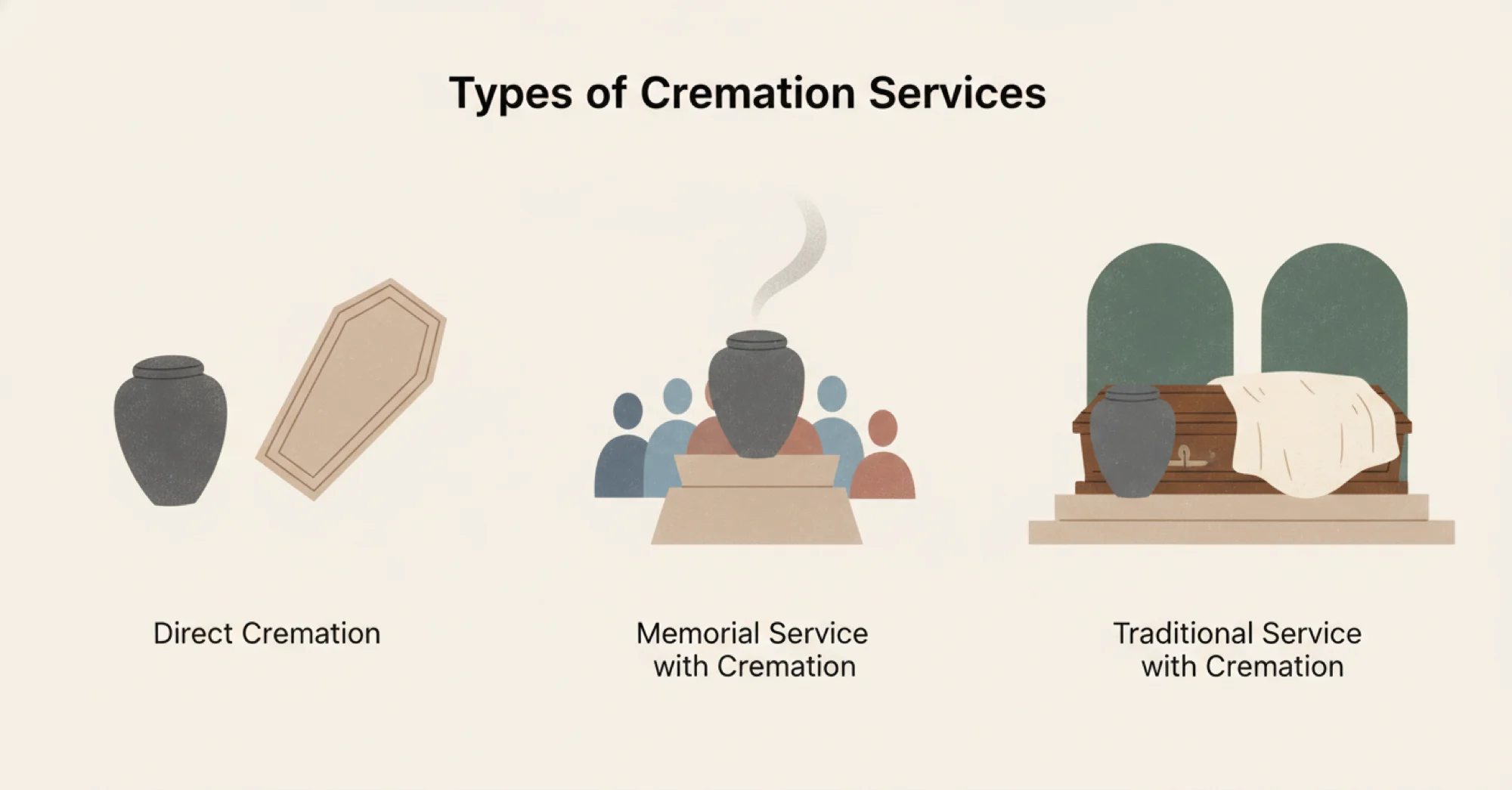
Understanding the main types of cremation makes it easier to compare quotes and avoid paying for things you do not want.
1. Direct Cremation
The simplest and usually the least expensive approach. There is no funeral service at the funeral home and no public viewing.
What is included:
- Transport from the place of death.
- Required paperwork and permits.
- The cremation process.
- A basic container for the ashes.
Ideal for: Families who prefer a simple, private option, or who plan to hold a memorial later at home, outdoors, or online.
2. Cremation With Memorial Service
The cremation happens first, and then a memorial or celebration of life is held with the urn present.
What may be included:
- Use of a venue such as a funeral home chapel, place of worship, community center, or private space.
- An officiant or speaker.
- Audio‑visual support for photos, music, or video.
- Reception or gathering afterward.
Ideal for: Families who want to come together and share memories, but do not want embalming or a viewing with a casket.
3. Cremation With Traditional Funeral
This option mirrors a conventional funeral, with cremation taking place after the service.
What may be included:
- Embalming and body preparation.
- Use of a rental casket and funeral home facilities.
- Viewing or visitation hours.
- A funeral service with staff support.
- Cremation after the service.
Ideal for: Families who want a more traditional farewell and value the experience of a viewing and formal service before cremation.
Factors That Affect Cremation Cost
Several variables influence your final cremation cost, even within the same city.
- Location: Prices are often higher in large metro areas than in smaller towns. Some states have higher average funeral and cremation costs than others.
- Funeral home or provider: Each provider sets its own pricing. Two businesses in the same city can have very different fee structures.
- Timing and urgency: Immediate‑need arrangements may limit your ability to shop around, especially if you are under time pressure.
- Add‑ons and extras: Death certificates, upgraded urns, flowers, printed programs, obituary placement, and keepsakes can all increase the total.
- Ash disposition choices: Burial in a cemetery, placement in a columbarium niche, or scattering at sea may involve additional fees.
- Transport and permits: If the person died in another state or country, you may see extra transport costs and permit fees.
Because of these variables, it is important to ask for an itemized price list versus relying on a single bundled number.
Example Cremation Cost Breakdown
Here is a simplified example of how costs can add up for a cremation with a memorial service:
| Item | Example cost (USD) |
|---|---|
| Direct cremation fee | $2,000 |
| Death certificates (3 copies) | $75 |
| Upgraded urn | $200 |
| Venue rental for memorial | $500 |
| Flowers and printed programs | $300 |
| Reception (light food and drinks) | $400 |
| Optional clergy or celebrant honorarium | $250 |
| Estimated total | $3,725 |
Your numbers may be higher or lower depending on your location, provider, and how simple or elaborate you want the gathering to be. This example is meant to show how direct cremation can remain affordable, even when you choose to add a personalized memorial.
Ways to Reduce Cremation Costs
It is possible to create a respectful, thoughtful farewell while keeping costs under control. A few practical steps can help.
- Compare multiple providers: Call or check online price lists for more than one funeral home or cremation provider. Ask whether the quote includes transport, permits, and the return of ashes.
- Consider direct cremation with a separate memorial: Choosing direct cremation and planning your own gathering later often costs less than a formal service at a funeral home.
- Decline packages that include extras you do not need: Many providers bundle goods and services together. You can ask to remove items that are not important to you.
- Use a cremation society or online provider: Groups such as National Cremation and other regional cremation societies can offer straightforward pricing and fewer high‑pressure add‑ons.
- Handle some elements yourself: Families sometimes create their own memorial programs, slide shows, or simple receptions, which can reduce costs while still feeling deeply personal.
How Elayne Fits Into Cremation Planning
Cremation decisions are only one part of what needs to be handled after a death. Once the service is over, there are still accounts to close, benefits to claim, and paperwork to complete. Many families are surprised by how long that work can take, especially if they are grieving and managing jobs, children, or caregiving.
Elayne is designed to help with that next chapter. It is an estate settlement service that supports families with:
- Organizing and tracking the many post‑cremation tasks, from bank notifications to retirement account updates.
- Helping with forms and communications for Social Security, life insurance, and other benefits.
- Providing a shared, secure space where relatives and advisors can see what has been done and what comes next.
- Pairing smart tools with real human Guides who offer calm, knowledgeable support.
By helping families work through these steps more smoothly, Elayne gives you more room to focus on your own well‑being and on the people around you.
When it feels right, you can try Elayne and see how it feels to have a steady partner helping with the details that come after cremation, so you are not carrying all of it on your own.
Final Thoughts on How Much Cremation Costs
Cremation cost can feel like one more hard thing to figure out at a time when you already have a lot on your heart. The good news is that you have real options, from simple direct cremation to services with memorials and gatherings, and you can shape those choices around both your budget and your family’s wishes. By asking for itemized pricing, focusing on what truly matters to you, and letting go of extras that do not, you can create a respectful goodbye without taking on more expense than you intend. If you also want steady help with the paperwork, accounts, and next steps that follow, you can learn more and see if it feels like a fit at elayne.com.
{{blog-cta-financial}}
FAQs
Is cremation cheaper than burial?
In most cases, yes. Direct cremation often costs around $1,000 to $3,600, while a full funeral with cremation may be in the $6,000 range. Burial with a service and vault is frequently closer to $8,300 to $9,400 once cemetery costs are included. The exact difference depends on your location and the choices you make.
What does direct cremation include?
Direct cremation usually covers:
- Transport of the body to the provider.
- Basic paperwork and permits.
- The cremation itself.
- Return of the ashes in a simple container.
It does not include embalming, viewing, or a formal service at the funeral home.
Can I still have a service if I choose cremation?
Yes. Many families hold a memorial or celebration of life either before or after the cremation. This can take place at a funeral home, place of worship, park, home, or online. Choosing cremation simply gives you more flexibility about timing and location.
Do I need to buy an urn?
No. Ashes are usually returned in a basic container at no extra cost. You can purchase an urn later if you plan to display it, place it in a niche, or bury it. Many families also choose simple keepsake containers or scatter tubes for ceremonies.
How can I avoid spending more than I intend?
Ask for an itemized price list, compare more than one provider, and focus on what feels meaningful to you. You do not need to accept every upgrade or package. Direct cremation plus a personal memorial often costs less and can feel just as heartfelt as a more expensive service.
What should I plan for after cremation?
After cremation, you may still need to:
- Update banks, insurers, and utility companies.
- Claim life insurance, retirement benefits, or survivor payments.
- Work with the court for probate if required.
- Coordinate with family members about personal items and finances.
An estate settlement service like Elayne can help you organize and move through these steps so you are not trying to figure it all out on your own while you are grieving.










.svg)