

Alix charges 1% of the gross estate value as its service fee. For a $600,000 estate, that comes to $6,000. For a $1.5 million estate, the fee is $15,000. The fee is calculated on gross value, meaning debts and liabilities do not reduce the base figure. Percentage-based pricing is a well-established model in estate services. What follows covers how the 1% fee is structured, what it includes, how it compares to other pricing models in the estate settlement space, and what families typically pay across the full scope of estate settlement.
Key Takeaways:
- Alix charges 1% of gross estate value: $5,000 for a $500,000 estate or $10,000 for $1 million.
- The fee is calculated on gross value before debts.
- Total estate settlement costs typically run 3% to 8% of estate value, including attorney fees and court costs.
- Elayne charges a flat subscription fee independent of estate size.
What Is Alix?
Alix is an estate settlement service that guides families through the administrative steps that follow a death. The service combines AI-driven document processing with a team of human specialists who help executors and family members close accounts, file paperwork, and work through the legal requirements of settling an estate.
The service is built around a guided workflow. Families are guided through a checklist of steps, from gathering financial records to notifying institutions, with support available at each stage. Alix positions itself as an alternative to hiring an estate attorney for full representation, similar to other estate settlement platforms in the market, sitting somewhere between a DIY approach and full legal counsel.
What Does Alix Handle?
Alix covers several core areas of estate settlement:
- Account closure and notification, including banks, credit card companies, and subscription services
- Document collection and organization, helping families gather death certificates, account statements, and legal paperwork
- Guidance on probate requirements
- Coordination with financial institutions on behalf of the estate
The service is available to families across the United States, with support tailored to state-specific probate rules where applicable.
Who Alix Is Designed For
Alix serves executors and family members who are managing an estate and want structured guidance during the process. Families who want to stay engaged in the process while having professional support available tend to find the guided model a good fit. Alix does not replace an estate attorney for matters requiring legal advice. For the administrative work needed during estate settlement, Alix covers the core steps.
{{blog-cta-financial}}
How Alix Pricing Works
Alix charges a flat 1% fee on the total gross value of the estate. That figure covers the full scope of their settlement service, from asset inventory through final distribution. For a $500,000 estate, that works out to $5,000. For a $1,000,000 estate, the fee is $10,000. For a $2,000,000 estate, the fee is $20,000. The percentage model is a well-established approach in professional estate services. Attorneys, executors, and personal representatives in many states are compensated on a similar percentage basis.
How Gross Valuation Works
A few key points to note about how gross valuation typically works:
- Debts, liens, and mortgages do not reduce the base that is used to set a price.
- There is no sliding scale or tiered pricing. Larger estates could pay more in absolute dollars even when the administrative steps involved may not scale proportionally.
What These Figures Look Like Across Estate Sizes
For a $300,000 estate, the Alix fee is $3,000. For a $750,000 estate, the fee is $7,500. For a $1,500,000 estate, the fee is $15,000.
It's important to note that each of those figures represents the service fee alone, not attorney costs, court filing fees, or executor compensation. Those costs are separate and vary by state. When evaluating the full cost of estate settlement, the Alix service fee is one component of a broader picture that typically includes several other professional fees as well.
What the Fee Includes
Alix charges a flat fee based on estate size. The fee covers guidance through the core settlement steps: identifying assets, notifying creditors, filing required paperwork, and distributing the estate to beneficiaries.
Here is a general breakdown of what that fee typically covers:
- Assistance identifying and cataloguing estate assets, including financial accounts and property holdings
- Creditor notification support
- Document preparation and filing guidance for probate court submissions
- Distribution support to help families move assets to the right beneficiaries once the estate is cleared
How Percentage Pricing Compares to Other Fee Models
Alix charges a percentage of the estate's total value, which sets it apart from most competitors in the estate settlement space. Flat-fee services charge a fixed amount regardless of estate size, meaning a $2 million estate costs the same as a $200,000 one. Hourly models bill for time spent.
Percentage-based fees can work well for larger estates where the complexity warrants professional oversight. An attorney billing 2% to 4% of a $1.2 million estate earns $24,000 to $48,000, which may reflect hundreds of hours of legal work across probate filings, creditor negotiations, and asset transfers.
When Flat Fees or Hourly Billing May Serve Families Better
- Simple estates with clear beneficiaries and minimal assets may not require a percentage-based approach.
- When an estate holds a single piece of property or a small number of accounts, the percentage model may produce fees disproportionate to the time involved.
- Families who are comfortable handling routine paperwork themselves may only prefer attorney guidance for specific filings.
The clearest signal that percentage-based fees may be the better fit is complexity: contested assets, multiple states, business interests.
{{blog-cta-financial}}
What Families Pay for Estate Settlement Overall
Alix's service fee is one component of what settlement costs. Attorney fees, court costs, executor compensation, and accounting work all add up alongside any software or service costs.
Here is a rough breakdown:
- Attorney fees often make up the largest share, ranging from 1% to 5% of estate value depending on the state and complexity involved.
- Court and filing fees vary by jurisdiction but can add several hundred to a few thousand dollars.
- Executor compensation, where taken, is usually a percentage set by state law.
How Elayne's Pricing Works
Elayne charges based on the scope of work a family needs. The pricing follows a cumulative tier structure, where each level builds on the one before it and covers a defined set of settlement steps.
The four tiers are:
- Free. Families can start here, understand what the process involves, and see where to begin.
- Estate Organizer — $500. Covers organizing the estate and preparing for probate or work with an attorney. Includes personalized checklist, document organization, and probate readiness steps.
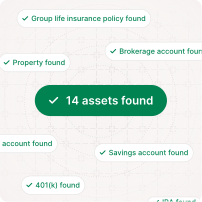
- Financial Discovery — $3,000 total. Includes everything in Estate Organizer, plus Elayne's Verified Asset Search—a credentialed search for unclaimed assets, lost insurance policies, dormant accounts, and eligible survivor benefits.
- Inheritance Plan — $6,000 total. Includes everything in Financial Discovery, plus full inheritance and distribution mapping: who inherits each asset, how each transfer works, date-of-death valuations, and support opening an estate bank account.
Elayne is also an eligible estate expense. When a confirmed estate account has been opened, Elayne can bill the estate directly. For families who pay out of pocket first, Elayne helps them seek reimbursement from estate funds once authority and an estate account are in place. In practice, this means the cost of the service often comes from the estate itself, not from the family's personal funds.
FAQs
How much does Alix's estate settlement pricing cost?
Alix charges 1% of the gross estate value as their service fee. For a $500,000 estate, that's $5,000; for a $1 million estate, it's $10,000. The fee is calculated on the gross value of the estate before debts or liabilities are deducted.
Does Alix file tax returns for the estate?
No. Alix's fee covers asset inventory, creditor notification, document preparation guidance, and distribution support, but does not include preparing or filing Forms 1040, 1041, or 706.
What's included in Alix's 1% estate settlement pricing fee?
The 1% fee covers assistance cataloguing assets, creditor notification support, document preparation and filing guidance for probate, and distribution coordination. It does not cover attorney representation, court filing fees, or state-specific legal services beyond guided document preparation.
When does percentage pricing make more sense than hourly billing?
Percentage-based fees work best for complex estates, such as those involving multiple states, business interests, or contested assets.
Alix vs flat-fee estate settlement services?
Alix charges 1% of the gross estate value, so a $1 million estate pays $10,000 while a $500,000 estate pays $5,000. Flat-fee services charge the same amount regardless of estate size.
How much does estate settlement cost overall?
Total estate settlement costs typically range from 3% to 8% of the gross estate value. For a $500,000 estate, that works out to roughly $15,000 to $40,000, including attorney fees (often 1% to 5% of estate value), court and filing fees, executor compensation where taken, and accounting or tax preparation for estates with investment income or business interests.
*Disclaimer: This article is for informational purposes only and does not provide legal, medical, financial, or tax advice. Please consult with a licensed professional to address your specific situation.










.svg)